
US Military Used Claude AI in Iran Strikes After Trump Ordered Anthropic Ban
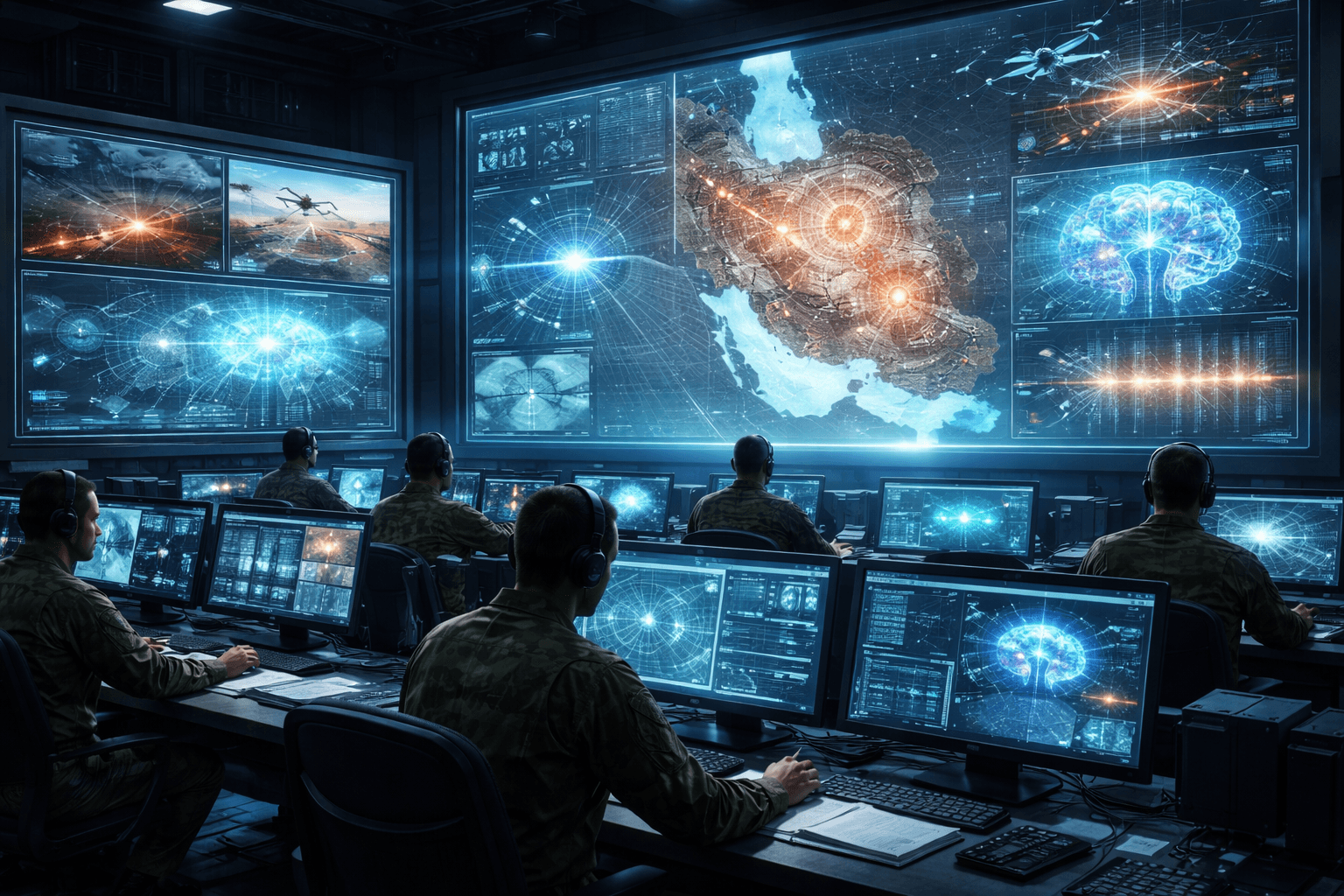
A critical moment for AI governance, defense oversight, and political credibility
Reports emerging from multiple international outlets indicate that the US military used Claude AI in Iran strikes just hours after President Donald Trump ordered a ban on Anthropic technology.
The timing has drawn sharp attention. It raises serious concerns about coordination, enforcement, and accountability at the highest levels of US defense and political leadership.
While officials deny direct violations, the episode highlights how deeply artificial intelligence is embedded in modern military systems.
What the Reports Say
According to verified reporting, US defense systems relied on AI tools linked to Anthropic during operations connected to Iran.
The AI model involved was Claude, a system designed for reasoning, data synthesis, and decision support.
Importantly, sources emphasize that Claude did not autonomously authorize or execute strikes.
Instead, it reportedly supported intelligence processing and operational planning.
However, the timing is crucial.
The usage reportedly occurred within hours of Trump’s executive order restricting Anthropic’s involvement with US government operations.
you might like this :- Pentagon Anthropic AI Clash Deepens
Trump’s Ban on Anthropic
President Donald Trump ordered the ban amid rising concerns about AI supply chain risks.
The administration cited national security vulnerabilities.
It also pointed to insufficient transparency around AI training data and model controls.
As a result, Anthropic was classified as a restricted technology provider for defense use.
Therefore, any continued reliance on its systems, even indirectly, immediately triggered scrutiny.
How the AI Was Used
Defense analysts familiar with the systems say the AI was integrated into existing military software layers.
These layers support:
- Intelligence summarization
- Threat pattern analysis
- Mission planning assistance
Crucially, human commanders retained final authority.
Yet, the reliance on Claude AI illustrates a deeper issue.
Modern military infrastructure often embeds AI tools long before policy changes take effect.
As a result, immediate shutdowns are rarely simple.
Did the US Military Violate the Ban?
Officials argue that no explicit violation occurred.
Their reasoning rests on three points:
- The AI was already embedded in operational systems
- Claude did not perform lethal decision making
- The ban lacked immediate technical enforcement mechanisms
Still, governance experts remain unconvinced.
The episode exposes gaps between executive orders and real world military execution.
Strategic Implications for AI and Defense
This incident carries broader consequences.
First, it underscores how deeply AI is woven into modern warfare.
Second, it reveals how policy decisions struggle to keep pace with deployed technology.
For defense planners, this creates a risk.
For AI firms, it creates reputational exposure.
Most importantly, it raises questions about civilian oversight of military AI use.
Impact on Anthropic and the AI Industry
Anthropic now faces a delicate moment.
The company has positioned itself as a leader in AI safety.
Yet, association with active military operations complicates that narrative.
At the same time, competitors and regulators are watching closely.
This case may influence how future AI defense contracts are structured, reviewed, and audited.
What Happens Next
Looking ahead, several outcomes appear likely.
First, stricter enforcement mechanisms may follow executive bans.
Second, military AI systems may require clearer modular controls.
Third, AI firms may face tighter disclosure rules for government use.
Ultimately, this episode will shape how AI governance evolves in national security contexts.
The report that the US military used Claude AI in Iran strikes after a presidential ban is more than a political controversy. It is a structural warning.
AI now moves faster than policy. Defense systems integrate technology before governance frameworks mature.
Unless oversight adapts, similar conflicts will repeat.
The question is no longer whether AI belongs in military operations.
The real question is who controls it, and how effectively.
Topics
Covering startup news, AI, technology, and business at ThePrimely. Delivering accurate, in-depth reporting on the stories that shape the future.