
Trump Delays China Visit as Iran War Takes Priority
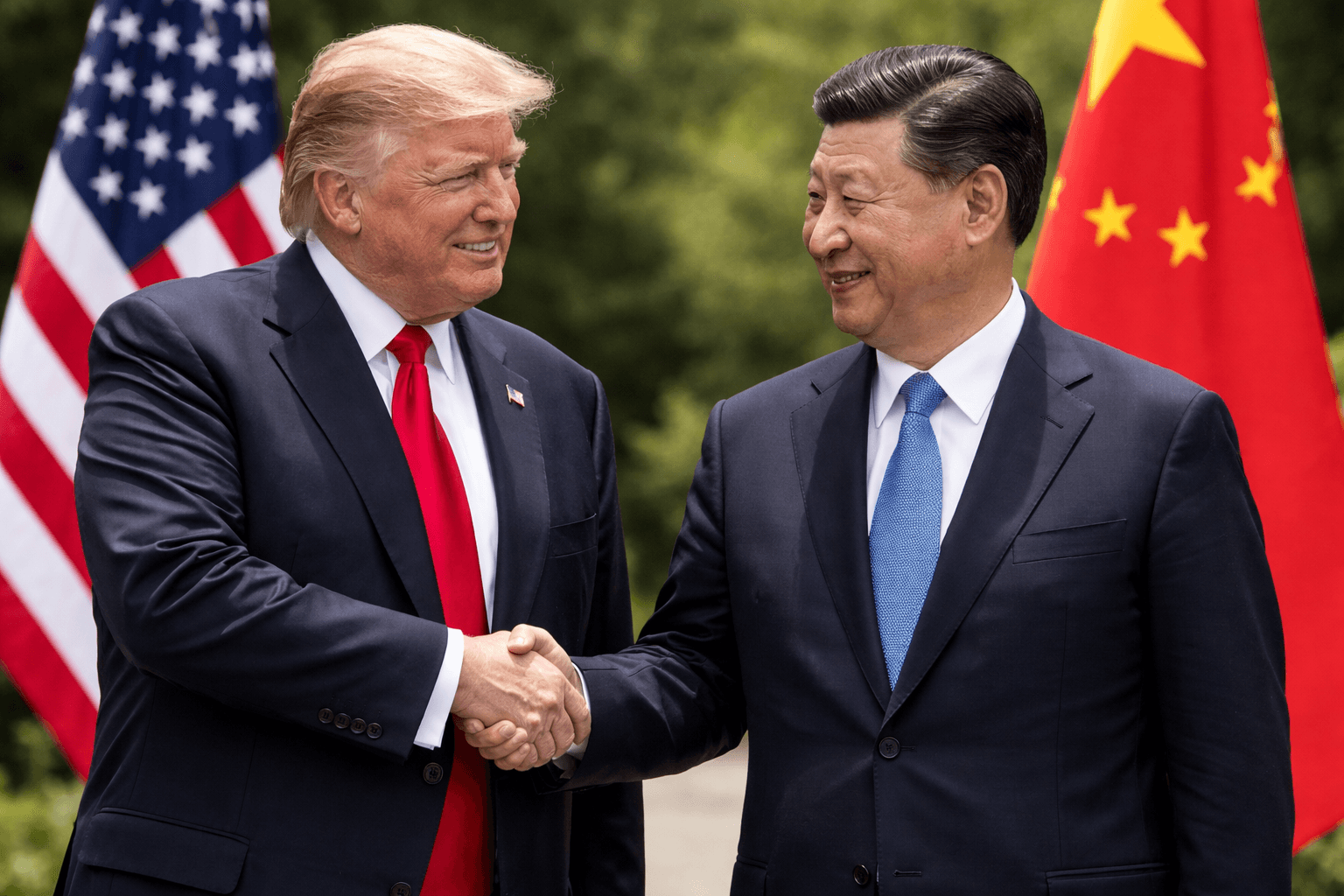
US President Donald Trump has postponed his planned visit to China and will remain in Washington as the Iran conflict intensifies.
The meeting with Chinese President Xi Jinping was scheduled between 31 March and 2 April. It will now likely take place about a month later.
Speaking at the White House, Trump said he made the decision to oversee the war.
“We’ve requested that we delay it a month or so,” he told reporters. “We’ve got a war going on, and I think it’s important that I be here.”
China Confirms Talks on Timing
China confirmed that both sides are discussing the timing of the visit.
Foreign ministry spokesperson Lin Jian said Beijing and Washington are in contact over “the timing and related matters” of the trip.
He also rejected claims linking the delay to tensions around the Strait of Hormuz, a key global shipping route.
“We have noted that the US side has clarified these reports,” Lin said. He added that such claims are “completely wrong”.
Conflicting Signals Over Reason for Delay
Trump’s latest remarks clarified earlier comments that had raised questions.
In an interview with the Financial Times, he suggested he might delay the visit if China did not help reopen the Strait of Hormuz.
On Monday, however, Trump said the war alone drove the decision.
“There’s no tricks to it,” he said. “It’s very simple.”
US Treasury Secretary Scott Bessent supported that explanation.
He said Trump wants to stay in Washington to coordinate the US response.
“Travelling abroad at a time like this may not be optimal,” Bessent said.
Iran War Reshapes Global Priorities
The Iran conflict has become the central focus of US foreign policy.
Attacks on ships and energy infrastructure in the Gulf have disrupted oil supplies.
These disruptions have also pushed global prices higher.
The Strait of Hormuz now sits at the centre of global concern.
A large share of the world’s oil and gas flows through this route.
The crisis has also complicated diplomatic efforts, including US-China relations.
Rising Tensions Between Washington and Beijing
Relations between the United States and China have grown more strained in recent weeks.
Beijing has criticised US and Israeli strikes on Iran.
At the same time, China continues to maintain economic ties with Tehran.
China remains a major buyer of Iranian oil despite US sanctions.
Trade tensions have also resurfaced between the two countries.
Washington recently announced plans to investigate trade practices involving China and others.
This move followed a US Supreme Court decision that struck down earlier tariff measures.
Trade Talks Continue Despite Uncertainty
Despite tensions, both sides continue diplomatic talks.
Officials from the US and China met in Paris in recent days.
They discussed tariffs, investments and economic sanctions.
Chinese trade representative Li Chenggang said both sides agreed on some issues.
He added that negotiations will continue.
However, he said China raised “serious concern” over US plans to investigate its trade practices.
US officials also explained potential tariff changes during the talks.
A Delicate Balancing Act
Trump’s decision highlights a difficult balancing act for the United States.
Washington must manage a growing conflict in the Middle East.
At the same time, it must maintain relations with China, a key global economic power.
Trump stressed the importance of that relationship.
“I’m looking forward to being with him,” he said, referring to Xi. “We have a very good relationship.”
What Comes Next
The exact timing of the meeting remains unclear.
Officials from both countries are expected to continue discussions in the coming weeks.
However, the evolving situation in the Middle East may influence both the schedule and agenda.
As the Iran conflict reshapes global priorities, leaders in Washington and Beijing face mounting pressure.
They must manage geopolitical tensions while also protecting economic stability.
Topics
Covering startup news, AI, technology, and business at ThePrimely. Delivering accurate, in-depth reporting on the stories that shape the future.