
Hormuz Crisis: Why NATO Allies Are Split Over Iran War
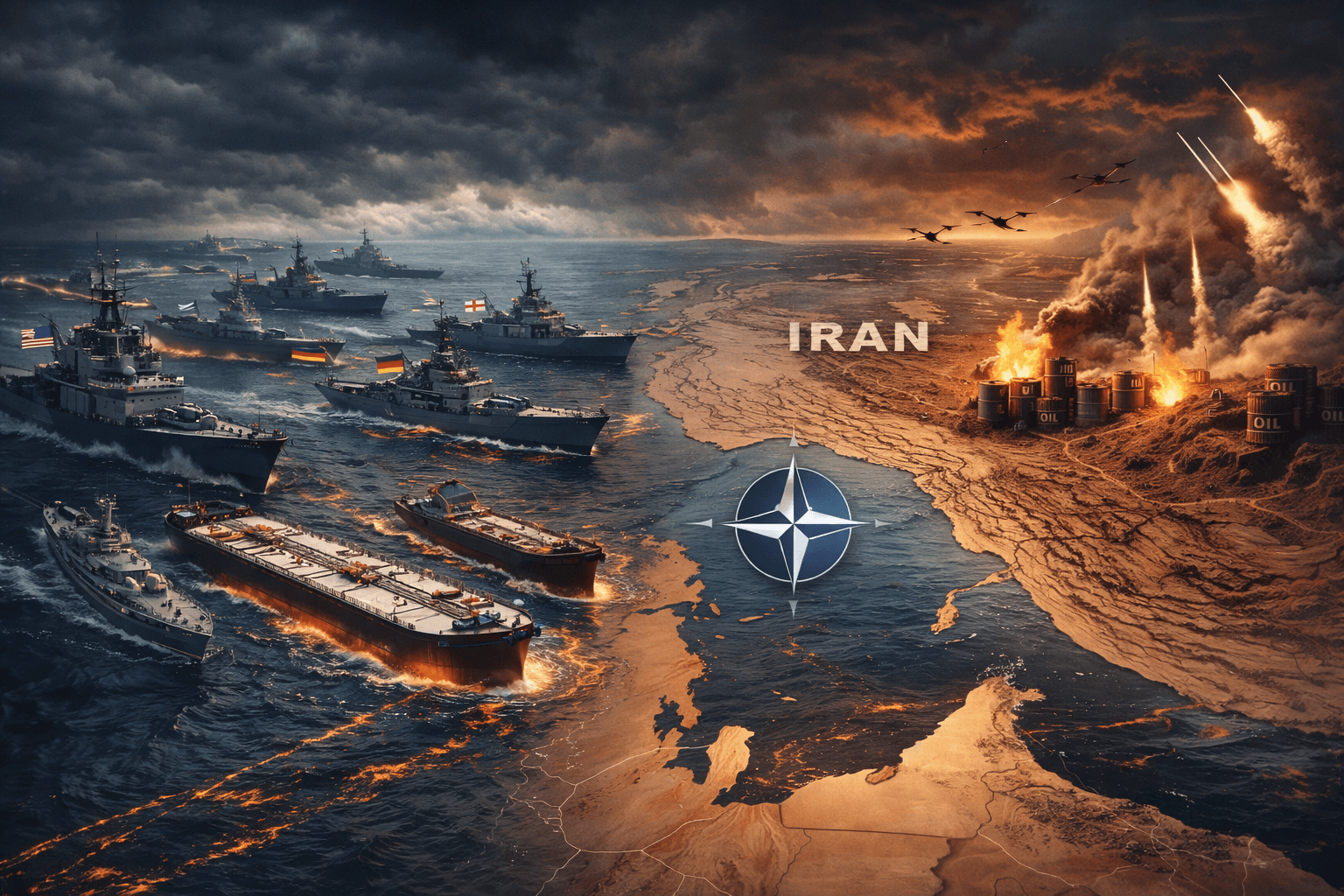
The escalating crisis around the Strait of Hormuz has become one of the most dangerous flashpoints in the global economy. As attacks on ships and threats to block the vital waterway continue, Western allies are struggling to agree on how to respond.
The narrow channel between Iran and Oman carries roughly one-fifth of the world’s oil and liquefied natural gas shipments. Any disruption to this route has immediate consequences for global energy markets.
In recent weeks, the conflict involving Iran has led to attacks on vessels, rising insurance costs for shipping companies and sharp swings in oil prices. While the United States has called for stronger military cooperation to protect the route, several NATO countries have adopted a more cautious stance.
Why the Strait of Hormuz Matters
The Strait of Hormuz is widely considered the most important oil transit chokepoint in the world.
The waterway connects the Persian Gulf to the Arabian Sea and serves as the primary export route for energy from major Gulf producers such as Saudi Arabia, Iraq, Kuwait and the United Arab Emirates.
Each day, millions of barrels of crude oil and natural gas pass through the strait.
For major Asian economies including China, India, Japan and South Korea, the route is essential to maintaining stable energy supplies. Europe also relies indirectly on the corridor through global oil markets.
When tensions rise in the region, energy traders often react quickly. Oil prices surged past $100 per barrel earlier during the current crisis before easing slightly amid hopes of diplomatic progress.
Washington Pushes for Allied Support
The United States has taken the lead in calling for an international effort to secure the strait.
President Donald Trump has urged NATO partners and other major economies to contribute naval vessels and resources to protect shipping in the region.
Washington argues that many countries depend on energy supplies that pass through the Gulf and should therefore share the burden of keeping the route open.
The US proposal includes escorting commercial vessels, clearing potential naval mines and increasing surveillance of the waterway.
American officials say such measures are necessary to prevent further disruptions to global energy supplies.
NATO Allies Show Reluctance
Despite US pressure, several NATO members have shown little enthusiasm for direct military involvement.
The United Kingdom, led by Prime Minister Keir Starmer, has said it will not be drawn into a wider war in the Middle East.
London has instead emphasised diplomacy and coordination with allies to restore shipping without escalating the conflict.
Other countries have expressed similar concerns.
Japan and Australia have indicated they do not currently plan to deploy naval forces to the region. Germany has also signalled caution about participating in military operations near Iran.
For many governments, the risk of a broader regional war outweighs the potential benefits of immediate military intervention.
The Economic Stakes
The crisis has already begun to affect the global economy.
Shipping companies operating near the Gulf have faced sharply higher insurance premiums. Some have temporarily suspended routes through the region due to security concerns.
Energy markets have also reacted strongly.
Higher oil prices could increase inflation and slow economic growth in many countries that depend on imported fuel.
Developing economies in particular could face greater financial strain if energy costs remain elevated for a prolonged period.
Diplomatic Efforts Continue
While tensions remain high, diplomatic discussions are ongoing.
Several countries are working to establish a coordinated plan that could restore safe navigation through the Strait of Hormuz without triggering a broader military confrontation.
Officials say such efforts could include multinational patrols, intelligence sharing and negotiations aimed at reducing tensions with Iran.
However, analysts warn that reopening the shipping corridor will be difficult unless the underlying geopolitical conflict begins to ease.
A Test for NATO Unity
The crisis has also become a test of NATO’s political cohesion.
The alliance has long relied on close cooperation between the United States and its European partners.
But disagreements over military strategy in the Middle East have revealed growing differences in how members view global security threats.
For Washington, protecting the Strait of Hormuz is both an economic and strategic priority.
For many European governments, avoiding a wider war in the region remains the central concern.
As the crisis unfolds, the balance between these two priorities will shape not only the future of the Hormuz shipping route but also the strength of Western alliances in an increasingly unstable world.
Topics
Covering startup news, AI, technology, and business at ThePrimely. Delivering accurate, in-depth reporting on the stories that shape the future.