
Ex-Uber CEO Travis Kalanick Launches Atoms to Lead Industrial Robotics Revolution
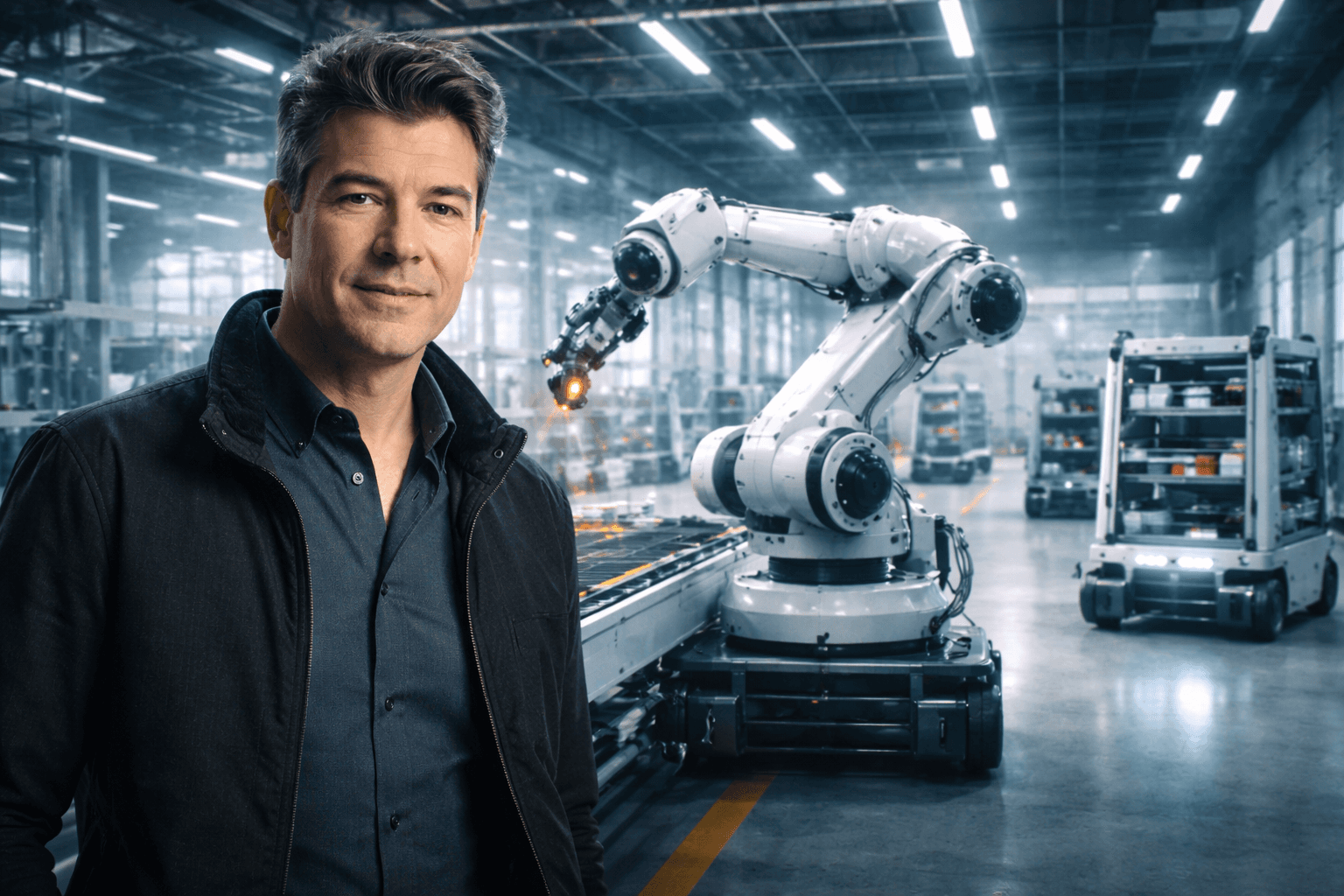
The race to automate the physical world is accelerating. A new entrant has now stepped forward with ambitious goals.
Travis Kalanick, the co founder and former CEO of Uber, has unveiled a robotics venture called Atoms. The company focuses on building specialized robots designed to perform real world industrial work.
The launch marks Kalanick’s most visible return to entrepreneurship since leaving Uber in 2017. More importantly, it signals a broader shift in technology. Artificial intelligence is moving beyond software and into physical infrastructure.
Kalanick believes this transition could drive a new era of productivity. His vision centers on what he calls “gainfully employed robots” designed to automate practical tasks across industries.
The Strategic Vision Behind Atoms
Atoms is not a startup built overnight. The company has been operating quietly for nearly eight years before its public launch.
During this period, the venture developed under the umbrella of Kalanick’s infrastructure company City Storage Systems. The newly branded Atoms now expands that foundation into robotics and automation.
Kalanick’s central thesis is simple. Software has already transformed information and communication. The next transformation will target the physical economy.
Factories, kitchens, transport systems, and mining operations still rely heavily on manual labor. Atoms aims to deploy robotic systems that can perform these tasks more efficiently.
The result could reshape productivity across entire industries.
Why Atoms Focuses on Specialized Robots
Unlike many robotics startups pursuing humanoid machines, Atoms is taking a different path.
The company prioritizes task specific robots designed for defined industrial environments. According to Kalanick, this approach offers clearer commercial value.
Humanoid robots face major technical hurdles. They must navigate unpredictable environments and replicate human movement. That complexity slows real world deployment.
Specialized machines, however, can operate efficiently within controlled settings.
Atoms is therefore building robots that perform specific roles with precision and reliability.
This philosophy reflects a broader shift in the robotics sector. Many industry experts now believe focused automation will scale faster than general purpose humanoid systems.
The Three Core Divisions of Atoms
The company plans to organize its operations around three industrial sectors.
Atoms Food
Food production represents the most immediate application.
Atoms will expand robotic infrastructure for commercial kitchens and food delivery systems. The initiative builds on Kalanick’s earlier investments in automated kitchen technology.
The goal is to reduce labor costs and increase production efficiency while maintaining consistent food quality.
Atoms Mining
Mining remains one of the most labor intensive industries in the world.
Atoms aims to deploy robotic systems capable of handling repetitive and hazardous tasks in extraction environments. These machines could improve safety while increasing output.
Atoms Transport
The transport division focuses on robotic mobility platforms.
Kalanick describes this system as a wheelbase for robots, a foundational platform that enables machines to move efficiently across industrial settings.
Together, these divisions position Atoms at the intersection of robotics, logistics, and infrastructure.
Automating the Physical Economy
Kalanick’s long term goal extends beyond individual industries.
He believes robotics combined with artificial intelligence will create what he describes as a “golden age” of productivity. Machines will handle repetitive physical work while humans focus on higher value activities.
This concept reframes robotics as an economic engine rather than a niche technology.
Instead of replacing workers outright, the strategy aims to expand production capacity across sectors. Robots become tools that amplify human capability.
In Kalanick’s words, the mission is to build machines that have productive jobs and contribute to economic abundance.
The Global Robotics Race
Atoms enters a market that is rapidly gaining momentum.
Across the technology sector, companies are investing heavily in robotics and automation. AI driven machines are now appearing in factories, warehouses, and logistics networks worldwide.
The shift reflects several structural trends:
- Rising labor shortages in industrial sectors
- Increasing demand for supply chain efficiency
- Advances in artificial intelligence and robotics hardware
- Growing investor interest in automation technologies
As these forces converge, robotics is moving from experimental deployments to commercial scale.
Atoms intends to position itself at the center of this transformation.
What Comes Next for Atoms
The company is still in the early stages of public development.
However, its foundation suggests a long term industrial strategy rather than a quick technology launch.
Several developments will shape the company’s trajectory:
- Expansion of robotics infrastructure in food production
- Partnerships with mining and logistics operators
- Development of scalable robotic mobility platforms
- Integration of AI driven automation across industries
If Atoms can successfully deploy these technologies, it could help accelerate the transition toward a highly automated industrial economy.
The launch of the Travis Kalanick Atoms robotics startup represents more than a personal comeback.
Atoms aims to build machines designed for productive work in sectors such as food production, mining, and transportation.
Whether the venture succeeds remains to be seen. However, its ambition is clear.
The next major technology revolution may not happen on screens. It may unfold on factory floors, in kitchens, and across supply chains powered by intelligent machines.
Topics
Covering startup news, AI, technology, and business at ThePrimely. Delivering accurate, in-depth reporting on the stories that shape the future.