
Stryv Acquires Sterra to Accelerate Expansion Into the Home Appliance Market
Singapore’s direct-to-consumer startup ecosystem is entering a consolidation phase. Strategic acquisitions are becoming a primary growth strategy.
The latest example is the move where Stryv acquires Sterra, a well-known water and air purifier brand. The acquisition signals a broader shift among Southeast Asian consumer brands toward multi-category expansion.
For Stryv, the deal marks a decisive step into the home appliance market and strengthens its long-term ambition to build a large consumer technology platform.
Strategic Expansion: Why Stryv Acquired Sterra
Singapore-based consumer electronics startup Stryv has fully acquired Sterra for an undisclosed amount.
Sterra will continue operating as an independent brand after the acquisition. Its CEO, Chris Lim, will transition into an advisory role during the integration phase.
Both companies will operate under Evo Commerce, the parent company behind Stryv and several other direct-to-consumer brands.
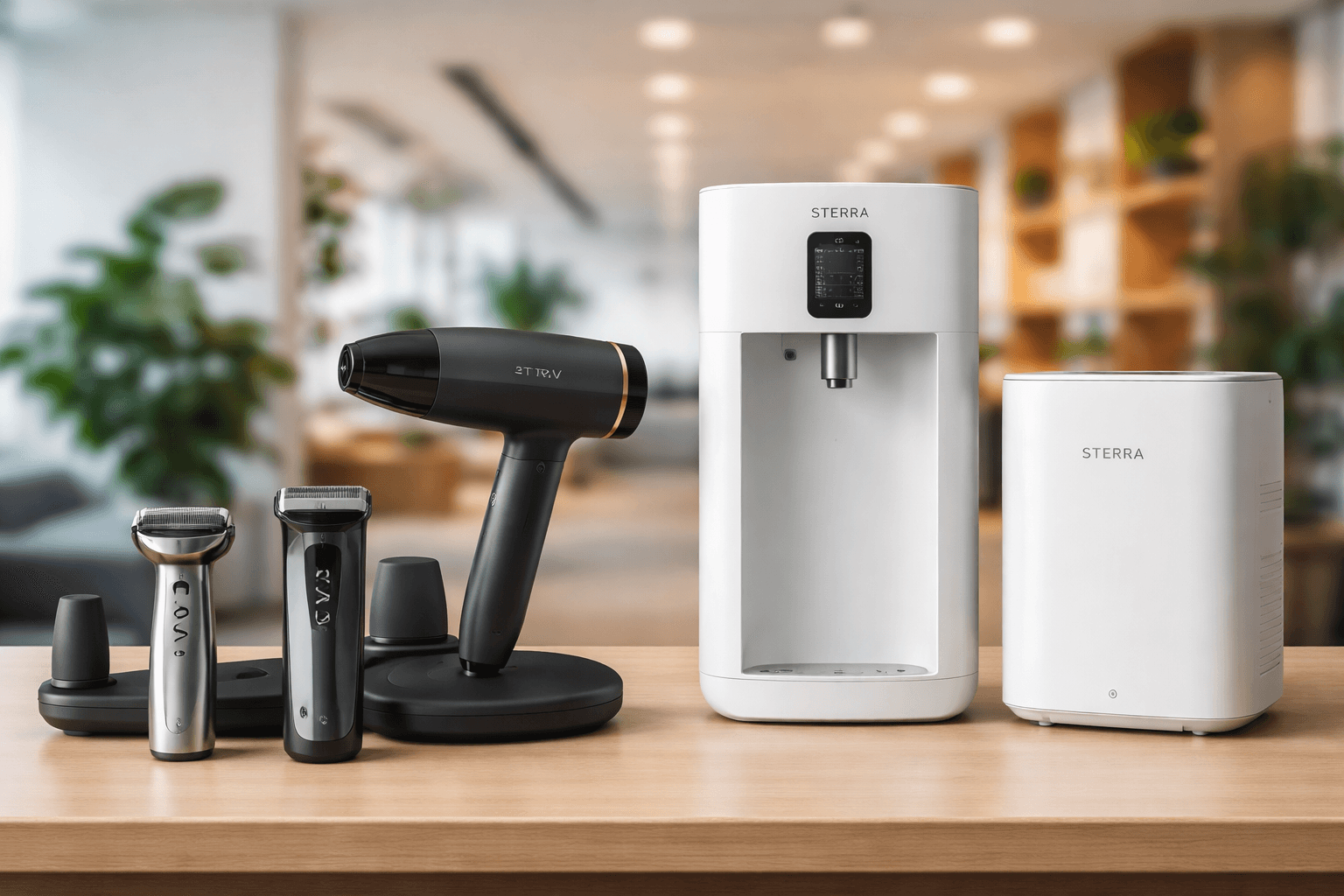
The transaction marks Stryv’s official entry into the home-care and home appliance category. This expansion broadens its existing portfolio of personal care devices, including hair dryers and men’s shavers.
Understanding the Companies Behind the Deal
Stryv’s Core Business Model
Stryv focuses on personal care technology products. These include grooming tools priced between US$149 and US$189.
The company distributes products through multiple channels:
- Its own ecommerce website
- Major online marketplaces
- More than 2,000 retail storefronts
- Around 30 branded retail stores across Singapore, Malaysia, and Hong Kong
The brand reported eight-figure annual revenue and closed 2025 profitably. The acquisition is funded directly from its balance sheet rather than external investment.
Sterra’s Position in the Home Appliance Market
Sterra specialises in air and water purification products with prices ranging from US$189 to US$1,999.
The company achieved rapid growth in the early years. It reached eight-figure revenue while remaining bootstrapped.
Unaudited financial figures show Sterra Tech recorded S$16.6 million in revenue for the fiscal year ending June 2025, although it reported a net loss of S$2.3 million during the period.
Sterra products are already present in roughly 200,000 homes in Singapore, offering valuable customer insights for product development.
Strategic Motives Behind the Acquisition
Faster Entry Into the Home-Care Market
Stryv’s leadership evaluated several expansion paths.
Building an internal home appliance brand would have required years of product testing and customer data collection.
Acquiring an established brand like Sterra offered immediate market access and a proven customer base.
Strengthening Technology and Supply Chain Capabilities
Sterra brings several operational advantages:
- Established R&D and technical service teams
- Long-standing technician workforce
- Supplier relationships with Tier-1 factories in China and South Korea
These capabilities complement Stryv’s existing manufacturing network, which primarily sources from China.
Industry Context: Rising M&A Activity Among D2C Brands
The acquisition also reflects a broader trend across Asian consumer startups.
Direct-to-consumer companies are increasingly pursuing mergers and acquisitions to accelerate scale.
Such deals allow brands to expand product categories, share supply chains, and reduce customer acquisition costs.
In Singapore alone, the consumer appliance market reached 4.9 million units in retail sales in 2025. Market projections suggest volumes could grow to 5.4 million units by 2030.
This growth creates opportunities for vertically integrated consumer brands that control both product development and distribution.
Competitive Landscape in the Consumer Appliance Market
Stryv’s expansion places it in a competitive industry dominated by global electronics manufacturers.
Major players currently leading the market include:
- Philips
- Braun
- Panasonic
These brands maintain strong market share across personal care and home appliance categories.
However, emerging D2C brands are challenging the traditional model through online distribution, brand storytelling, and direct customer relationships.
Integration Strategy and Customer Continuity
One operational priority following the acquisition is customer stability.
Stryv confirmed that existing Sterra customers will retain full product warranty coverage.
Operational teams from both companies will also integrate across several departments:
- Customer service
- Technical support
- Sales and marketing
- Finance and HR
This consolidation aims to improve efficiency while preserving Sterra’s brand identity.
Strategic Vision: Building a Multi-Category Consumer Brand
For Stryv’s leadership, the acquisition supports a broader strategic objective.
CEO Roy Ang has stated that the company aims to transform into a “multibillion-dollar enterprise.”
The company believes the combined operations of Stryv and Sterra could achieve nine-figure revenue by 2027.
The strategy focuses on expanding across Southeast Asia while strengthening presence in Singapore, Malaysia, and Hong Kong.
Topics
Covering startup news, AI, technology, and business at ThePrimely. Delivering accurate, in-depth reporting on the stories that shape the future.