
TCS Gemini Experience Center Signals the Next Phase of Physical AI in Manufacturing
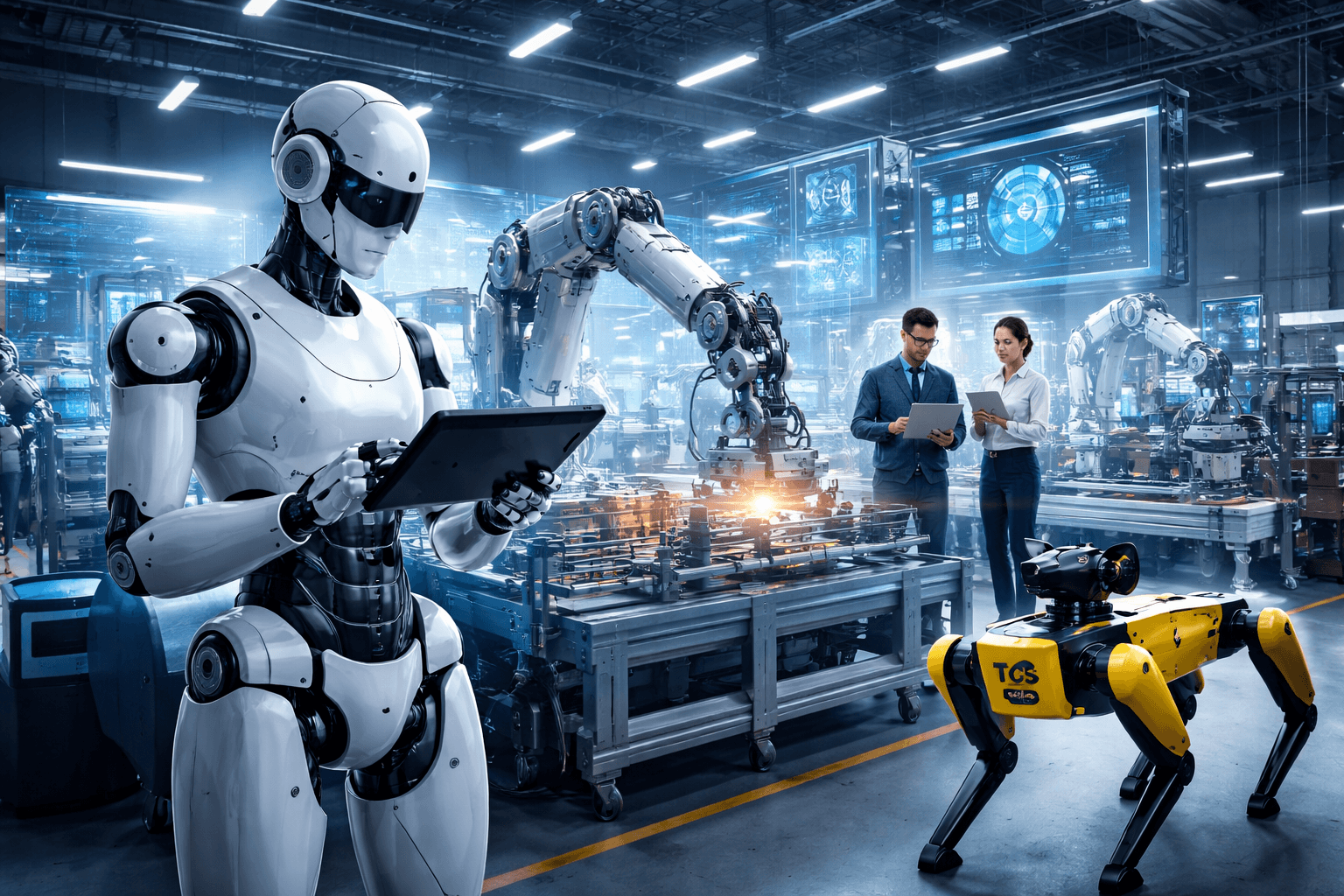
Artificial intelligence is rapidly moving beyond software. It is entering the physical world of factories, machines, and industrial systems.
Against this backdrop, Tata Consultancy Services has launched a new TCS Gemini Experience Center in Troy, Michigan. The facility focuses on developing Physical AI solutions for the manufacturing industry.
The launch marks an important step in TCS’s global AI strategy. More importantly, it highlights how enterprise AI is evolving from digital analytics to real world operational intelligence.
As industries look to scale AI adoption, this center positions TCS and its partners at the forefront of industrial transformation.
Understanding the New TCS Gemini Experience Center
The TCS Gemini Experience Center is located at the company’s innovation hub in Troy, Michigan. It is the seventh center globally and the second in the United States.
The initiative is built through a strategic collaboration between TCS and Google Cloud. The goal is clear. Accelerate the deployment of AI powered solutions across manufacturing environments.
The center integrates Google Cloud’s Gemini AI models with TCS’s deep manufacturing expertise. This combination allows enterprises to explore how artificial intelligence can operate inside physical industrial systems.
Manufacturers visiting the center can test, experiment, and scale AI driven applications before deploying them across their own facilities. This reduces implementation risk while accelerating innovation cycles.
By the end of 2026, TCS and Google Cloud aim to operate 13 Gemini Experience Centers globally, with six additional facilities planned within the year.
The Rise of Physical AI in Manufacturing
What Is Physical AI?
Physical AI refers to artificial intelligence systems that interact directly with the real world through robots, sensors, machines, and industrial equipment.
Instead of analyzing data alone, these systems observe, interpret, and act within physical environments.
The TCS Gemini Experience Center showcases this concept through the TCS Physical AI Blueprint, an end to end framework that combines:
- AI powered humanoid and quadruped robotics
- Advanced sensing technologies
- Edge intelligence for real time analysis
- Secure cloud orchestration
- Autonomous decision support systems
Together, these technologies enable factories to operate with greater intelligence, safety, and efficiency.
Key Industrial Use Cases Demonstrated at the Center
The Michigan facility provides practical demonstrations of how Physical AI can transform factory operations.
1. Autonomous Industrial Monitoring
AI driven robots can patrol manufacturing facilities and detect operational anomalies. This includes equipment faults, safety hazards, and environmental risks.
2. Safety and PPE Compliance
AI systems monitor whether workers follow personal protective equipment standards. This improves workplace safety while reducing compliance risks.
3. Intelligent Quality Inspection
Computer vision systems inspect production lines in real time. As a result, manufacturers can detect defects earlier and improve product consistency.
4. Environmental Anomaly Detection
Sensors and AI models continuously monitor factory conditions. They identify abnormal temperature, gas levels, or vibration patterns.
5. Predictive Equipment Maintenance
AI analyzes operational data to predict machine failures before they occur. This helps reduce downtime and extend equipment lifespan.
6. Production Progress Mapping
Manufacturers can track manufacturing progress across large industrial environments using AI powered analytics.
These applications move AI from the digital dashboard directly into factory operations.
Strategic Importance of the TCS Google Cloud Partnership
The new TCS Gemini Experience Center also highlights the growing strategic partnership between TCS and Google Cloud.
Google Cloud provides the Gemini AI models and cloud infrastructure, while TCS delivers industry expertise, integration capabilities, and enterprise transformation services.
This partnership enables the deployment of agentic AI systems, which can autonomously perform tasks, analyze operational environments, and assist decision making.
According to industry leaders involved in the initiative, the collaboration aims to help manufacturers build more autonomous, resilient, and data driven operations.
In practical terms, the center acts as a bridge between AI experimentation and production scale deployment.
Expanding the Global TCS Innovation Network
The Michigan facility is part of a broader innovation ecosystem developed by TCS.
The company currently operates Gemini Experience Centers in several major global locations, including:
- Bengaluru
- New York
- Chennai
- Riyadh
- Singapore
- São Paulo
These centers are integrated into the TCS Pace innovation network, which connects enterprises, startups, universities, and research institutions.
Through this ecosystem, companies can collaborate on emerging technologies, develop prototypes, and deploy enterprise ready AI solutions.
Why This Development Matters
The launch of the TCS Gemini Experience Center reflects a deeper shift in the enterprise technology landscape.
For years, AI adoption focused on software analytics and digital workflows. However, the next phase involves embedding intelligence directly into physical environments.
Manufacturing is one of the sectors where this transformation will be most significant.
Physical AI can enable:
- Autonomous factory monitoring
- Intelligent robotics collaboration
- Predictive industrial maintenance
- Continuous operational optimization
For global manufacturers facing labor shortages, operational complexity, and rising costs, these capabilities could dramatically improve productivity.
Furthermore, as AI becomes central to industrial competitiveness, companies that scale these technologies earlier will gain a significant advantage.
The Era of Autonomous Industry
The TCS Gemini Experience Center illustrates where industrial AI is heading.
Factories will increasingly rely on systems that can sense, analyze, and act in real time. These systems will operate alongside human workers rather than replace them.
The human in the loop approach ensures that AI enhances safety, productivity, and decision making while maintaining human oversight.
As Physical AI matures, industries will move closer to fully intelligent and adaptive manufacturing ecosystems.
The launch of the TCS Gemini Experience Center in Michigan represents more than another innovation lab.
It signals a strategic shift toward Physical AI driven industrial transformation. By combining robotics, sensors, edge intelligence, and cloud AI, the center demonstrates how factories can evolve into intelligent operational systems.
In the coming years, centers like this may define how enterprises transition from AI experimentation to autonomous industry at scale.
Topics
Covering startup news, AI, technology, and business at ThePrimely. Delivering accurate, in-depth reporting on the stories that shape the future.