
Pakistan Afghanistan Conflict Intensifies as Reports Surface of Taliban Leadership Losses
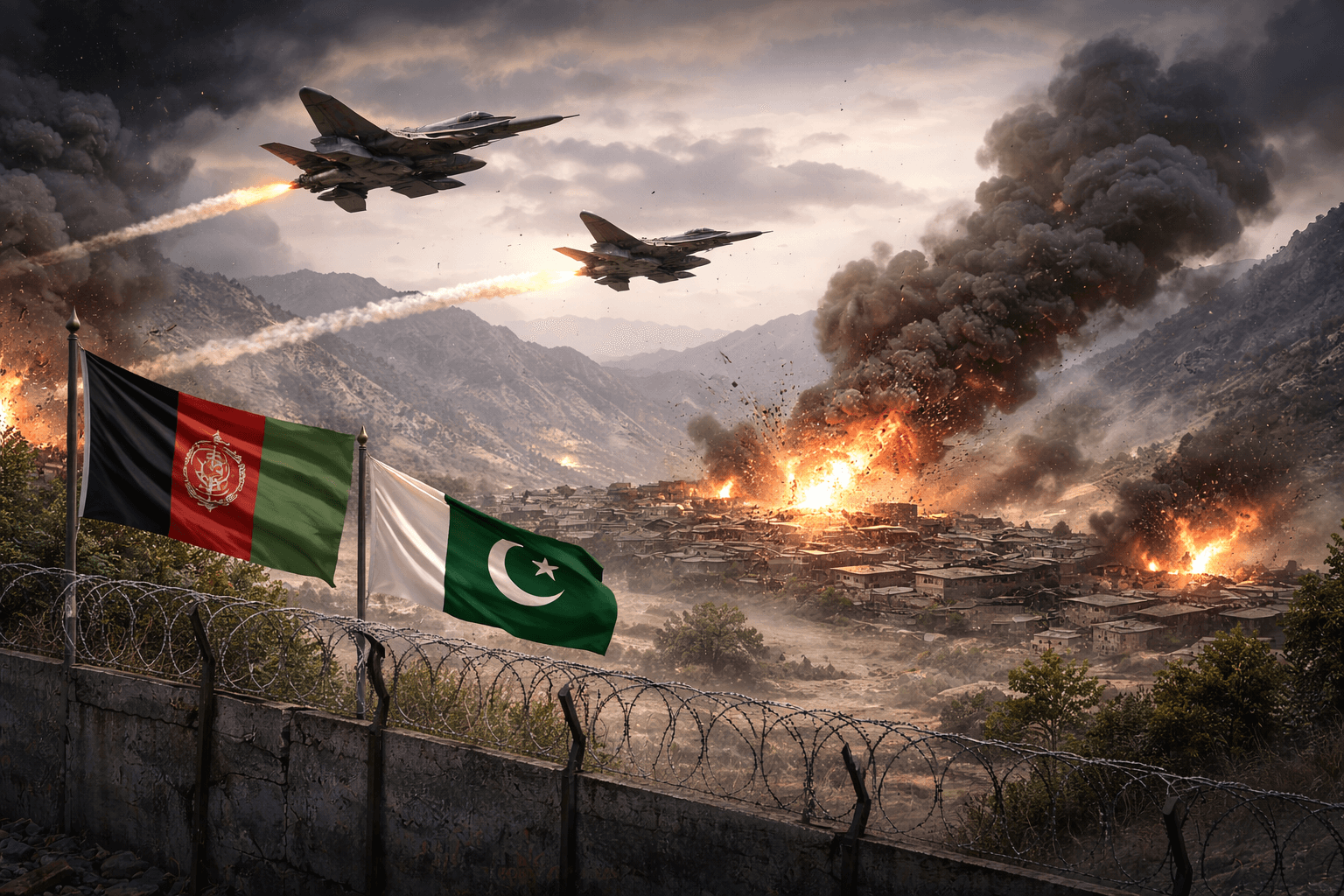
The Pakistan Afghanistan conflict has entered a volatile phase after Pakistan carried out airstrikes inside Afghan territory, prompting reports that senior Taliban leaders may have been killed. While Islamabad confirmed military operations, claims regarding the death of top Taliban figures remain unverified.
The situation has sharply escalated tensions along the Durand Line and drawn international attention.
Pakistan Launches Cross Border Air Operations
Pakistan confirmed that it conducted airstrikes targeting Taliban positions in provinces including Kabul, Kandahar and Paktia. The operation was described by Pakistani officials as Operation Ghazab lil Haq, framed as a response to security threats and cross border attacks.
According to Pakistani authorities, more than 130 Taliban fighters were killed and over 200 were injured. Officials also claimed that military compounds, weapons depots and armored vehicles were destroyed.
Islamabad stated that the operation aimed to neutralize militant threats that it believes operate from Afghan soil.
Claims Surrounding Taliban Leadership
Soon after the strikes, reports began circulating that Taliban Supreme Leader Hibatullah Akhundzada and other senior commanders including Mullah Neda Mohammad Nadeem were killed in the bombardment.
However, there has been no official confirmation from either Pakistan or the Taliban administration regarding these claims.
Security analysts caution that leadership death reports frequently emerge during intense military exchanges. Until verified through independent or official sources, such claims remain speculative.
At present, the status of Akhundzada remains unclear.
Kabul’s Response and Rising Tensions
The Taliban government in Afghanistan condemned the airstrikes and accused Pakistan of violating Afghan sovereignty. Afghan officials alleged civilian casualties and infrastructure damage, though precise figures remain disputed.
Pakistan, in contrast, maintained that the strikes were targeted and focused strictly on militant installations.
This exchange underscores long standing tensions between the two countries. The Durand Line, which marks their border, has historically been a flashpoint for disputes over security and territorial integrity.
The Strategic Backdrop: Why This Conflict Matters
The Pakistan Afghanistan conflict is not an isolated military incident. It reflects deeper structural issues.
Pakistan has repeatedly accused militant groups of launching attacks from Afghan territory. The Taliban government denies harboring such elements and frames Pakistan’s military actions as aggressive overreach.
The current escalation suggests that diplomatic mechanisms between Islamabad and Kabul are under strain.
Sustained military exchanges could destabilize border regions, disrupt trade routes and worsen humanitarian conditions in vulnerable communities.
Regional and Security Implications
If the confrontation continues, it could produce several consequences:
First, border security conditions may deteriorate further, leading to displacement and civilian risk.
Second, diplomatic relations between the two governments may suffer long term damage.
Third, regional powers could be drawn into mediation efforts to prevent broader instability in South Asia.
At this stage, both sides have adopted firm public positions, reducing immediate prospects for de escalation.
Separating Facts From Claims
Verified information confirms that Pakistan conducted air operations and reported significant militant casualties.
Unverified information includes claims that top Taliban leaders were killed.
Responsible analysis requires distinguishing between confirmed military activity and circulating speculation. Until official evidence emerges, leadership death reports remain unsubstantiated.
Topics
Covering startup news, AI, technology, and business at ThePrimely. Delivering accurate, in-depth reporting on the stories that shape the future.