
South Korea abortion case murder convictions spark debate
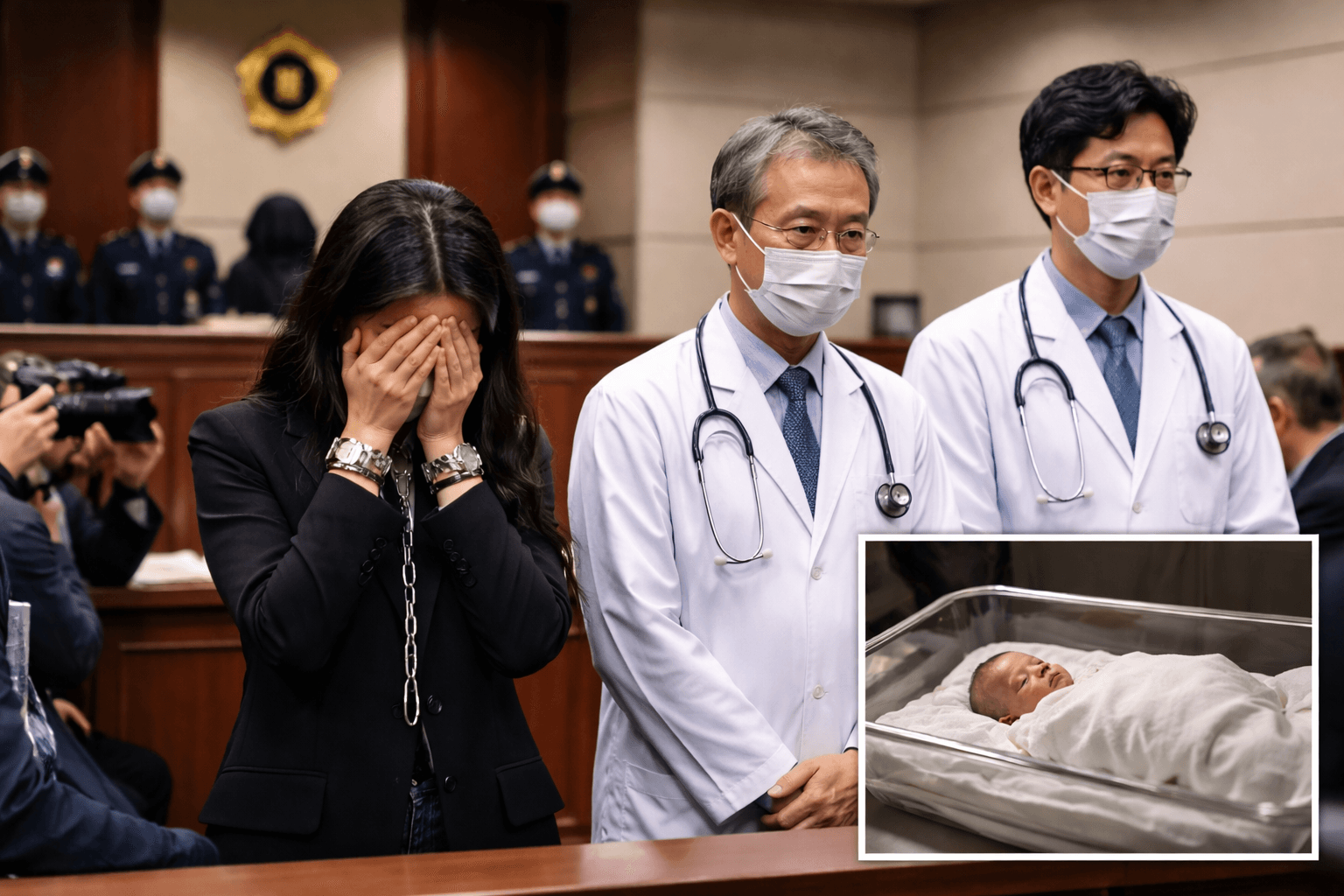
South Korea abortion case murder convictions expose legal grey area
The South Korea abortion case murder ruling has sparked widespread debate after a court convicted a woman, a surgeon, and a hospital director over the death of a baby delivered during a late-term abortion procedure.
The case has drawn national attention because it highlights the legal uncertainty surrounding abortion regulations in South Korea since the country’s Constitutional Court struck down a long-standing abortion ban in 2019.
Court convicts woman and hospital staff
A South Korean court found the woman, identified by her surname Kwon, guilty of murder after she sought to terminate her pregnancy at 36 weeks.
The procedure was carried out through a Caesarean section. Prosecutors said the baby was born alive before hospital staff placed it in a freezer, where it later died.
The surgeon who performed the operation and the hospital’s director were also convicted of murder. The surgeon received a four-year prison sentence, while the hospital director was sentenced to six years in prison.
Both men admitted during the trial that they had killed the newborn. Authorities took them into custody immediately after the verdict was delivered.
Meanwhile, Kwon received a three-year suspended prison sentence. The court also ordered her to complete 200 hours of community service.
Investigation began after YouTube video
The investigation began in 2024 after Kwon posted a YouTube video describing how she had ended her pregnancy at 36 weeks.
The video sparked public outrage and led South Korea’s health ministry to file a criminal complaint. Police subsequently launched an investigation into both the woman and the medical staff involved.
During the investigation, prosecutors said hospital staff falsified medical records to suggest that Kwon had experienced a stillbirth.
Allegations of a large illegal abortion network
Prosecutors also revealed that the hospital had allegedly received about 1.4 billion won for performing abortions on more than 500 patients.
According to investigators, many patients were referred to the hospital through brokers who arranged the procedures.
Authorities believe the hospital operated an organized system that connected pregnant women with late-stage abortion services.
Defence arguments and personal circumstances
Kwon’s lawyer argued that she did not know the baby would be killed after being removed from her womb.
During the trial, Kwon told the court that she only discovered she was pregnant seven months into the pregnancy.
She said she sought an abortion because she had no stable income. Additionally, she feared the baby might be born with health problems because she had drunk alcohol and smoked during the pregnancy.
However, the judge stated that medical staff had informed Kwon that the baby was healthy. She had also heard the baby’s heartbeat during ultrasound examinations.
The court concluded that she knew the baby would be born alive through Caesarean delivery.
Legal vacuum after abortion ban was removed
The South Korea abortion case murder verdict has also renewed attention on the country’s abortion laws.
In 2019, South Korea’s Constitutional Court ruled that the long-standing abortion ban was unconstitutional.
The court instructed lawmakers to revise the law by the end of 2020. It suggested allowing abortion up to 22 weeks of pregnancy.
However, parliament failed to pass new legislation before the deadline.
A government proposal introduced in 2020 suggested allowing abortion up to 14 weeks, or up to 24 weeks in special circumstances such as rape or health risks.
The proposal stalled in parliament due to political disagreements.
As a result, when the old ban expired in 2021, South Korea was left without a clear legal framework regulating abortion.
Courts forced to handle cases individually
Because there is no clear legislation defining limits for abortion, prosecutors have increasingly used murder charges in cases involving late-stage pregnancies.
Authorities argue that once a baby is delivered alive, any deliberate act leading to its death can be prosecuted as homicide.
The judge in Kwon’s case acknowledged that the crime was serious. However, the court also considered the lack of legal clarity and limited social support for women facing late-stage pregnancies.
The judge said the court was exercising leniency partly because the legal system had not provided clear guidance or support for women in such situations.
Debate over abortion policy intensifies
The case has intensified public debate in South Korea over the need for clear abortion legislation.
Legal experts say the current situation leaves doctors, patients, and prosecutors operating in a legal grey area.
Until parliament passes a comprehensive law regulating abortion, courts may continue to face complex cases involving late-term procedures and criminal liability.
Topics
Covering startup news, AI, technology, and business at ThePrimely. Delivering accurate, in-depth reporting on the stories that shape the future.