
Stock Markets Rebound in Early Trade After Three-Day Slump
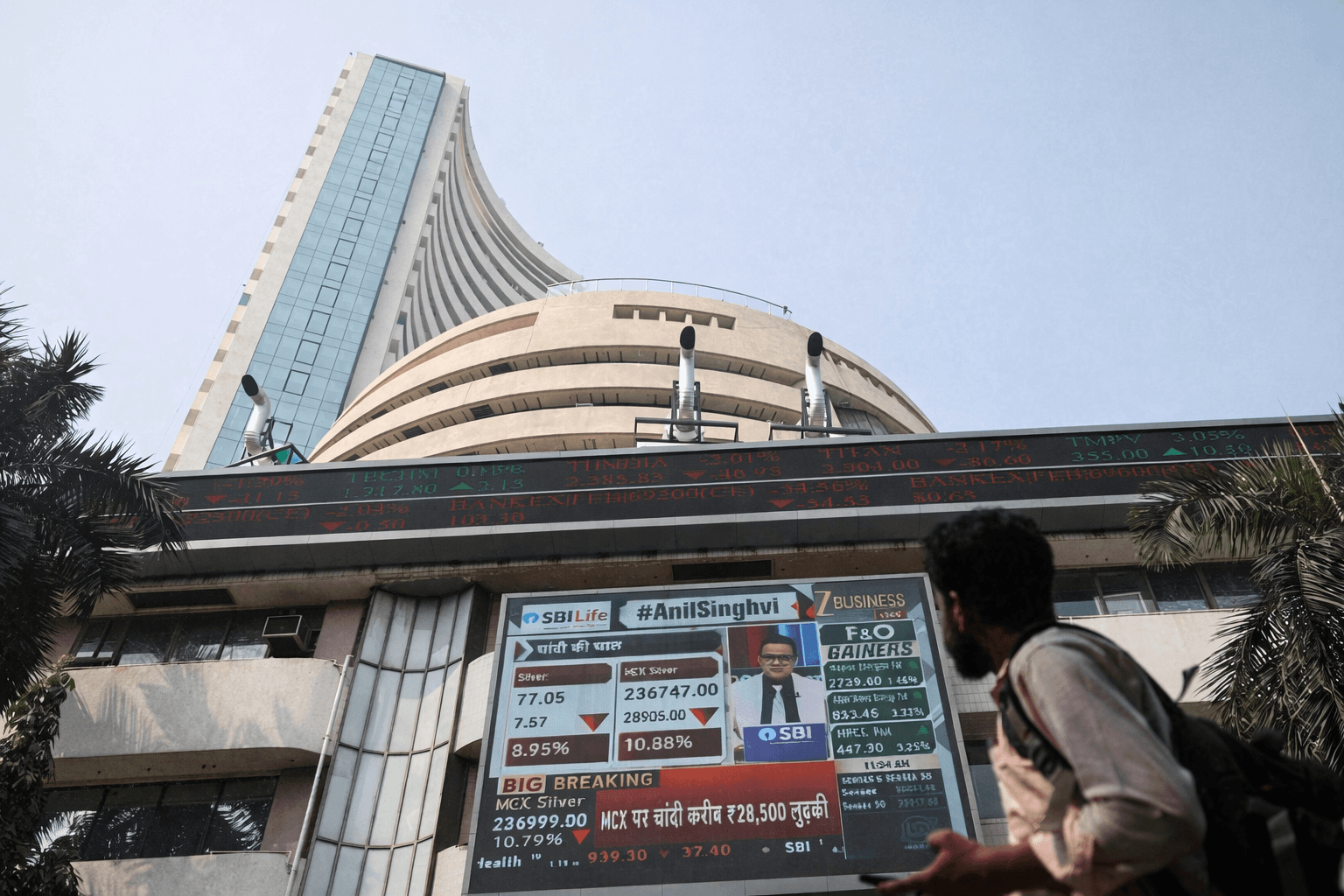
India’s benchmark equity indices showed signs of recovery on March 16 as stock markets rebound in early trade after three consecutive sessions of losses.
The BSE Sensex and NSE Nifty initially opened lower but later moved into positive territory as investors returned to blue-chip banking and financial stocks.
The rebound reflects value buying by investors after the recent market correction triggered by global uncertainties and geopolitical tensions.
Early Market Movement: Initial Dip Followed by Recovery
In early trading, the BSE Sensex slipped 179.31 points to 74,384.61, while the NSE Nifty fell 53.1 points to 23,098.
However, both indices quickly recovered as buying activity increased across several large-cap stocks. The Sensex later traded 342.02 points higher at 74,899.76, while the Nifty climbed 88.55 points to 23,240.95.
The recovery came after three straight days of losses that had weakened investor sentiment.
Blue-Chip Stocks Lead the Market Recovery
The rebound was driven primarily by strong buying in major blue-chip companies.
Key gainers among Sensex constituents included:
- UltraTech Cement
- Tata Steel
- InterGlobe Aviation
- State Bank of India
- HDFC Bank
- ITC
Banking stocks played a particularly important role in stabilizing the market, as investors took advantage of lower valuations following the recent sell-off.
Context: Recent Market Decline and Global Pressures
The market recovery followed a sharp decline in previous trading sessions.
The Sensex had fallen nearly 1,470 points, while the Nifty slipped below 23,200, marking one of the steepest weekly declines in recent months.
Several factors contributed to the earlier slump:
- Rising global geopolitical tensions
- Higher crude oil prices
- Continued selling by foreign institutional investors
- Weak global equity markets
These developments triggered broad-based selling across sectors.
Geopolitical Risks Continue to Influence Markets
Despite the rebound, market sentiment remains cautious.
Global geopolitical tensions and energy supply concerns have increased volatility in financial markets.
Recent developments in the Middle East have disrupted global energy supply chains and pushed oil prices higher, creating inflation concerns for major economies including India.
As India relies heavily on imported crude oil, rising energy costs could affect inflation, fiscal balances, and corporate profitability.
Sector Performance in Early Trade
While banking and select industrial stocks led the rebound, performance across other sectors remained mixed.
Financial services and consumer-oriented companies provided support to the benchmark indices.
However, mid-cap and small-cap stocks continued to face selling pressure, indicating that investors remain cautious about broader market risks.
Investor Strategy in a Volatile Market
Market analysts suggest that the rebound reflects short-term value buying rather than a complete reversal of the broader trend.
Investors are increasingly focusing on companies with strong fundamentals and stable earnings prospects.
Defensive sectors such as banking, consumer goods, and infrastructure are attracting renewed interest during periods of market volatility.
Topics
Covering startup news, AI, technology, and business at ThePrimely. Delivering accurate, in-depth reporting on the stories that shape the future.