
Sensex, Nifty Fall Over 1% as West Asia Conflict Drives Crude Oil Surge
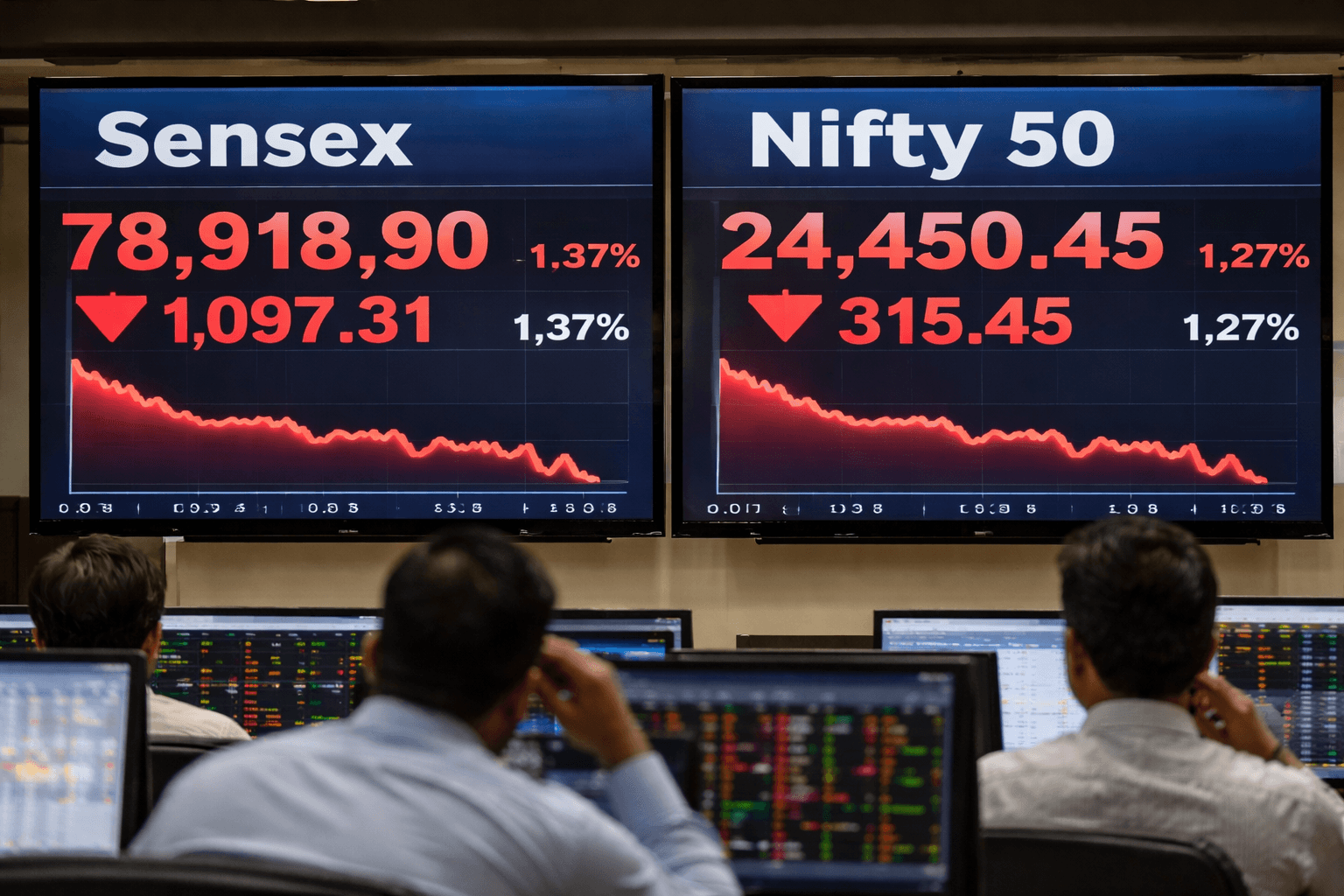
Indian benchmark stock indices Sensex and Nifty fell sharply after escalating tensions in West Asia triggered a surge in global crude oil prices and rattled investor sentiment.
The BSE Sensex declined by 1,097 points, or 1.37 percent, closing at 78,918.90, while the NSE Nifty dropped 315.45 points, or 1.27 percent, to settle at 24,450.45. The decline came after a brief recovery in the previous trading session as geopolitical risks intensified across the Middle East.
The market downturn reflects growing concerns that the ongoing conflict could disrupt global energy supply chains and increase inflationary pressures worldwide.
Sensex Nifty Fall West Asia Conflict: Key Market Movements
The decline in Indian markets was primarily triggered by rising crude oil prices and increased global uncertainty.
Major factors influencing the fall included:
- Escalating conflict in West Asia
- Rising global crude oil prices
- Weak cues from global markets
- Persistent foreign institutional investor (FII) selling
Energy-importing economies like India are particularly vulnerable to spikes in crude oil prices because higher import costs affect inflation, fiscal balances, and corporate profitability.
Investor sentiment weakened as geopolitical developments raised fears of prolonged instability in the region.
Global Oil Prices Surge Amid Conflict
Crude oil prices have surged as tensions disrupted supply routes in the Middle East.
The conflict has threatened shipping through the Strait of Hormuz, a critical maritime passage that handles roughly 20% of global oil trade.
Disruptions in the region have already pushed Brent crude prices sharply higher and triggered volatility across global energy markets.
Analysts warn that sustained disruptions could push oil prices toward $100 per barrel or higher, significantly increasing costs for energy-importing countries.
Investor Wealth Impact
The sustained market decline over several sessions has erased significant investor wealth.
In the past five trading sessions alone, nearly ₹19 lakh crore in market capitalisation has been wiped out from Indian equity markets as geopolitical tensions intensified.
The losses highlight the sensitivity of emerging markets to global geopolitical developments, particularly those affecting energy prices.
Stock markets typically react quickly to geopolitical risks because they introduce uncertainty into economic growth projections.
Sectoral Impact on Indian Markets
The sell-off affected several key sectors of the Indian economy.
Banking and Financial Stocks
Major banking stocks were among the biggest losers as investors reduced exposure to risk-sensitive sectors.
Energy and Oil Marketing Companies
Companies dependent on imported crude faced pressure due to rising input costs.
Infrastructure and Manufacturing
Higher energy prices increase production costs, which can reduce profit margins.
Technology and pharmaceutical stocks showed relatively better resilience compared with cyclical sectors.
Broader Economic Concerns
The decline in Indian markets reflects wider economic concerns linked to the West Asia conflict.
Global analysts warn that prolonged geopolitical instability could:
Push Energy Prices Higher
Higher oil prices increase fuel costs and inflation worldwide.
Slow Global Economic Growth
Rising energy costs reduce consumer spending and industrial output.
Increase Market Volatility
Investors typically shift toward safer assets such as gold and government bonds during geopolitical crises.
Such conditions often lead to short-term volatility in equity markets.
Topics
Covering startup news, AI, technology, and business at ThePrimely. Delivering accurate, in-depth reporting on the stories that shape the future.