
Qatar Helicopter Crash Kills Seven: Technical Fault Confirmed
A Tragic Incident with Immediate Questions
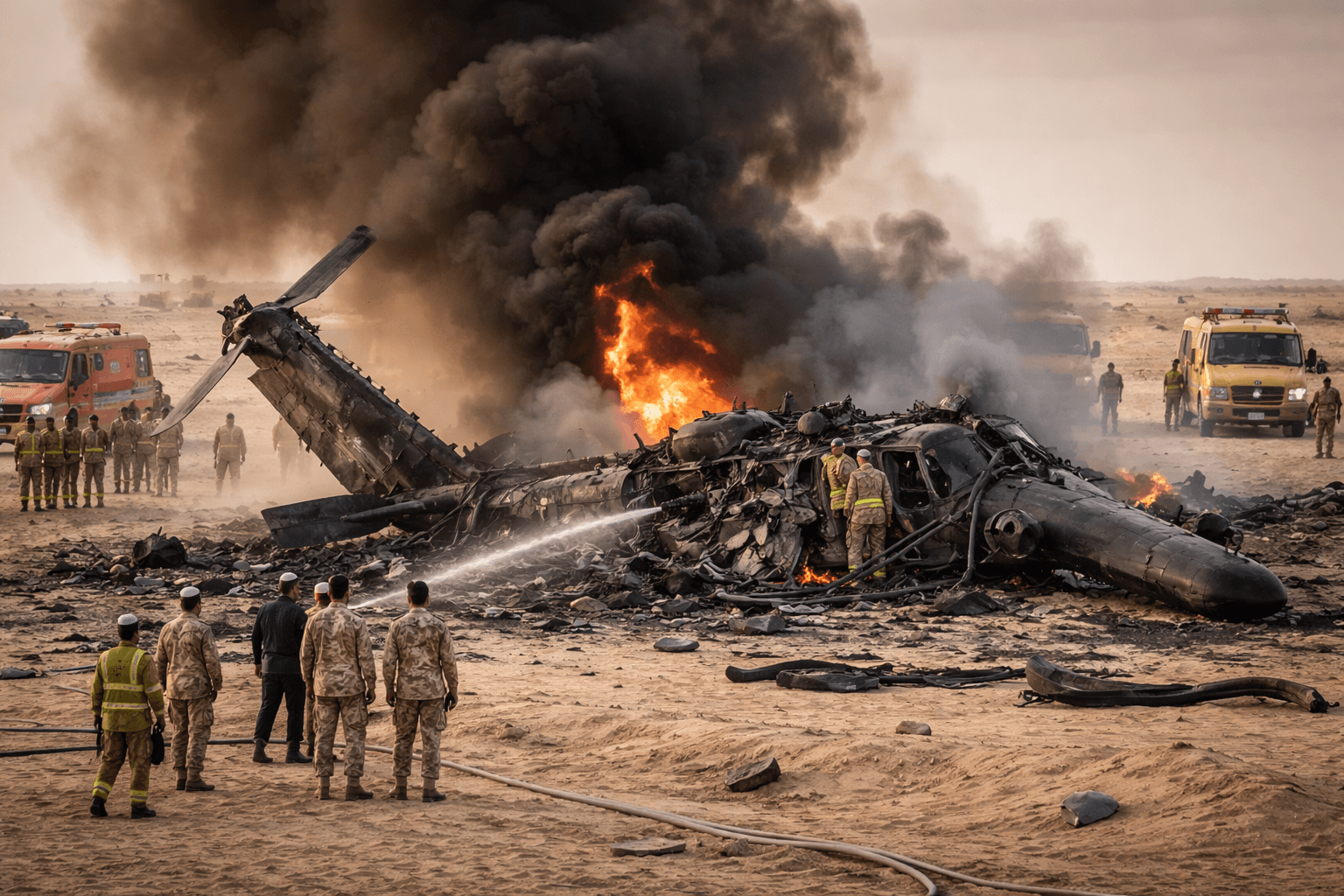
The Qatar helicopter crash that killed seven people has drawn global attention. Authorities confirmed that a technical malfunction caused the accident. The crash has raised urgent concerns about aviation safety in the region.
The helicopter went down during routine operations. Officials reported no survivors. Emergency teams responded quickly, but the impact proved fatal.
This incident now stands as one of the most serious aviation accidents in Qatar in recent years.
Confirmed Facts
Authorities in Qatar, along with Turkish officials, confirmed key details:
- Seven individuals lost their lives
- The helicopter suffered a technical malfunction mid flight
- The crash occurred during a standard operational mission
- No external attack or sabotage has been reported
Investigators ruled out foul play in early assessments. Instead, mechanical failure appears to be the primary cause.
However, officials stressed that the investigation is still ongoing. More technical data will be analyzed in the coming days.
Aviation Safety in Focus
Qatar has maintained a strong aviation safety record. Its regulatory systems align with global standards. However, helicopter operations carry unique risks.
Unlike commercial jets, helicopters operate in more complex conditions. They often fly at lower altitudes. They also face higher exposure to mechanical stress.
As a result, even minor technical faults can escalate quickly.
This crash highlights the importance of strict maintenance protocols. It also raises questions about inspection cycles and operational oversight.
Key Developments in the Investigation
Authorities have already taken several steps:
Initial Technical Review
Investigators are examining engine performance and system failures. Early signs point to a mechanical issue.
Black Box and Data Analysis
Flight data systems are being analyzed to reconstruct the final moments. This will clarify the sequence of failure.
Coordination with International Experts
Qatar is working with global aviation specialists. This ensures transparency and technical accuracy.
Safety Audit Measures
Regulators may initiate broader inspections of similar aircraft fleets. This is a standard precaution after such incidents.
A Wake Up Call
The Qatar helicopter crash could have wider implications.
Increased Regulatory Scrutiny
Authorities may tighten safety checks for helicopter operations. This could impact operators across the Middle East.
Operational Cost Pressure
Enhanced inspections and maintenance protocols may raise costs. Operators will need to invest more in safety compliance.
Insurance and Risk Assessment
Insurance firms may reassess aviation risk models. Premiums for certain operations could rise.
Public Confidence
Although helicopter travel is limited, such incidents affect overall aviation perception. Restoring trust becomes critical.
Strategic Implications for Aviation Leaders
This incident highlights several strategic priorities:
- Strengthening predictive maintenance systems
- Investing in real time monitoring technologies
- Improving pilot training for emergency scenarios
- Enhancing cross border safety coordination
Leaders must act quickly. Preventive strategy is more effective than reactive response.
What Comes Next
The investigation will likely take several weeks. Final reports will provide detailed technical findings.
If systemic issues are identified, regulators may introduce new compliance standards. These could reshape helicopter operations in the region.
Moreover, aviation companies may accelerate adoption of advanced diagnostics. Technology driven safety systems will become a priority.
In the long term, this tragedy may lead to stronger safeguards.
A Critical Moment for Aviation Safety
The Qatar helicopter crash is a stark reminder of aviation risks. Even advanced systems can fail without warning.
However, such incidents also drive improvement. Strong investigations lead to better regulations.
The focus now must remain on accountability and prevention. Safety is not static. It evolves with every lesson learned.
Topics
Covering startup news, AI, technology, and business at ThePrimely. Delivering accurate, in-depth reporting on the stories that shape the future.