
Only Six NATO Countries Back Trump’s Iran War as Alliance Divides
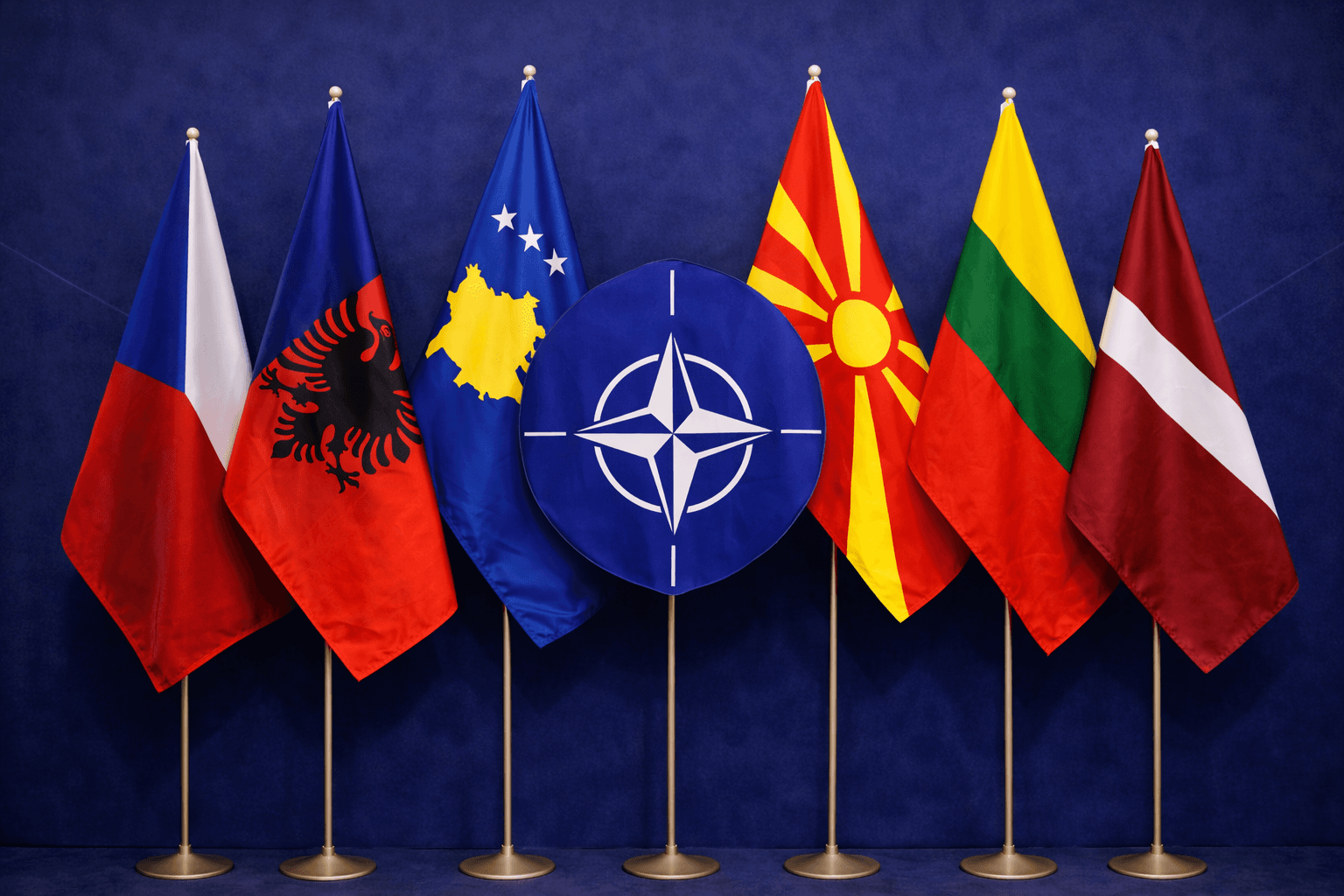
NATO Trump Iran war support has become a defining issue within the alliance, as only a small group of member states publicly back US-led strikes on Iran while most allies refuse involvement.
The divide highlights deep tensions within NATO at a time of escalating conflict in the Middle East.
A Small Group of Supporters
Out of NATO’s 32 members, only six countries have clearly backed the US-Israel military campaign against Iran.
They are:
- Czech Republic
- Albania
- Kosovo
- North Macedonia
- Lithuania
- Latvia
These countries have issued statements supporting the strikes, often citing concerns about Iran’s nuclear programme and regional influence.
Czech Prime Minister Andrej Babiš described Iran’s actions as a threat to global stability, while Albania’s Prime Minister Edi Rama expressed strong support for US leadership.
Leaders in the Baltic states have also framed the strikes as a response to long-standing security concerns.
Most NATO Members Hold Back
Despite US pressure, the majority of NATO members have chosen not to participate.
President Donald Trump acknowledged that “most” allies are staying out of the conflict.
Several countries, including Italy and Spain, have openly criticised the strikes.
Others, such as Denmark, Finland and Luxembourg, have taken a more cautious stance.
They have avoided direct support while expressing concern about Iran’s actions and calling for diplomatic solutions.
NATO’s Role Under Question
NATO Secretary General Mark Rutte has voiced support for limiting Iran’s military capabilities.
However, he made it clear that the alliance itself will not take part in the war.
“NATO is not being drawn into this,” he said, stressing that individual countries can make their own decisions.
This position reflects NATO’s identity as a defensive alliance rather than an interventionist force.
German Chancellor Friedrich Merz reinforced this view, saying NATO “has no place” in the conflict.
Tensions Over the Strait of Hormuz
The divide has become more visible over the Strait of Hormuz, a critical route for global oil shipments.
Trump has urged allies to help secure the passage, warning of consequences if they fail to act.
He has also suggested the US may withdraw protection from the route once the conflict ends, pushing other countries to take responsibility.
However, many allies have rejected the idea of sending naval forces.
The United Kingdom has said it will not be drawn into a wider war.
Others have argued that involvement could escalate tensions further.
Mixed Signals from Europe
Some countries have adopted a middle-ground approach.
Denmark and Finland have indicated they remain open to limited cooperation, particularly in securing shipping routes.
However, they emphasise the need for de-escalation.
Luxembourg has gone further, criticising US pressure as “blackmail” while calling for diplomatic efforts.
At the same time, several NATO countries continue to support US operations indirectly.
Countries including the UK, France and Italy are allowing the use of their military bases.
This reflects a complex balance between alliance commitments and political caution.
A Fragmented Alliance
The current situation reveals a more fragmented NATO than in previous conflicts.
Unlike earlier interventions where the alliance acted more collectively, this crisis shows diverging national priorities.
Some countries view Iran as a direct security threat.
Others worry about the risks of escalation and the legal basis of military action.
Turkey, for example, has criticised the strikes as potentially violating international law.
What This Means Going Forward
The split within NATO could have long-term implications.
It raises questions about the alliance’s unity and its ability to respond to global crises.
At the same time, it reflects a changing geopolitical landscape.
Countries are increasingly making independent decisions rather than following a unified bloc approach.
A Test for Western Unity
As the conflict with Iran continues, NATO faces a difficult test.
Balancing support for allies with concerns about escalation will remain a key challenge.
For now, the alliance stands divided.
Only a handful of countries have offered clear backing, while the majority remain cautious.
This divide may shape not only the outcome of the current conflict, but also the future of NATO itself.
Topics
Covering startup news, AI, technology, and business at ThePrimely. Delivering accurate, in-depth reporting on the stories that shape the future.