
IT Stocks Under Pressure: How AI Fears Sparked a Sharp Market Selloff
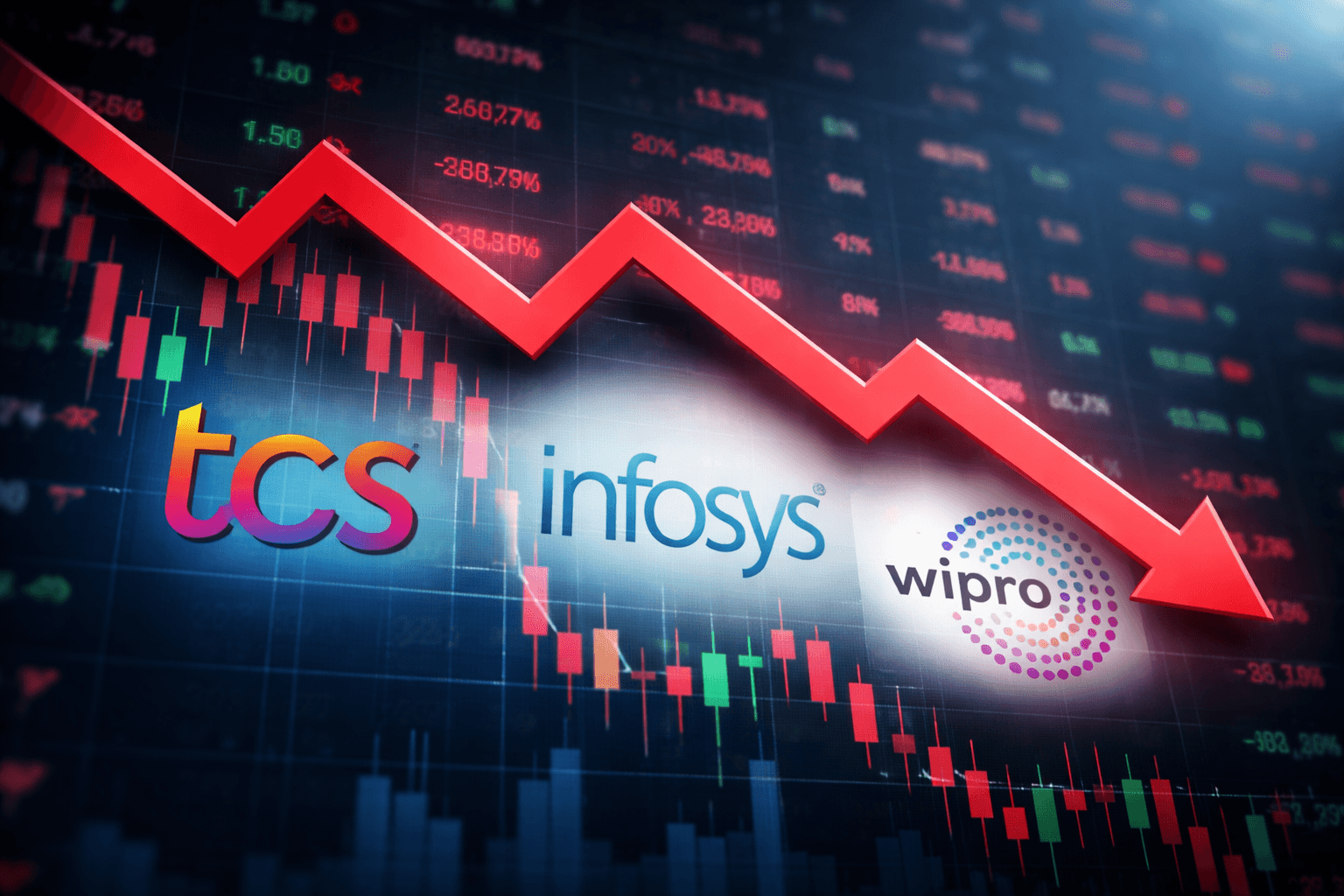
The Indian IT sector faced sharp selling pressure as AI fears drag Nifty IT lower by more than 4 percent in a single session.
Shares of TCS, Infosys, and Wipro led the decline. The selloff erased significant market value and weighed heavily on benchmark indices.
The trigger was not earnings. It was anxiety. Investors are reassessing how artificial intelligence could reshape the traditional IT services model.
This shift in sentiment is now visible on the charts.
What Happened in the Market
The Nifty IT index dropped over 4 percent during the session, making it one of the worst performing sectoral indices of the day.
Heavyweights such as:
witnessed notable declines.
The fall followed global cues and rising concerns that rapid AI adoption could disrupt revenue streams for traditional outsourcing and IT services companies.
Market experts noted that investors are questioning whether automation and generative AI could reduce the need for large scale manpower driven contracts, which have historically powered Indian IT growth.
There was no immediate company specific negative announcement. The reaction was largely sentiment driven.
Why AI Is Creating Pressure on IT Stocks
Artificial intelligence is both an opportunity and a threat for IT services firms.
On one side, AI can improve productivity, reduce costs, and open new revenue streams. On the other, it may compress billing rates and reduce dependency on large employee bases.
The concern centers on three key areas:
1. Revenue Model Disruption
Traditional IT companies rely heavily on time and material contracts. AI tools can automate tasks that earlier required teams of engineers.
If clients demand lower costs due to automation, margins could face pressure.
2. Pricing Power Risk
Clients are increasingly exploring AI led transformation in house or through specialized global players. This could weaken pricing leverage for legacy service providers.
3. Demand Uncertainty
Enterprises are cautious about discretionary spending. If AI reduces project sizes or timelines, order books may slow.
These fears, even if not immediate, are shaping investor perception.
Expert View: Buy the Dip or Stay Cautious?
Market experts offered a measured perspective.
Some analysts suggest that the correction may offer selective buying opportunities. They argue that large IT firms are investing aggressively in AI capabilities and partnerships.
However, others advise caution. They highlight that the sector may face near term volatility as investors reassess growth visibility in a changing technology landscape.
The key point is this: AI disruption will not happen overnight. But the transition phase may create earnings uncertainty.
That uncertainty is what the market is pricing in.
Broader Industry Impact
The Indian IT sector contributes significantly to exports and market capitalization. A sharp decline in frontline IT stocks impacts overall market sentiment.
Beyond stock prices, there are deeper implications:
- Talent strategy may evolve toward AI integration
- Billing structures may shift toward outcome based pricing
- Companies may accelerate automation internally
Firms that reposition early could defend margins better.
Those that delay adaptation may struggle.
Strategic Implications for Investors
Investors should evaluate IT stocks through three filters:
Balance Sheet Strength
Companies with strong cash reserves can invest in AI capabilities without stressing margins.
Client Diversification
Firms with diversified global exposure may manage sectoral slowdowns better.
AI Readiness
The ability to integrate AI into service offerings will define competitive advantage.
Short term volatility may continue. But long term structural demand for digital transformation remains intact.
The question is not whether AI will change the IT sector. It is how quickly companies can adapt.
Future Outlook for Nifty IT
The near term outlook remains cautious.
Global macro uncertainty, combined with AI led disruption fears, may keep the Nifty IT index volatile.
However, history shows that Indian IT firms have navigated multiple technology shifts. From Y2K to cloud computing, adaptation has been a strength.
If companies successfully embed AI into scalable service models, the current correction could prove temporary.
Investors should watch upcoming management commentary and deal wins for clarity.
AI Fears Drag Nifty IT, But Transition Is Inevitable
AI fears drag Nifty IT sharply lower, reflecting investor anxiety about structural disruption.
yet disruption also creates opportunity.
The Indian IT sector stands at an inflection point. Companies that lead the AI transformation may emerge stronger. Those that lag could face margin pressure.
For investors, discipline and selective positioning will matter more than broad sector bets.
Volatility may persist. Strategic clarity will define winners.
Frequently Asked Questions
Why did the Nifty IT index fall over 4 percent?
The decline followed investor concerns that rapid AI adoption could disrupt traditional IT services revenue models and compress margins.
Which stocks were most affected?
TCS, Infosys, and Wipro were among the major stocks that saw significant declines during the session.
Is AI a threat to Indian IT companies?
AI presents both risks and opportunities. It may reduce reliance on manpower driven contracts but can also open new high value service lines.
Should investors buy the dip in IT stocks?
Some experts see selective opportunities, while others recommend caution due to near term uncertainty. Investors should assess company specific strengths before making decisions.
What should investors watch going forward?
Monitor management commentary on AI strategy, deal pipelines, client demand trends, and margin guidance for clearer signals.
Topics
Covering startup news, AI, technology, and business at ThePrimely. Delivering accurate, in-depth reporting on the stories that shape the future.