
300 Jobs Gone in One Move: Why the Washington Post Layoffs Are a Wake Up Call for Media Professionals
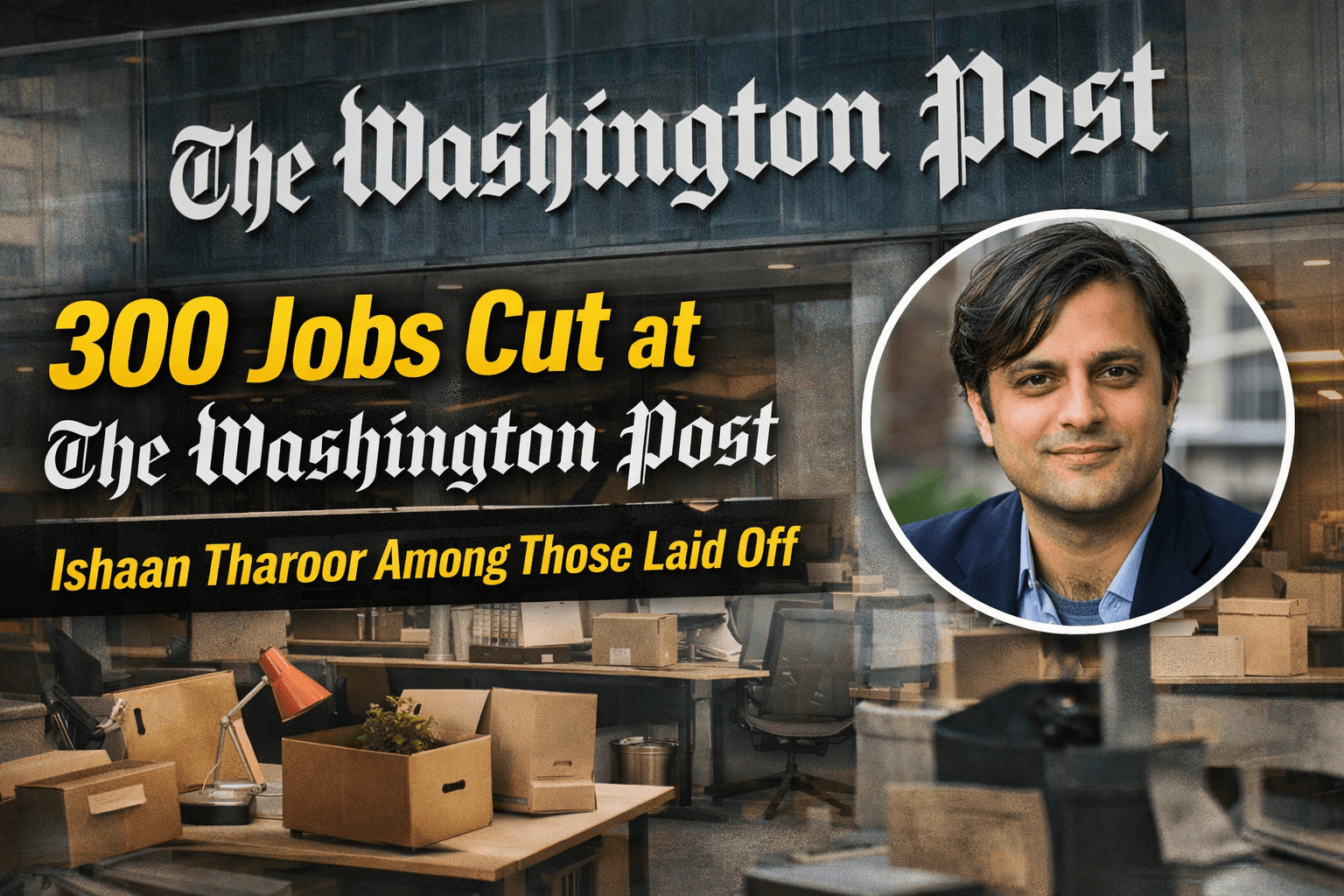
The Washington Post, one of the most respected newspapers in the world, has recently carried out a large round of layoffs affecting more than 300 employees across its editorial teams. Among those impacted was Ishaan Tharoor, a journalist and the son of Indian politician and writer Shashi Tharoor, who had spent over a decade with the publication.
This development shocked many in the media world and sparked conversations about the changing landscape of journalism and the broader challenges facing traditional newsrooms today.
Washington Post Cuts More Than 300 Jobs
According to reports, Washington Post leadership made the difficult decision to reduce its editorial workforce as part of a larger restructuring plan. The layoffs spanned multiple departments, including reporting, editing, and production.
The newspaper’s leadership has been under pressure to adapt to a shifting media environment where digital platforms, declining print revenue, and rising content costs have forced news organizations to rethink their business models.
The layoffs totalled over 300 staff members, impacting both seasoned journalists and newsroom support roles alike. These moves reflect broader trends in the news industry where even major outlets must respond to financial and technological change.
Ishaan Tharoor Among Those Laid Off
One of the names that drew widespread attention was Ishaan Tharoor, a Washington Post journalist and the son of Indian parliamentarian Shashi Tharoor. Ishaan had been associated with the newspaper for over 12 years, building a reputation as a thoughtful writer on international affairs and cultural issues.
In a personal note shared publicly, Ishaan described his layoff as heartbreaking, acknowledging the difficult moments but expressing gratitude for his time at the paper. His father, Shashi Tharoor, also shared support and pride in his son’s work, underscoring the personal toll such corporate decisions can take on families and careers.
This news resonated strongly especially among readers in India and internationally who followed both Tharoors’ work.
Why the Washington Post Made These Cuts
The Washington Post, like many legacy media organizations, has faced persistent financial pressure. Advertising revenues that once fuelled newsroom expansion have declined as audiences shift to digital platforms and social networks.
To remain competitive and financially viable, the newspaper has pursued cost restructuring that includes streamlining staff and investing in emerging digital products.
Industry analysts note that while layoffs are never a positive sign, they are part of a larger trend where newsrooms are smaller, more focused, and expected to do more with less in the age of online content.
What These Layoffs Mean for Journalism
Job cuts on a scale like this raise larger questions about the future of journalism. Some of the broader implications include:
- Pressure on News Quality
Reductions in staff can strain remaining journalists, increasing workloads and squeezing time for deep investigative reporting. - Shift to Digital and AI Tools
Newsrooms are investing in digital publishing tools and AI-based content systems, sometimes replacing roles previously handled by humans. This creates new revenue models but also fuels uncertainty about job security. - Talent Redistribution
Experienced journalists who are laid off often move into freelance work, consultancy, or digital media startups, reshaping how expertise is distributed in the industry.
The Washington Post layoffs shine a spotlight on how even globally respected newspapers must evolve in a competitive, digital first marketplace.
Reactions From the Industry
The news of layoffs was met with a mix of surprise and concern across the media industry. Many journalists and newsroom professionals voiced solidarity with their colleagues who lost their jobs. Some saw this as part of a larger shift in how audiences consume news — from traditional newspapers to mobile and social media platforms.
Among the voices that gained attention was that of Ishaan Tharoor, whose honest acknowledgement of the personal impact of his layoff struck a chord with many young journalists navigating similar changes.
Industry leaders continue to debate how news organizations can balance financial sustainability with quality journalism and employee well being.
What Comes Next for Affected Staff
For many journalists and editorial teams affected by the layoffs, the next chapter will involve career reevaluation and new opportunities. Some may return to freelance journalism, start independent media ventures, or transition to academia and commentary.
Others may pursue roles in digital media companies that value content creation but operate on different business models than traditional newsrooms.
The changing landscape of media means flexibility and adaptability are increasingly essential for journalists at all stages of their careers
Topics
Covering startup news, AI, technology, and business at ThePrimely. Delivering accurate, in-depth reporting on the stories that shape the future.