
India Raises LPG Supply to 50% as Crisis Eases
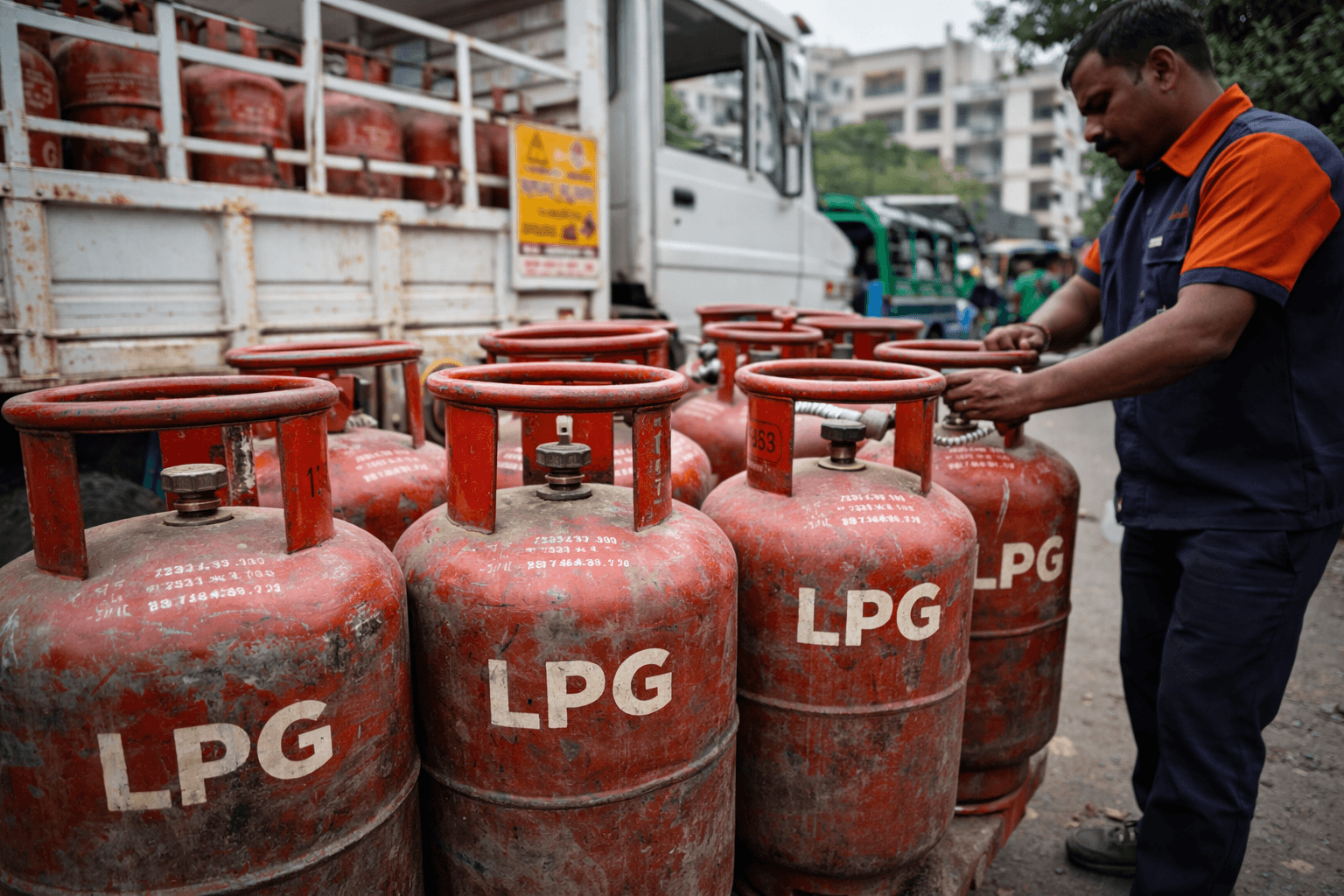
India has increased commercial LPG supply to half of pre-crisis levels, offering cautious relief to restaurants, hotels and food businesses that have struggled through weeks of fuel shortages triggered by geopolitical tensions in the Middle East.
The government approved an additional 20% allocation of commercial LPG to states and Union Territories, raising total availability to 50% of normal supply levels.
The move comes after global energy supply chains were disrupted by conflict in West Asia, particularly around the Strait of Hormuz, one of the world’s most critical oil and gas shipping routes.
Authorities had earlier reduced LPG supply to commercial users in order to prioritise household cooking gas needs.
Now, as domestic production improves and panic buying slows, supply conditions appear to be gradually stabilising.
Food and Hospitality Sector Gets Priority
The latest increase in allocation focuses heavily on sectors that rely heavily on cooking gas, especially restaurants, hotels, industrial canteens and food processing units.
Community kitchens, subsidised canteens and small food vendors are also among the beneficiaries of the revised distribution plan.
The hospitality industry has faced rising operational costs in recent weeks as LPG shortages forced many businesses to switch to alternative fuels such as firewood, diesel burners or electric appliances.
In some cities, restaurants reported cost increases of up to 25–30%, raising concerns about higher food prices for consumers.
By increasing LPG availability, policymakers hope to ease pressure on small businesses and prevent broader inflation in the food sector.
Crisis Linked to Global Energy Disruptions
India depends significantly on imported LPG to meet domestic demand, with a large share of shipments passing through the Strait of Hormuz.
The ongoing conflict in the region has affected maritime traffic and increased insurance costs for vessels, slowing deliveries and tightening global supply.
In response, authorities initially limited commercial LPG availability to ensure uninterrupted supply for households, hospitals and essential services.
Officials emphasised that domestic consumers remain the top priority, with deliveries continuing at normal levels despite global uncertainty.
The government has also increased domestic LPG production and conducted inspections to prevent hoarding and black marketing of cylinders.
Push Towards Alternative Fuel Sources
Alongside increasing supply, policymakers are encouraging businesses to adopt alternative fuel systems such as piped natural gas (PNG).
The expansion of city gas infrastructure is seen as a long-term solution to reduce dependence on LPG cylinders, especially for commercial users.
Authorities have urged states to accelerate PNG rollout and simplify approvals for new connections.
This shift could improve resilience in future supply disruptions linked to global geopolitical tensions.
Signs of Gradual Improvement
Officials say panic booking has declined in recent days as supply conditions show signs of recovery.
In several states, delivery backlogs are easing and waiting periods for refills are slowly returning to normal.
Domestic refineries continue to operate at high capacity, ensuring adequate availability of petrol, diesel and other fuels.
Despite improvement, authorities caution that global uncertainty still poses risks to energy supply chains.
A Reminder of India’s Energy Vulnerability
The LPG disruption highlights India’s exposure to global supply shocks, particularly those linked to geopolitical developments in major energy-producing regions.
Even short-term disruptions in the Strait of Hormuz can affect cooking gas availability, transport costs and food prices.
For millions of households and small businesses, LPG remains an essential fuel for daily operations.
The government’s decision to raise allocation to 50% reflects efforts to balance domestic demand with commercial needs during a period of global uncertainty.
Outlook: Recovery Depends on Global Stability
Energy markets remain sensitive to developments in the Middle East conflict.
Further escalation could again disrupt shipping routes and create supply volatility.
For now, increasing LPG allocation signals improving conditions, though authorities continue to monitor the situation closely.
The gradual restoration of supply offers relief to businesses, but the crisis has also reinforced the need for diversified energy sources and stronger supply resilience.
As global energy dynamics evolve, policymakers are expected to continue balancing affordability, availability and long-term energy security.
Topics
Covering startup news, AI, technology, and business at ThePrimely. Delivering accurate, in-depth reporting on the stories that shape the future.