
Relief for India: LPG Tanker Nanda Devi Reaches Gujarat After Risky Journey
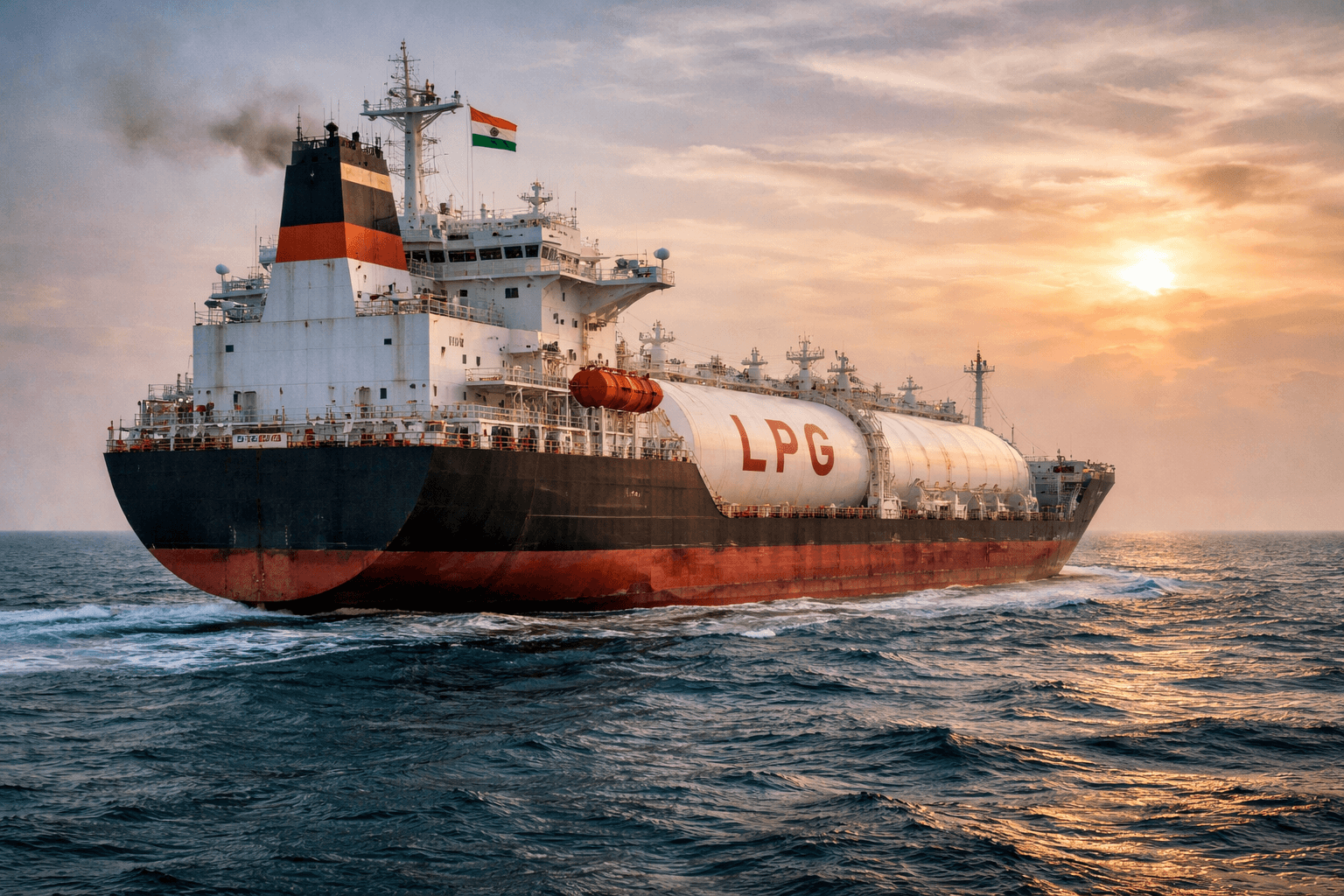
India has received a second major liquefied petroleum gas (LPG) shipment after the tanker Nanda Devi arrived at Vadinar port in Gujarat on March 17, offering relief amid ongoing supply disruptions linked to the West Asia conflict.
The vessel carried around 46,500 metric tonnes of LPG and successfully navigated the Strait of Hormuz, one of the world’s most critical and currently volatile energy routes.
Its arrival follows closely behind another LPG tanker, Shivalik, which reached India a day earlier, signalling that energy shipments are slowly resuming despite the security risks in the region.
A Risky Journey Through a Global Chokepoint
The journey of the Nanda Devi highlights the challenges facing global energy trade.
The Strait of Hormuz, located between Iran and Oman, normally carries a significant share of global oil and gas shipments. However, the ongoing conflict has disrupted maritime traffic and raised fears of a prolonged energy crisis.
In recent weeks, most commercial vessels avoided the route due to:
- Missile and drone threats
- Rising insurance costs
- Warnings from Iran to shipping operators
Despite these risks, the Nanda Devi managed to cross the strait, likely under close monitoring and security arrangements.
Earlier reports indicated that India had engaged diplomatically with Iran to ensure safe passage for its energy shipments.
Boost for India’s LPG Supply
The arrival of the tanker comes at a crucial time for India.
The country depends on imports to meet around 60% of its LPG demand, with a large share coming from the Middle East.
Disruptions in the Strait of Hormuz had effectively stalled several shipments, leading to:
- Supply pressure in domestic markets
- Restrictions on commercial LPG use
- Government push for alternative fuels like kerosene and coal
Officials say the arrival of Nanda Devi could help ease some of this pressure, especially if more vessels follow in the coming days.
Part of a Larger Energy Lifeline
The Nanda Devi is one of two Indian-flagged LPG carriers that were allowed to pass through the Strait during heightened tensions.
Both vessels were carrying cargo from Ras Laffan in Qatar, one of the world’s largest LNG and LPG export hubs.
Together, the two tankers transported over 90,000 tonnes of LPG, forming a critical lifeline for India’s energy needs during the crisis.
The shipments were reportedly supported by close coordination between Indian authorities, shipping agencies and security forces.
Shipping Still Faces Risks
Despite the successful arrival, risks to maritime traffic in the region remain high.
Recent attacks on vessels and warnings from Iran continue to deter shipping companies from using the route freely.
Dozens of ships, including several linked to India, remain stranded or delayed in the Gulf region.
Analysts say the situation remains fragile and could worsen if the conflict escalates further.
Hope for More Shipments
The arrival of the Nanda Devi has raised cautious optimism in India’s energy sector.
Officials and industry players hope that more oil and LPG shipments currently stuck in the Gulf may soon begin moving again.
However, much depends on:
- Diplomatic negotiations
- Security conditions in the Strait of Hormuz
- Coordination among global shipping and energy players
For now, the successful voyage of the Nanda Devi offers a rare positive signal in an otherwise tense global energy environment.
Topics
Covering startup news, AI, technology, and business at ThePrimely. Delivering accurate, in-depth reporting on the stories that shape the future.