
India LPG Imports Hit, Govt Pushes Kerosene and Coal
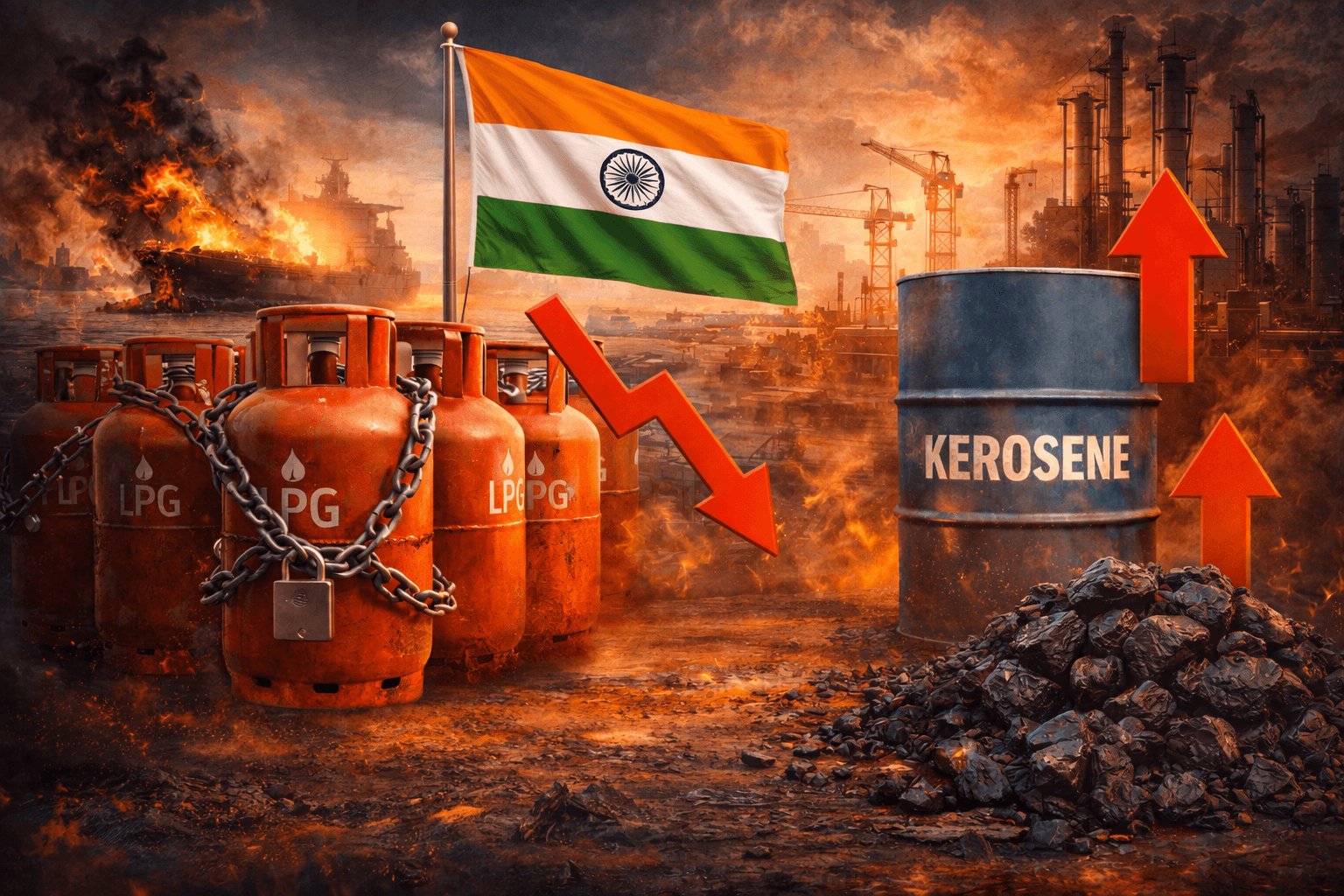
India has begun promoting alternative fuels such as kerosene and coal after disruptions in LPG imports triggered concerns about cooking gas supply.
Officials say the move will ease pressure on liquefied petroleum gas as the conflict in West Asia disrupts shipping through the Strait of Hormuz.
India depends on imports to meet around 60% of its LPG demand. Nearly 90% of those imports normally pass through the Gulf shipping route.
The disruption means about 55% of India’s LPG consumption supply has been affected.
Government Urges Consumers Not to Panic
Authorities say LPG bookings have surged sharply in recent days.
Officials blame the sudden increase on misinformation and panic among consumers.
The government has asked households to avoid unnecessary bookings and follow the normal delivery cycle.
“Alternate fuel options are being activated to ease pressure on LPG and gas channels,” Petroleum Minister Hardeep Singh Puri told Parliament.
Officials say the government’s priority remains protecting cooking gas supply for households.
India currently has more than 33 crore domestic LPG consumers.
Commercial Users Asked to Shift to Other Fuels
To reduce demand, the government has asked commercial establishments to temporarily switch to alternative fuels.
Restaurants, hotels and other hospitality businesses can now use:
- Kerosene
- Coal
- Fuel oil
- Biomass
- Refuse-derived fuel pellets
The Environment Ministry has allowed these fuels for one month during the crisis period.
Officials say the decision will allow commercial users to reduce LPG consumption and free up supplies for households.
Government Releases More Kerosene and Coal
Authorities have also increased supplies of alternative fuels.
The government released an additional 48,000 kilolitres of kerosene to states on top of the usual quarterly allocation.
State governments will distribute the fuel through public distribution systems and retail outlets.
At the same time, the coal ministry has asked Coal India and Singareni Collieries to increase coal allocations for small and medium consumers.
Limits Placed on Commercial LPG Supply
The government has also introduced temporary controls on commercial LPG distribution.
Oil companies will allocate 20% of the average monthly commercial LPG requirement to businesses in coordination with state governments.
Officials say the measure will prevent hoarding and black marketing.
Commercial LPG normally operates in a fully deregulated market. Businesses can buy cylinders directly without booking or registration.
During supply disruptions, however, that system can encourage hoarding and resale in grey markets.
Authorities say the new allocation system will ensure genuine users receive supplies first.
Booking Gap Extended for Households
The government has also introduced measures to reduce panic booking.
Households in rural and remote areas must now wait 45 days between cylinder bookings.
Urban households must maintain a minimum gap of 25 days between bookings.
Earlier, the minimum interval was 21 days, but officials increased it after the conflict began.
Domestic LPG Production Increased
To offset the supply disruption, the government has ordered refiners to increase LPG production.
Oil companies have redirected propane and butane streams from petrochemical production to LPG manufacturing.
Officials say these steps have raised domestic LPG output by about 28% compared with pre-conflict levels.
All additional production now goes directly toward household consumption.
Hospitals and educational institutions have also been placed under priority supply protection.
Government Says Supply Situation Is Stable
Authorities insist that LPG supply has not collapsed despite disruptions in imports.
Officials say no LPG dealership in the country has run out of cylinders.
Delivery cycles for domestic customers remain unchanged.
District-level monitoring committees now track supplies and investigate hoarding or diversion.
Field officers from oil marketing companies are also working with enforcement teams to prevent black marketing.
Political Debate Over Energy Security
The issue has also triggered debate in Parliament.
Opposition leader Rahul Gandhi warned that the conflict could have serious consequences for India’s energy security.
He said rising fuel prices and LPG shortages were already affecting restaurants and small businesses.
Petroleum Minister Puri rejected claims of a major supply crisis.
He said India’s crude and gas supplies remain secure and that petrol, diesel, kerosene and aviation fuel remain widely available.
India Diversifies Energy Sources
Officials say India has expanded its crude oil sourcing in recent years.
The country now imports oil from around 40 countries, compared with 27 countries in 2006-07.
According to the government, non-Hormuz sources now account for around 70% of crude imports, up from 55% before the conflict.
Officials say this diversification has helped India maintain stable energy supplies during the crisis.
For now, authorities say the main goal is clear: ensure that the kitchens of millions of Indian households continue to receive cooking gas despite the global energy disruption.
Topics
Covering startup news, AI, technology, and business at ThePrimely. Delivering accurate, in-depth reporting on the stories that shape the future.