
Big AI Boost: India Grants Tax Holiday Till 2047 for Data Centres
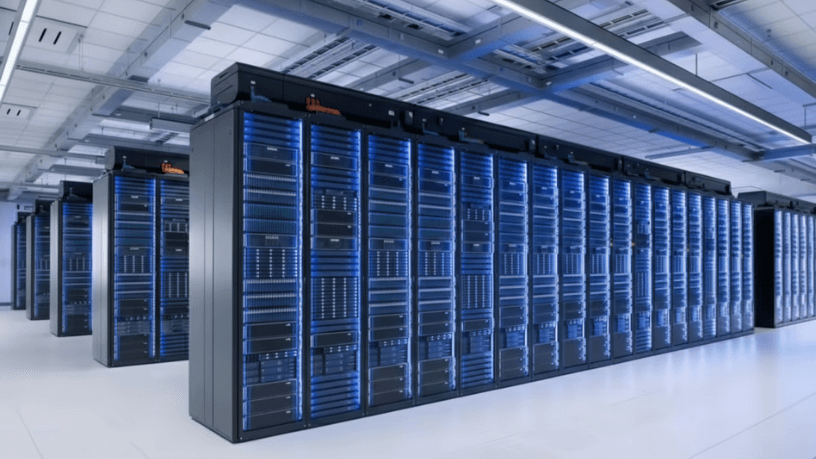
India has unveiled a major policy push aimed at strengthening its position in the global technology and artificial intelligence ecosystem. In the Union Budget 2026, Finance Minister Nirmala Sitharaman announced a long-term tax holiday for foreign companies that deliver global cloud services using data centres based in India. The incentive will remain in place until 2047, marking one of the most ambitious infrastructure-linked tax measures in recent years.
The move signals a strategic shift in India’s economic planning, placing digital infrastructure, AI capabilities, and advanced technology manufacturing at the center of long-term growth policy.
Long-Term Tax Incentive for Cloud and Data Infrastructure
Under the proposal, foreign firms offering cloud services worldwide can qualify for a tax holiday if they use data centre services located in India. However, these companies must serve Indian customers through a domestic reseller entity. The policy also introduces a 15 percent safe harbour on costs for related-party data centre service arrangements, providing clarity for multinational corporate structures.
This framework aims to reduce tax uncertainty while encouraging global cloud and AI infrastructure players to base large-scale operations in India. Policymakers view data centres as critical national infrastructure, similar to transport, power, and telecom networks, due to their role in supporting digital economies.
By offering policy stability until 2047, the government is signaling that India intends to be a long-term hub for global data storage, processing, and AI workloads.
AI and Digital Growth as Core Budget Themes
The tax holiday aligns with the broader Budget 2026 theme of investing in future-facing infrastructure. Artificial intelligence, cloud computing, and digital platforms are now seen as core economic enablers rather than niche sectors.
India’s digital economy has expanded rapidly, driven by rising internet penetration, fintech growth, and enterprise digitization. However, a large portion of global data processing and AI infrastructure still sits outside the country. By incentivizing local data centre development, India aims to capture a greater share of this value chain.
Large hyperscale facilities not only support cloud services but also power AI training models, enterprise analytics, and emerging technologies such as autonomous systems and smart manufacturing.
Semiconductor Push Under Mission 2.0
The Budget also reinforced India’s semiconductor ambitions. A Rs 40,000 crore outlay has been proposed under the India Semiconductor Mission 2.0. The program will expand beyond fabrication to include equipment and materials aligned with full-stack Indian intellectual property.
Officials emphasized industry-led research and training centers, which are intended to build a skilled workforce capable of supporting advanced chip design and manufacturing. This complements the data centre policy, as AI infrastructure depends heavily on high-performance semiconductor supply.
Together, the semiconductor expansion and data centre incentives form a coordinated strategy to localize critical technology capabilities.
Rare Earth Corridors to Support Strategic Tech
Another important announcement involves the creation of dedicated rare earth corridors in Odisha, Kerala, Andhra Pradesh, and Tamil Nadu. These corridors will promote mining, processing, research, and manufacturing related to rare earth minerals.
Rare earth materials are essential for electronics, renewable energy systems, electric vehicles, and advanced defense technologies. Strengthening domestic access to these resources is expected to reduce external dependence and support high-tech manufacturing.
The rare earth strategy complements semiconductor and AI initiatives by securing upstream materials needed for next-generation devices and digital infrastructure.
Global Investment Momentum
India has already begun attracting large-scale technology infrastructure commitments. Major global technology firms have announced multi-billion-dollar investments in AI and data infrastructure within the country. These projects are seen as early indicators of India’s growing appeal as a technology operations base.
The new tax framework may accelerate such investment decisions by offering long-term cost predictability. Industry analysts note that data centres involve high upfront capital expenditure and long payback periods, making stable policy support a key factor in site selection.
Strategic Shift Toward Digital Infrastructure
Budget 2026 underscores a broader policy evolution. Traditional infrastructure such as roads and railways remains important, but digital infrastructure now occupies equal strategic priority. Data centres, semiconductor facilities, and AI platforms are being treated as pillars of national competitiveness.
By linking tax policy, mineral strategy, and technology manufacturing, the government is building an integrated framework to position India as a core node in global digital supply chains.
If implementation matches intent, the measures announced could reshape India’s role in cloud computing, AI deployment, and advanced electronics over the next two decades.
Topics
Covering startup news, AI, technology, and business at ThePrimely. Delivering accurate, in-depth reporting on the stories that shape the future.