
Will E85 Ethanol Fuel India Change How Cars Run and What It Means for Energy and Economy?
A decisive shift in E85 ethanol fuel India strategy
E85 ethanol fuel India is moving from concept to policy reality. The government has proposed draft rules to introduce fuel that contains 85 percent ethanol and 15 percent petrol.
This marks a major shift in how vehicles may operate in the coming years. More importantly, it signals a structural change in India’s energy strategy. The move aligns with the broader push toward cleaner fuels and reduced dependence on crude oil imports.
What is E85 and why India is focusing on it
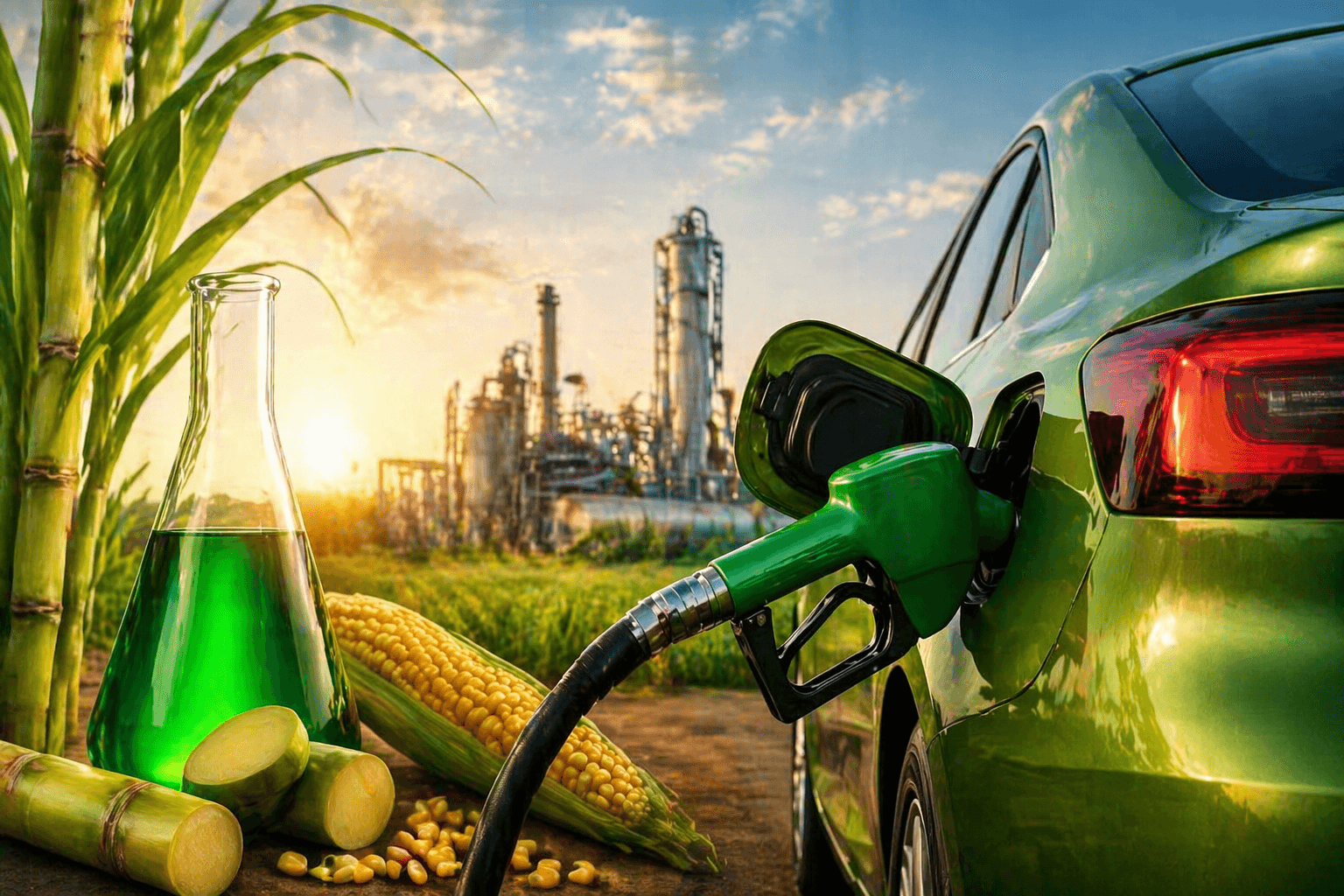
E85 is a high ethanol blended fuel. It contains 85 percent ethanol, which is derived from crops such as sugarcane and maize. Currently, India widely uses E20 fuel in several regions. The transition to E85 represents a much deeper commitment to biofuels.
The rationale is clear. India imports a large share of its crude oil. This creates economic pressure and energy vulnerability. By increasing ethanol usage, the country aims to reduce import bills while promoting domestic production.
Policy direction and government intent
The policy push has gained momentum under Nitin Gadkari, who has consistently advocated ethanol adoption. Draft rules now propose standards for E85 fuel and compatible vehicles. These vehicles, often called flex fuel vehicles, can run on varying ethanol blends.
The government’s intent is twofold. First, it wants to cut fossil fuel dependence. Second, it aims to create a stable demand for agricultural produce. This approach integrates energy policy with rural economic growth.
Industry readiness and automotive transformation
The shift to E85 will require significant changes in the automobile sector. Car manufacturers must develop engines that can handle high ethanol content. Flex fuel technology already exists globally, but scaling it in India will take time. Automakers have started aligning with this vision. Some companies have already showcased flex fuel prototypes.
However, widespread adoption depends on infrastructure. Fuel stations must supply E85 consistently across regions. Without distribution readiness, vehicle adoption will remain limited.
Economic and agricultural impact
The introduction of E85 could benefit India’s agricultural sector. Ethanol production relies heavily on crops like sugarcane and maize. Increased demand will support farmers and stabilize crop prices.
At the same time, it may reduce surplus stock issues in the sugar industry. From a macroeconomic perspective, reduced oil imports can significantly impact the trade deficit. This strengthens economic resilience over time.
However, policymakers must balance food security concerns with fuel production needs.
Environmental considerations and limitations
E85 offers environmental benefits, but the impact is nuanced. Ethanol burns cleaner than petrol. It reduces certain emissions and improves air quality.
However, large scale ethanol production requires water and land resources. This raises sustainability concerns. Therefore, the long term success of E85 depends on efficient resource management and technological improvements.
What lies ahead for India’s fuel ecosystem
India’s move toward E85 signals a broader transformation. The country is not abandoning conventional fuels overnight. Instead, it is building a diversified energy mix. Ethanol, electric mobility, and alternative fuels will coexist in the transition phase.
The success of E85 will depend on coordination between policymakers, automakers, and fuel suppliers. If executed well, it can redefine India’s energy independence. E85 ethanol fuel India is more than a fuel shift. It is a strategic economic and energy decision.
The policy connects agriculture, industry, and sustainability in a single framework. While challenges remain, the direction is clear. India is preparing for a future where fuel is cleaner, more local, and less dependent on imports. The real test will be execution at scale.
FAQ's
What is E85 fuel?
E85 is a blend of 85 percent ethanol and 15 percent petrol used in compatible vehicles.
Will current cars run on E85 in India?
No. Only flex fuel vehicles designed for high ethanol blends can use E85 safely.
Why is India promoting ethanol fuel?
India aims to reduce crude oil imports and support farmers through increased ethanol production.
Is E85 better for the environment?
It produces lower emissions than petrol, but large scale production has resource challenges.
When will E85 be available in India?
The rollout depends on policy approval, infrastructure readiness, and vehicle compatibility timelines.
Topics
Covering startup news, AI, technology, and business at ThePrimely. Delivering accurate, in-depth reporting on the stories that shape the future.