
China Nuclear Warhead Expansion Near Arunachal: Strategic Risks for India
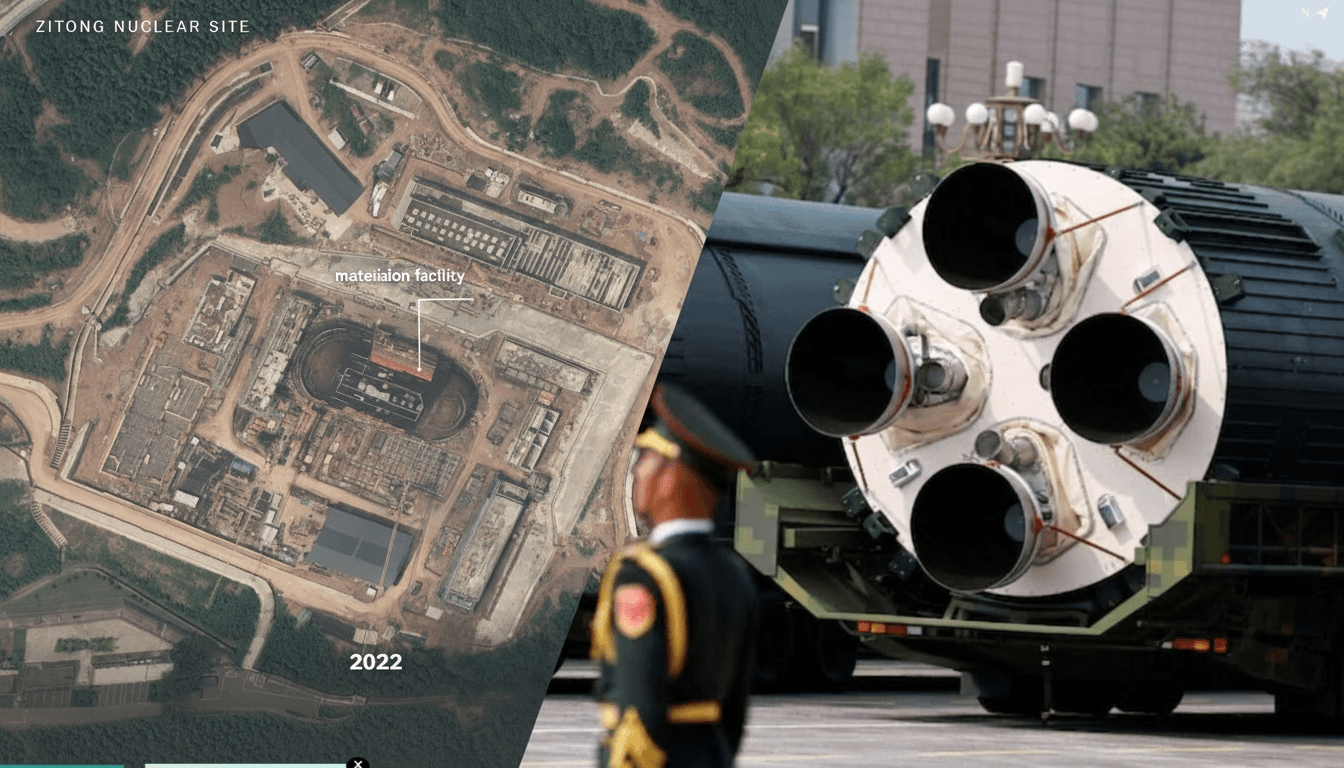
China nuclear warhead expansion is no longer an abstract assessment. New satellite evidence and investigative reporting show that Beijing is significantly upgrading nuclear facilities in Sichuan province, roughly 800 kilometers from Arunachal Pradesh.
The development changes India’s security calculus. It also signals a broader shift in China’s nuclear doctrine and production capacity.
Recent reporting by major international and Indian publications, including coverage of a detailed investigation by The New York Times, indicates expansion activity at facilities linked to plutonium processing and warhead development. The upgrades appear structured, long term, and strategically positioned.
This is not routine modernization. It reflects capacity growth.
What Is Happening in Sichuan?
Investigative analysis based on satellite imagery reveals new construction around a high security nuclear complex in Sichuan. The facility is associated with warhead component development and plutonium handling.
Key observations include:
- Newly built high security perimeter zones
- Underground structures resembling reinforced bunkers
- Additional industrial scale buildings linked to nuclear material processing
- Increased transport and infrastructure activity
Reports indicate that China is enhancing its ability to process plutonium cores. Plutonium is the critical fissile material used in many nuclear warheads.
The facility sits deep inland. However, at approximately 800 kilometers from Arunachal Pradesh, it lies within strategic proximity to India’s northeast.
The location provides Beijing both geographic depth and regional reach.
Why This Matters for India
Geographic Proximity and Strategic Signaling
The China nuclear warhead expansion in Sichuan is not on the immediate border. Yet distance does not reduce strategic implications.
Missile delivery systems make geography relative. What matters is deployment flexibility and production capacity.
For India, the concern is twofold:
- Expansion of China’s overall nuclear arsenal
- Greater regional concentration of advanced warhead infrastructure
China has historically maintained a smaller nuclear arsenal compared to the United States and Russia. However, global assessments in recent years suggest rapid scaling of its nuclear forces.
If plutonium production increases, warhead stockpiles can expand.
That changes deterrence equations across Asia.
China’s Broader Nuclear Strategy
From Minimal Deterrence to Arsenal Expansion?
For decades, China maintained a posture described as “minimum deterrence.” The doctrine focused on a smaller, survivable nuclear force.
Recent construction trends tell a different story.
Independent analyses in past years have documented the construction of hundreds of new missile silos in western China. Now, expanded warhead infrastructure adds another layer to that buildup.
The Sichuan facility strengthens the back end of the nuclear supply chain. Production capacity matters as much as delivery systems.
This suggests:
- Greater warhead availability
- Improved redundancy in nuclear infrastructure
- Enhanced survivability through underground and hardened facilities
The shift may reflect growing strategic competition with Washington. However, India sits within the operational footprint of this expansion.
The India–China Security Context
India and China share a long and disputed border. Tensions have remained elevated since the 2020 clashes in eastern Ladakh.
Arunachal Pradesh remains a core friction point. China refers to it as “South Tibet” and routinely objects to Indian infrastructure development there.
In this context, the China nuclear warhead expansion adds complexity.
India already operates under a two front security challenge involving China and Pakistan. Any increase in Chinese nuclear production affects long term deterrence planning.
New Delhi must now consider:
- Warhead stockpile asymmetry
- Missile defense investments
- Second strike capability enhancement
- Hardening of strategic assets
The security calculus becomes tougher, not immediately explosive, but structurally heavier.
Strategic Implications for Asia
Regional Arms Balance
An expanding Chinese nuclear infrastructure affects more than India.
It impacts:
- U.S. force posture in the Indo Pacific
- Japan’s security planning
- Taiwan contingency calculations
- Broader Asian missile defense architecture
If plutonium production scales up, China could significantly increase its deployed or reserve warheads over time.
That introduces pressure across multiple deterrence relationships.
Infrastructure Resilience and Survivability
Underground bunkers and reinforced structures suggest survivability planning.
Hardened facilities reduce vulnerability to preemptive strikes.
This indicates preparation for high intensity conflict scenarios, not just symbolic deterrence.
Such resilience increases strategic stability in one sense. But it also entrenches long term arms competition.
Industry and Defense Impact
Defense modernization in India will likely accelerate.
Key sectors that may see impact include:
- Missile systems development
- Submarine based nuclear deterrent platforms
- Early warning and surveillance systems
- Space based monitoring capabilities
India has already strengthened its strategic forces command structure. However, capacity expansion across the border raises pressure to sustain technological parity.
Markets often respond to defense signals. Long term procurement programs could see renewed urgency.
Future Outlook
China has not publicly confirmed detailed expansion figures. However, satellite evidence and multi source reporting indicate sustained infrastructure growth.
Three scenarios may unfold:
- Gradual arsenal expansion aligned with global power competition
- Accelerated buildup amid U.S. strategic rivalry
- Stabilization through arms control dialogue, though no current framework suggests near term limits
For India, the response will likely remain measured. Public rhetoric may stay restrained. Strategic planning, however, will intensify quietly.
Deterrence in Asia is entering a new phase.
A Structural Shift in Asia’s Nuclear Equation
China nuclear warhead expansion near Arunachal Pradesh is not an isolated development. It forms part of a larger restructuring of Beijing’s strategic posture.
The facility upgrades in Sichuan strengthen warhead production and infrastructure survivability. They reinforce China’s ability to scale its nuclear arsenal over time.
For India, the challenge is strategic, not immediate. Yet it is serious.
New Delhi must balance deterrence credibility, fiscal discipline, and regional stability.
The coming decade will define whether Asia moves toward structured arms management or deeper nuclear competition.
The signals from Sichuan suggest preparation, not pause.
Topics
Covering startup news, AI, technology, and business at ThePrimely. Delivering accurate, in-depth reporting on the stories that shape the future.