
China’s Brain-Computer Interface Industry Is Racing Ahead
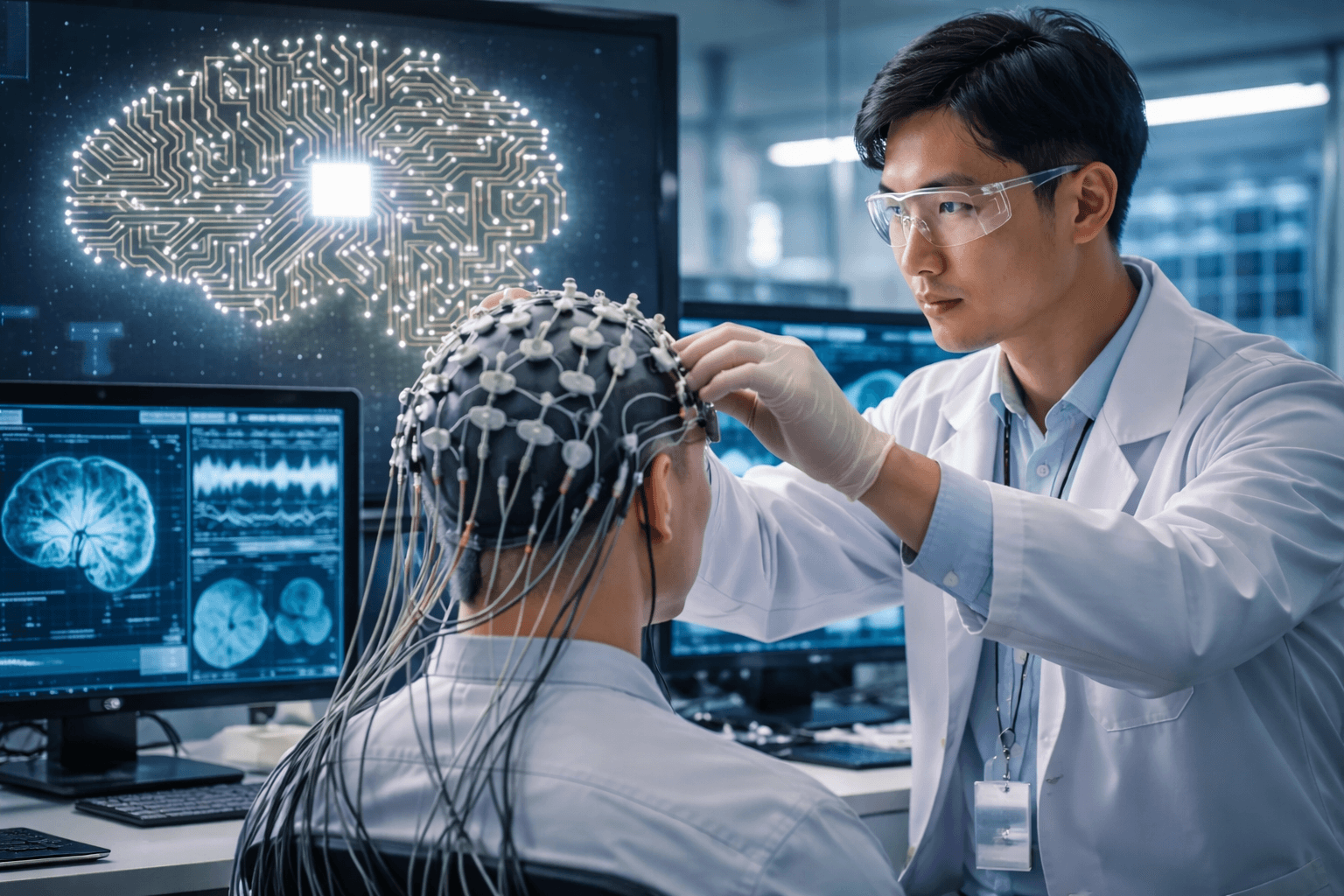
A New Frontier in Technology
The global race for advanced computing is entering a new phase.
The brain-computer interface industry is emerging as a critical frontier.
China is moving quickly in this space.
Recent developments show that the country is shifting from research to real-world applications.
What Is Driving China’s Rapid Progress
China’s progress is not accidental.
It is supported by strong government policy and coordinated investment.
The country has identified brain-computer interfaces as a strategic industry.
Authorities are providing funding, regulatory support, and clinical infrastructure.
This approach is accelerating development across multiple companies.
From Research to Real-World Application
China’s BCI sector is moving beyond the lab.
Startups and research institutions are entering clinical trials.
In one case, a paralyzed patient was able to control a computer cursor within days of receiving an implant.
This marks a shift toward practical medical applications.
Key Developments in the Industry
1. Rapid Growth of Clinical Trials
Chinese companies are conducting more human trials.
This helps gather real-world data faster than competitors.
It also shortens the time between research and commercialization.
2. Strong Startup Ecosystem
Several startups are leading innovation.
Companies like NeuroXess are developing new types of implants.
Some designs sit on the brain surface rather than penetrating it.
This may reduce medical risks and improve safety.
3. Focus on Less Invasive Technology
Chinese researchers are exploring non-invasive methods.
These include ultrasound-based systems that can read brain signals.
Such approaches aim to make the technology more accessible.
4. Government-Led Industrial Strategy
China’s strategy is highly coordinated.
Multiple ministries are involved in planning and execution.
The goal is to build globally competitive BCI companies by 2030.
This long-term approach is driving consistent progress.
You might Like this :- Sam Altman Defends AI Energy Use in Growing Sustainability Debate
Background: The Global BCI Race
Brain-computer interfaces allow direct communication between the brain and machines.
They are being developed for medical and technological use.
Applications include:
- Restoring movement for paralyzed patients
- Treating neurological disorders
- Enhancing human-computer interaction
Companies like Neuralink in the United States are also competing in this space.
The competition is now global.
Industry Impact
Healthcare Transformation
BCI technology could transform healthcare.
It offers new ways to treat paralysis, stroke, and brain disorders.
Early results suggest strong potential.
Acceleration of Innovation
China’s scale allows faster data collection and testing.
This can lead to quicker improvements in technology.
It also reduces development costs.
Global Competition Intensifies
The race between China and Western companies is accelerating.
Each side is trying to achieve breakthroughs first.
This competition is likely to drive rapid innovation.
Strategic Implications
1. Technology Leadership
BCI is becoming a key area of technological leadership.
Countries that lead in this field may shape future standards.
2. Integration with AI
BCI development is closely linked with artificial intelligence.
AI helps decode brain signals and improve accuracy.
This creates a powerful combination of technologies.
3. Ethical and Regulatory Challenges
The technology raises important questions.
Issues include privacy, data security, and human enhancement.
Regulation will play a critical role.
Future Outlook
The brain-computer interface industry is still evolving.
However, progress is accelerating.
Future developments may include:
- More advanced implants
- Non-invasive wearable devices
- Broader medical applications
China’s coordinated strategy suggests continued growth.
The country is positioning itself as a major global leader.
Topics
Covering startup news, AI, technology, and business at ThePrimely. Delivering accurate, in-depth reporting on the stories that shape the future.