
Sam Altman Defends AI Energy Use in Growing Sustainability Debate
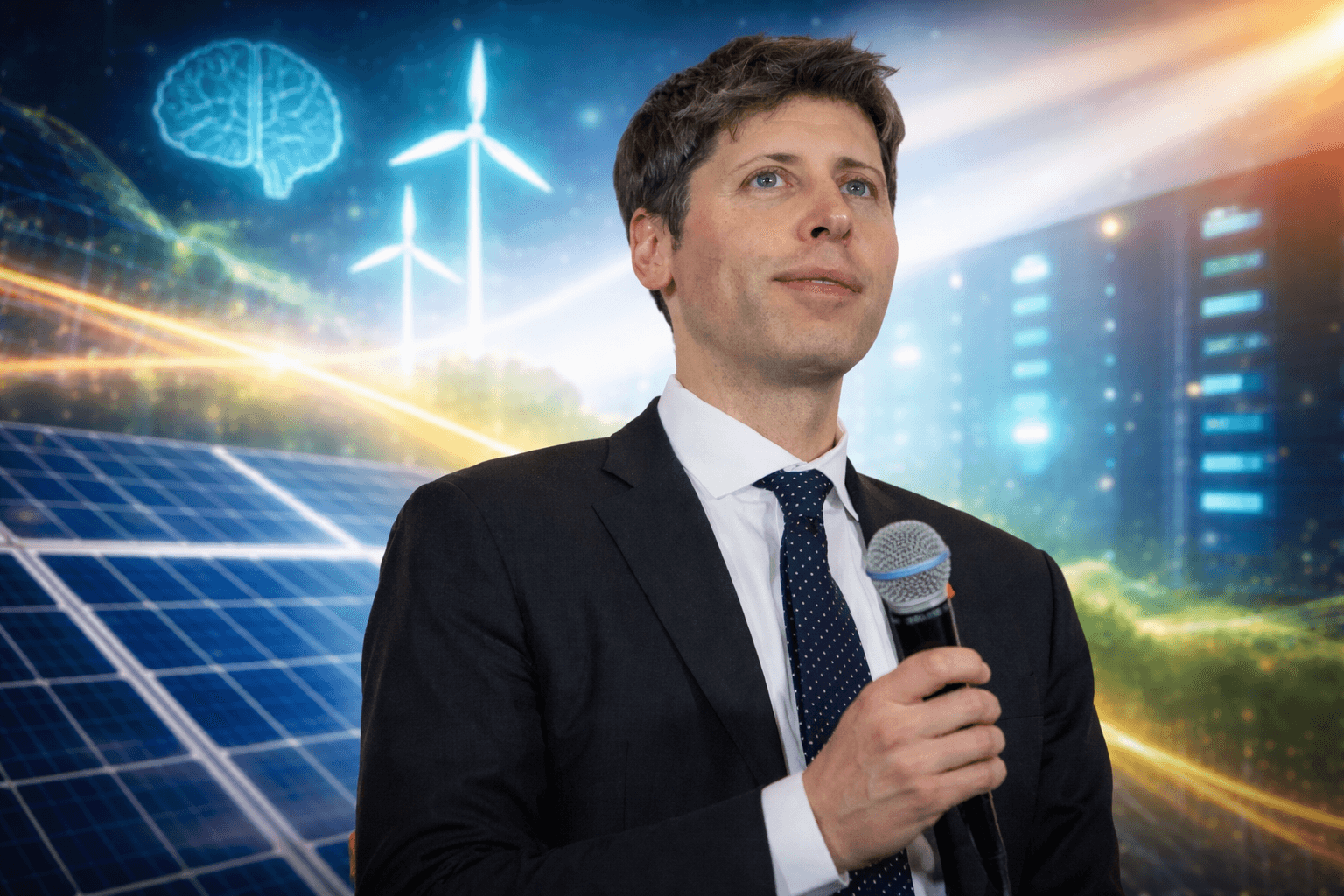
A New Perspective on AI’s Energy Impact
Concerns about AI energy consumption are increasing as artificial intelligence expands worldwide.
In response, OpenAI CEO Sam Altman offered a different perspective.
He argued that while AI uses energy, humans also require significant energy to develop intelligence.
This comparison has sparked debate across the technology industry.
What Sam Altman Said
Speaking at an event in India, Altman addressed growing criticism about AI’s environmental impact.
He pushed back against claims that AI consumes excessive water per query, calling some of those claims “completely untrue.”
However, he acknowledged that overall energy consumption is a valid concern, especially as AI usage increases globally.
His key argument was that comparisons are often misleading.
Comparing AI and Human Intelligence
Altman highlighted a broader point:
- Training AI models requires large amounts of energy
- But human intelligence also has a long energy cost
He explained that developing a human mind takes years of life, food, and resources.
This shifts the discussion from short-term usage to lifetime energy consumption.
Background: Rising Concerns Over AI Energy
The rapid growth of AI has increased demand for data centers and computing power.
Studies show that AI systems consume more energy than traditional computing tasks.
For example, AI queries can use several times more electricity than a standard web search.
As usage grows, the total energy footprint becomes significant.
Key Developments in the Debate
1. Misconceptions About Water Usage
Altman strongly criticized viral claims about AI water consumption.
He said many online figures are inaccurate and not based on current technology.
Modern data centers use different cooling methods, reducing water dependency.
2. Focus on Total Energy, Not Per Query
Altman emphasized that the real issue is total energy usage, not individual AI queries.
As AI adoption grows, overall consumption will increase.
3. Call for Clean Energy Transition
Rather than limiting AI development, Altman suggested focusing on energy sources.
He advocated for faster adoption of:
- Nuclear energy
- Solar power
- Wind energy
This approach aims to support AI growth sustainably.
You might Like this :- OpenAI Enterprise Platform Frontier Targets Big Firms
Industry Impact: A Shift in the AI Conversation
Changing the Narrative
Altman’s comments are influencing how the industry views AI sustainability.
The debate is shifting from “how much energy AI uses” to “how energy is produced.”
Pressure on Tech Companies
Tech companies are facing increased scrutiny over their environmental impact.
There is growing demand for transparency in energy and water usage.
Balancing Innovation and Sustainability
The challenge is clear.
AI offers major benefits, but it also requires resources.
Companies must balance innovation with environmental responsibility.
Strategic Implications
1. Energy Becomes a Key Constraint
AI development depends heavily on energy availability.
Access to clean energy will shape future growth.
2. Investment in Infrastructure
Companies are investing in data centers and renewable energy projects.
This will define the next phase of AI expansion.
3. Public Perception Matters
Public concerns about sustainability can influence regulation.
Clear communication is essential for maintaining trust.
Future Outlook: Scaling AI Sustainably
The demand for AI will continue to grow.
This will increase pressure on energy systems.
Future developments will likely focus on:
- More efficient AI models
- Renewable energy integration
- Transparent reporting
The goal is to make AI both powerful and sustainable.
Topics
Covering startup news, AI, technology, and business at ThePrimely. Delivering accurate, in-depth reporting on the stories that shape the future.