
Why IIT Madras’ Bodhan AI Could Redefine Teaching and Learning in India
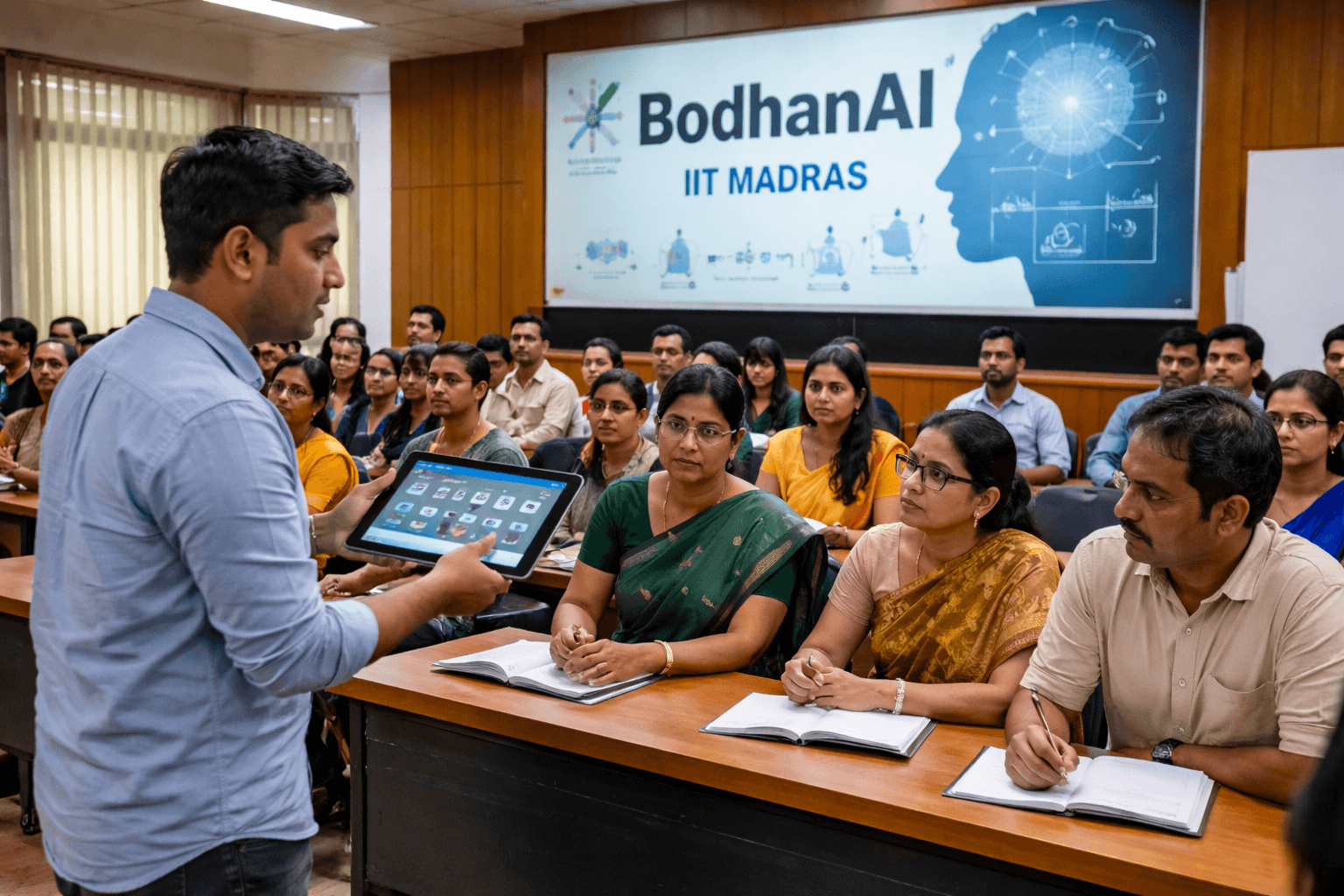
india is taking a decisive step to transform its educational landscape with BodhanAI, a new initiative designed to integrate artificial intelligence into classrooms nationwide. This ambitious effort seeks to empower teachers, enhance learning outcomes, and build a modern AI ready education system.
What Is BodhanAI?
BodhanAI is the Centre of Excellence in Artificial Intelligence for Education, established at Indian Institute of Technology (IIT) Madras under the IIT Madras Bodhan AI Foundation. It serves as the national hub to mainstream AI in India’s education ecosystem from primary schools to higher education institutions.
Backed by the Ministry of Education, the initiative intends to create digital infrastructure and training frameworks that ensure ethical, inclusive, and scalable AI adoption across the country’s classrooms.
Why This Matters
The rapid evolution of AI has made it essential for education systems to adapt. As technologies reshape industries, teaching and learning practices must evolve too. BodhanAI is part of this transformation. It aims to:
- Embed AI tools directly into educational settings.
- Equip teachers with relevant skills and confidence.
- Foster new learning experiences for students that align with future workforce needs.
These efforts reflect a shift in India’s education strategy toward future ready competencies rather than rote learning alone.
Key Developments and Strategic Components
Teacher Capacity Building
A major focus of BodhanAI is empowering teachers. The centre will develop structured AI training modules to help educators understand new pedagogies and classroom technologies.
During a recent national conclave, Union Education Minister Dharmendra Pradhan noted that these modules will accelerate teacher readiness and strengthen capacity building.
Digital Public Infrastructure
BodhanAI will contribute to building digital public infrastructure (DPI) focused on education. Through open APIs, startups, and institutions can create interoperable AI tools compatible with this national framework.
This shared platform sometimes referred to as the Bharat EduAI Stack is designed to enable a broad ecosystem of developers, educators, and researchers to co create solutions.
National Collaboration
The Bharat Bodhan AI Conclave brings together policymakers, academics, industry leaders, and edtech innovators to discuss frameworks and collaborations essential to scaling AI solutions nationwide.
Potential Impact on Education and Employment
BodhanAI aligns with the National Education Policy (NEP) 2020 goals to foster competency based learning and improve employability. By embedding AI insights into teaching and curriculum design, the initiative could:
- Strengthen student engagement through personalized learning.
- Narrow the gap between classroom learning and industry expectations.
- Help learners build skills relevant to the digital economy.
These approaches support a shift from traditional credentials toward demonstrable, adaptability focused competencies.
Challenges and Considerations
While the vision for BodhanAI is broad, execution will require coordinated action among states, institutions, and educators. Ensuring equal access especially in rural or under-resourced regions remains a key concern. Moreover, success will depend on practical deployment, continuous training, and effective evaluation mechanisms.
Future Outlook
If BodhanAI transitions from planning to widespread implementation, it could reshape the Indian education landscape. Teachers may become facilitators of AI augmented learning, and Indian classrooms may evolve into hubs of adaptive, technology enhanced education.
This initiative also signals India’s intent to build responsible, inclusive AI ecosystems anchored in public infrastructure and collaboration.
BodhanAI represents a strategic milestone in India’s education reforms. By prioritizing teacher training, building public digital infrastructure, and fostering collaboration, the initiative aims to make AI a constructive force in classrooms nationwide. Its success could redefine how learners engage with knowledge and prepare for a competitive global economy.
Topics
Covering startup news, AI, technology, and business at ThePrimely. Delivering accurate, in-depth reporting on the stories that shape the future.