
PM Modi: Trade Agreement to Strengthen ‘Make in India’ and Boost Jobs
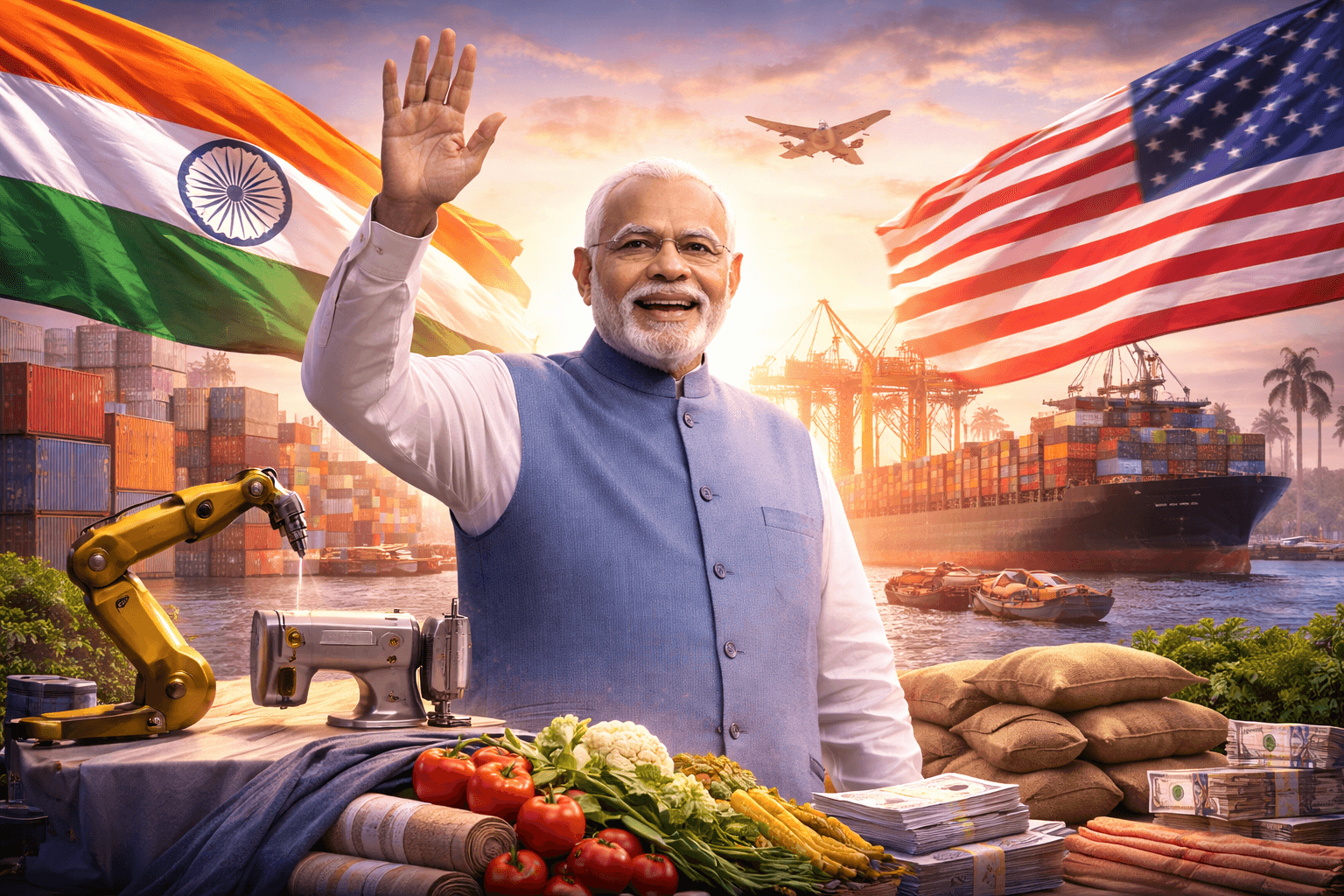
Prime Minister Narendra Modi has welcomed a new interim trade agreement framework between India and the United States, calling it a major boost for the Make in India initiative and employment across the country. According to Modi, the pact marks a deepening of economic cooperation that will open fresh opportunities for farmers, entrepreneurs, micro, small and medium enterprises (MSMEs), startup innovators and workers, especially women and young people.
A New Framework With Strategic Impact
The interim trade agreement framework announced by India and the United States does not yet constitute a full comprehensive trade treaty. Still, it represents meaningful progress in bilateral economic ties and provides a blueprint for future negotiations. Both governments have described the pact as a sign of growing trust and dynamism in their strategic partnership.
In a social media post, the Prime Minister thanked U.S. President Donald Trump for his commitment to strengthening ties and noted that the framework reflects the “depth, trust and dynamism” of the India-US relationship. Modi emphasized that this collaboration will expand market access and create shared economic opportunities.
How It Strengthens Make in India
Make in India, launched in 2014, remains one of the government’s signature programs to transform India into a global manufacturing hub. By facilitating deeper trade linkages with the U.S., the framework reinforces this vision in several ways:
Market Access for Indian Exports
The agreement is expected to open access to the $30 trillion U.S. economy for Indian exporters across key sectors such as textiles, leather goods, machinery and technology products. Tariff reductions and eased trade conditions can improve competitiveness for Indian manufacturers overseas.
Boost for MSMEs and Startups
Small and medium sized enterprises, often the backbone of India’s manufacturing base, stand to gain as export barriers fall. This can lead to investment inflows, innovation diffusion and integration into global supply chains — areas critical for MSMEs and startups.
Support for Domestic Producers
The framework also aims to safeguard sensitive agricultural and rural sectors by protecting certain farm products while promoting exports of other goods. This balanced approach seeks to open markets without sidelining domestic producers.
Job Creation and Inclusive Growth
One of the most significant promises from the Prime Minister’s remarks is job creation at scale, especially for women and young professionals. By strengthening manufacturing and export activity, the trade agreement could lead to higher employment across sectors ranging from textiles and artisanal goods to engineering products and technology services.
In addition, expanded export markets can stimulate related service sectors such as logistics, marketing, design and financial services, creating a broader jobs ecosystem. This has direct implications for the government’s goals around youth employment and women’s participation in the workforce.
Technology, Investment and Supply Chain Resilience
Modi also highlighted that the interim trade framework will deepen technology partnerships and investment cooperation between India and the United States. These collaborations can support innovation development, spur joint ventures, and enhance competitiveness in high value areas.
The agreement is also expected to strengthen trusted and resilient supply chains, which is increasingly important in a global context marked by disruptions and shifting geopolitical landscapes.
What This Means for India’s Future
The interim trade framework is part of a broader set of trade engagements aimed at positioning India as a major global economic partner. On top of this deal with the United States, India recently concluded a significant free trade agreement with the European Union, a pact expected to eliminate tariffs on a wide range of products and attract major investments over the years.
These strategic economic partnerships support both India’s export ambitions and goals under Make in India, Aatmanirbhar Bharat, and the vision of building a Viksit Bharat — a developed and equitable economy with strong manufacturing, innovation, and employment foundations.
Looking Ahead
While the interim trade framework is not the final step in trade relations, it sets a strong precedent for deeper cooperation and expanded economic engagement between India and the United States. Analysts expect that both nations are likely to pursue a comprehensive bilateral trade agreement in the months ahead, building on the foundations established in this framework.
If successful, such a deal could unlock even greater benefits in terms of job creation, technological collaboration, market access, and shared prosperity.
Topics
Covering startup news, AI, technology, and business at ThePrimely. Delivering accurate, in-depth reporting on the stories that shape the future.