
Rupee crashes past ₹92 as Iran war shock hits Indian markets
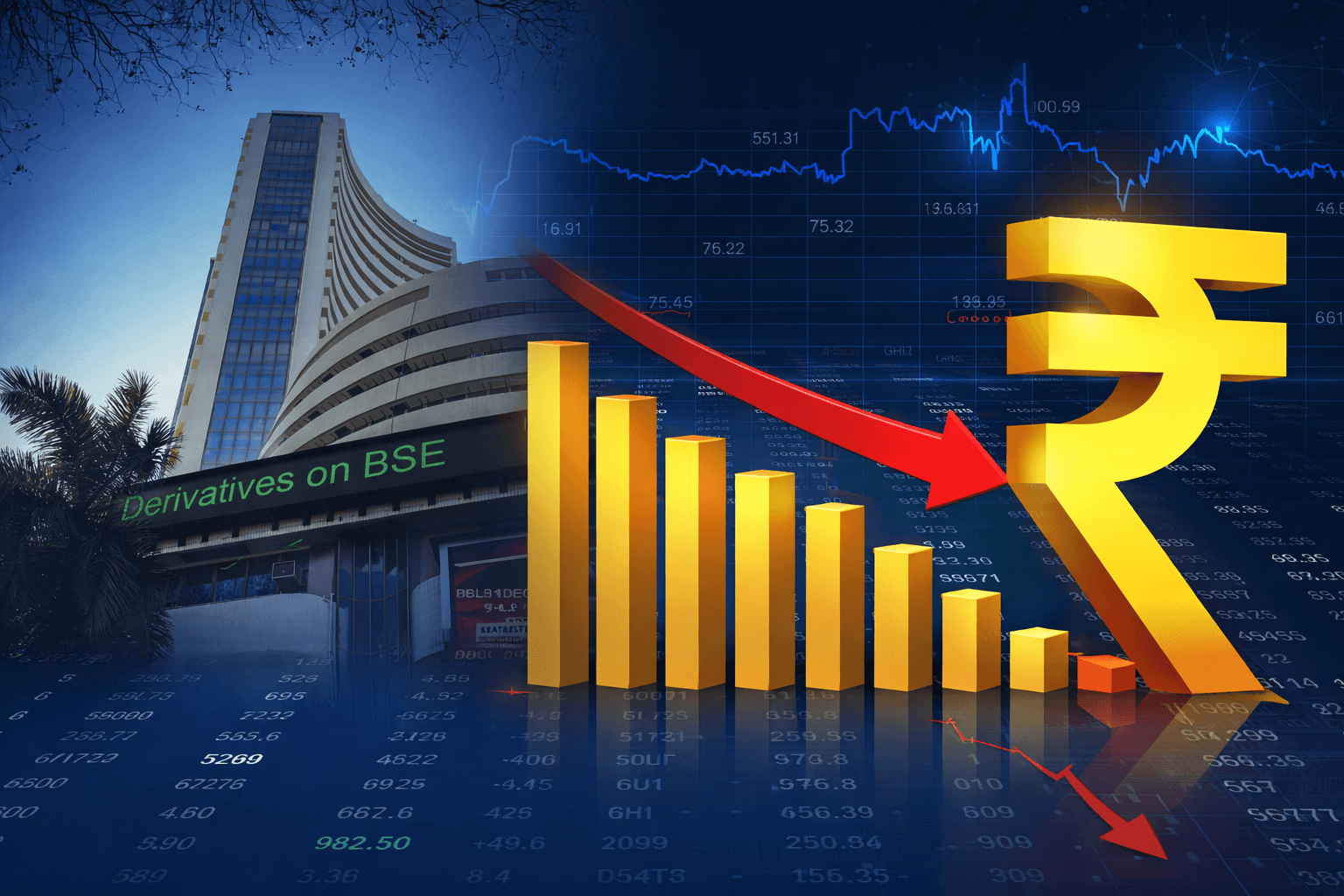
Rupee crashes past 92 as Iran war shock wipes ₹9.7 lakh crore from markets
The rupee crashes past 92 against the US dollar for the first time, sending shockwaves through Indian financial markets and wiping nearly ₹9.7 lakh crore in investor wealth within hours.
The sudden currency plunge came after escalating tensions involving Iran and the Middle East, which pushed global oil prices sharply higher and triggered a wave of risk-off selling across emerging markets.
As panic spread through financial markets, Indian stocks fell sharply while investors rushed toward safe-haven assets such as the US dollar.
Oil surge triggers currency shock
The biggest driver behind the rupee’s collapse was the surge in crude oil prices following fears of wider conflict in the Middle East.
Energy traders worry that escalating tensions could disrupt shipments through the Strait of Hormuz, one of the world’s most important oil transit routes.
The narrow waterway carries roughly 20% of global oil shipments, making it a critical artery for global energy markets.
India, which imports more than 80% of its crude oil, is particularly vulnerable to sudden spikes in global energy prices.
Consequently, rising oil costs increase the country’s demand for dollars to pay import bills, placing heavy downward pressure on the rupee.
Indian stock markets suffer massive losses
The currency shock quickly spread across India’s equity markets.
Benchmark indices dropped as investors reacted to the global risk environment and rising energy costs. The sell-off erased around ₹9.7 lakh crore from the total market capitalisation of companies listed on Indian exchanges.
Foreign institutional investors accelerated their selling, amplifying the market decline.
During periods of geopolitical tension, global funds often pull capital out of emerging markets and move into safer assets.
Inflation fears return
The rupee’s decline could have significant consequences for India’s economy.
A weaker currency makes imports more expensive, particularly energy and raw materials priced in US dollars.
Therefore, the latest currency slide could push inflation higher, especially in fuel, transportation, and manufacturing costs.
Economists warn that sustained oil price increases could complicate efforts to keep inflation under control.
RBI may intervene to stabilise the rupee
Financial markets are now closely watching the Reserve Bank of India (RBI) for possible intervention.
Central banks often step in during periods of extreme volatility by selling foreign-exchange reserves to stabilise their currencies.
India maintains large forex reserves, which gives policymakers some room to smooth excessive currency fluctuations.
However, analysts say intervention alone may not reverse the trend if global geopolitical tensions continue to escalate.
Why the Iran conflict matters for India
The Middle East remains one of the most important regions for global energy supply.
Any disruption to oil shipments could ripple through financial markets worldwide.
For India, the impact is particularly significant because energy imports play a central role in the country’s economic stability.
Consequently, rising geopolitical tensions can quickly translate into currency volatility, higher inflation, and weaker financial markets.
What investors are watching next
Investors are now monitoring several key developments:
• Military and diplomatic developments in the Middle East
• Oil price movements in global energy markets
• Possible intervention from the Reserve Bank of India
• Foreign investor flows into Indian markets
If geopolitical tensions escalate further, analysts warn that currency volatility and market turbulence could continue in the coming weeks.
Topics
Covering startup news, AI, technology, and business at ThePrimely. Delivering accurate, in-depth reporting on the stories that shape the future.