
OpenAI Senior Staff Departures Follow Shift Toward Prioritizing ChatGPT
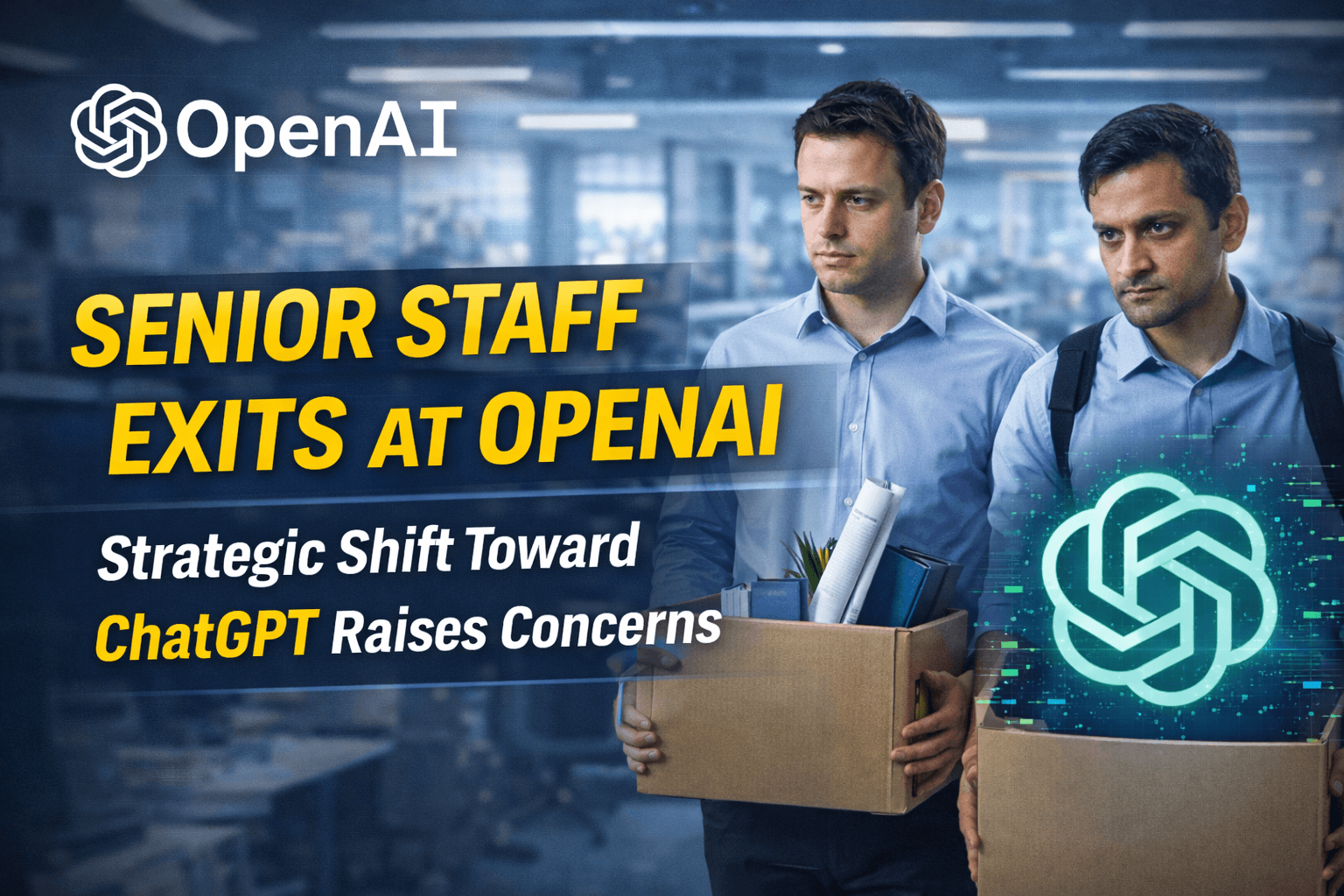
OpenAI is undergoing a significant internal transition as senior staff exits accelerate following the company’s decision to prioritize ChatGPT development. What began as a research-first AI lab is now moving faster toward a product-driven model, reshaping teams, priorities, and career paths inside the organization.
This shift has sparked debate across the global AI community about how companies balance long-term research with immediate commercial goals.
Why OpenAI Is Refocusing on ChatGPT
Over the past year, competition in the artificial intelligence space has intensified. Rivals have released faster and more capable models, pushing OpenAI to double down on ChatGPT as its core product.
Leadership directed teams to focus their time, talent, and computing power on improving ChatGPT’s performance, reliability, and real-world usability. Internal priorities were reset to ensure the chatbot remained competitive in a rapidly evolving market.
As a result, projects not directly tied to ChatGPT began receiving fewer resources.
Senior Researchers Begin to Leave
Following this strategic pivot, several senior researchers and leaders exited OpenAI. Their departures were reportedly linked to reduced support for exploratory research and long-term initiatives.
Key exits included:
- Senior research leaders whose work focused on broader AI systems rather than language models
- Policy and economics researchers who raised concerns about narrowing research scope
- Engineers involved in experimental tools and non ChatGPT projects
Many of these professionals joined OpenAI to work on foundational AI research. The new emphasis on near-term product outcomes created a mismatch between expectations and direction.
Research vs Product Development Tensions
At the heart of these exits lies a familiar challenge in the tech industry: research depth versus product speed.
OpenAI’s earlier model allowed researchers to explore ambitious ideas with fewer immediate commercial constraints. The current approach places stronger weight on user impact, performance metrics, and competitive positioning.
Teams working on areas such as autonomous agents, advanced reasoning models, and experimental AI tools reportedly struggled to secure the same level of computational resources as ChatGPT focused teams.
This shift made it harder for long-cycle research projects to progress.
Competitive Pressure Is Driving Decisions
The urgency behind OpenAI’s move is tied to rising competition. Competing AI models have matched or exceeded ChatGPT on several benchmarks, increasing pressure to deliver rapid improvements.
From a business perspective, strengthening ChatGPT protects OpenAI’s market position, user base, and partnerships. From a research perspective, it limits flexibility for deep experimentation.
This tradeoff is becoming increasingly common across leading AI firms.
OpenAI’s Official Position
OpenAI leadership maintains that research remains central to the company’s mission. Executives have stated that foundational research continues, but is now more closely integrated with product development.
The company argues that deploying AI at scale provides valuable feedback that improves research quality and safety. According to this view, real-world use strengthens long-term innovation rather than replacing it.
However, the pace and structure of work have clearly changed.
Why These Exits Matter for the AI Industry
The OpenAI senior staff exits reflect a broader shift in how AI organizations operate as they mature. These departures highlight:
- Growing commercialization of advanced AI research
- Reduced separation between research labs and product teams
- Increasing demand for short-term results in competitive markets
For AI professionals, this trend signals that career paths may increasingly favor product impact over pure research.
For the industry, it raises questions about where foundational breakthroughs will originate.
What Comes Next for OpenAI
OpenAI is expected to continue prioritizing ChatGPT improvements while selectively supporting long-term research aligned with product goals. Talent movement may stabilize once the new structure settles.
At the same time, researchers seeking open-ended exploration may look to universities, startups, or alternative labs to pursue foundational AI work.
Topics
Covering startup news, AI, technology, and business at ThePrimely. Delivering accurate, in-depth reporting on the stories that shape the future.