
Two Oil Tankers Reach India After Crossing Strait of Hormuz
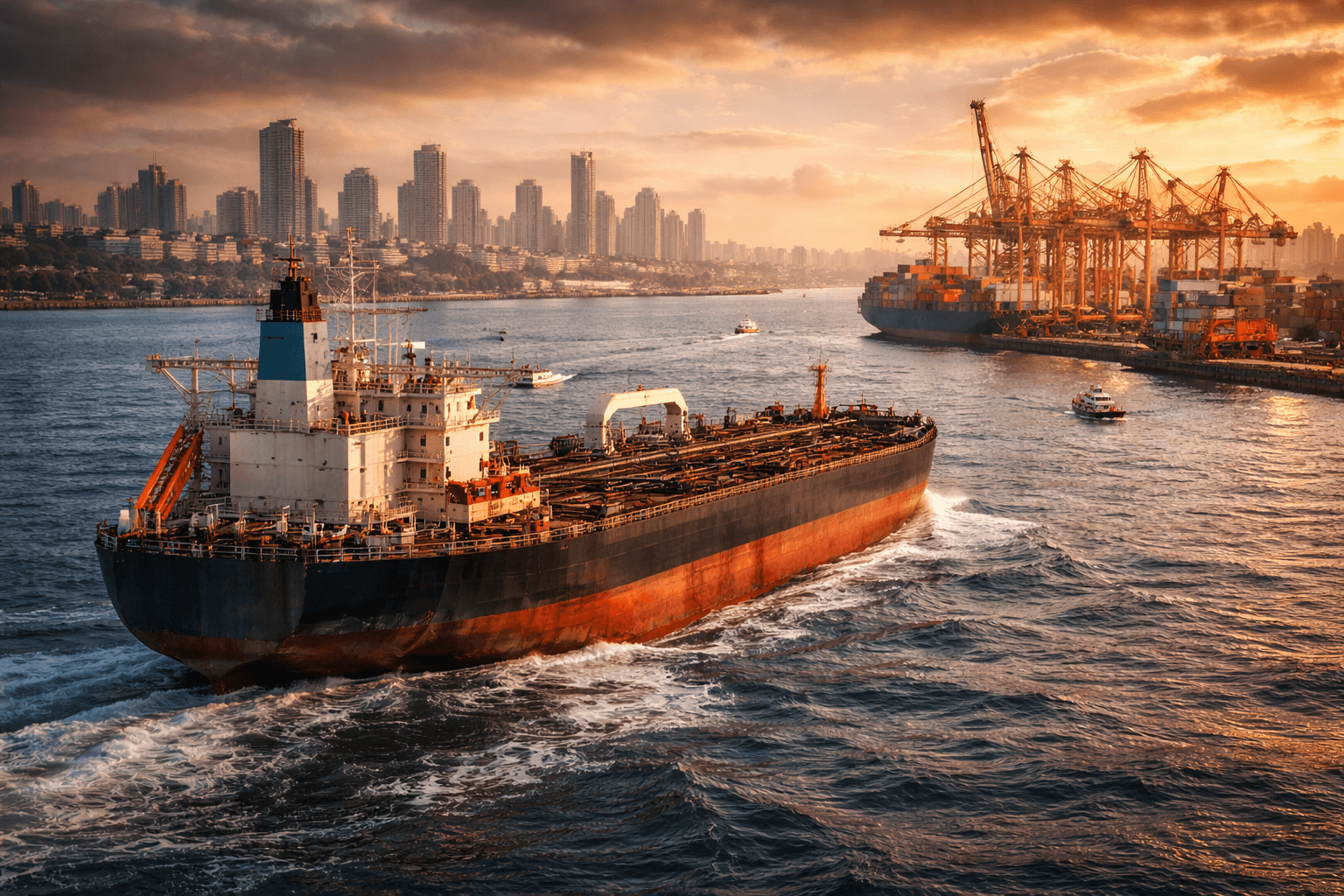
Two crude oil tankers carrying roughly three million barrels of West Asian crude have arrived in India after navigating the troubled waters of the Strait of Hormuz.
Industry sources and vessel-tracking data confirmed the arrivals. The development has raised hopes that more energy shipments stuck in the Persian Gulf could soon reach India despite the ongoing conflict in West Asia.
The Strait of Hormuz has seen severe disruptions since the conflict began on 28 February.
Tankers Carry Oil From Saudi Arabia and Iraq
One of the vessels, the Liberia-flagged tanker Shenlong, reached Mumbai port on Wednesday.
The Suezmax tanker carried around one million barrels of crude oil from Saudi Arabia’s Ras Tanura port. The vessel left Saudi Arabia on March 3.
Refineries operated by Bharat Petroleum Corporation and Hindustan Petroleum Corporation are located near Mumbai.
Another tanker, an India-flagged very large crude carrier (VLCC), also arrived in Mumbai carrying about two million barrels of crude from Iraq.
The vessel is expected to sail onward to Paradip in Odisha, where Indian Oil Corporation operates a major refinery.
Industry sources said both tankers likely crossed the Strait of Hormuz during the past five to six days.
First Non-Iranian Tankers to Cross Strait in Weeks
The two vessels appear to be the first non-Iranian oil tankers to pass through the strait since the conflict escalated.
Maritime traffic in the waterway has almost stopped due to security risks.
Reports suggest Iran has allowed only its own tankers carrying oil to China to cross the strait in recent weeks.
The arrival of these tankers in India has therefore encouraged energy traders.
Industry officials say several shipments destined for India remain stuck in the Persian Gulf.
India Holds Talks With Iran on Safe Passage
Indian authorities are now holding discussions with Iran to secure safe passage for vessels carrying energy supplies to the country.
These include tankers carrying crude oil and liquefied petroleum gas (LPG).
Several such vessels currently remain stranded west of the Strait of Hormuz.
India’s External Affairs Minister S Jaishankar has discussed maritime safety and energy security with his Iranian counterpart in recent days.
Foreign Ministry spokesperson Randhir Jaiswal confirmed that the ministers have held three conversations recently.
“The External Affairs Minister and the Foreign Minister of Iran discussed issues related to shipping safety and India’s energy security,” he said.
Ships May Have Crossed Strait in Stealth Mode
Industry sources said the two tankers may have sought Iranian permission before crossing the strait.
Shipping data suggests both vessels temporarily switched off their Automatic Identification System (AIS) transponders.
This practice, known as “going dark”, prevents public tracking of ships.
The tankers reportedly turned their tracking systems back on only after clearing the strait.
The waterway normally handles about one-fifth of global oil and liquefied natural gas trade.
Strait of Hormuz Critical for India’s Energy
India depends heavily on oil shipments that pass through the Strait of Hormuz.
Around 2.5 to 2.7 million barrels per day of India’s crude imports have travelled through the route in recent months.
That volume represents about half of the country’s oil imports, although the long-term average is closer to 40%.
Most of the crude comes from Iraq, Saudi Arabia, the United Arab Emirates and Kuwait.
India currently does not import oil from Iran due to US sanctions.
LPG Supply Faces Greater Risk
India holds relatively comfortable reserves of crude oil, petrol and diesel.
Current stockpiles can cover around eight weeks of demand.
However, the situation is more challenging for LPG, which millions of households use for cooking.
India imports roughly 60% of its LPG requirement.
About 90% of those imports normally pass through the Strait of Hormuz.
With shipping disruptions in the region, more than half of India’s LPG supply has effectively been cut off.
The government has therefore prioritised LPG supplies for households while restricting supply to commercial users.
Maritime Attacks Continue in Region
Despite the safe arrival of the two tankers, security risks remain high in the Gulf region.
Several vessels came under attack between Wednesday and Thursday.
Among them was the Marshall Islands-flagged tanker SafeSea Vishnu near Iraq.
The vessel carried 28 crew members, including 16 Indian sailors.
One Indian crew member died in the attack.
The remaining 15 Indian sailors were rescued and taken to Basra, where the Indian embassy is assisting them.
Dozens of Indian Seafarers Affected
According to India’s shipping ministry, 78 Indian seafarers were aboard vessels attacked in the region in recent days.
Officials said 70 sailors were rescued unharmed.
Four suffered injuries but remain stable.
Three died in the attacks, while one crew member remains missing.
All of these sailors were serving on foreign-flagged vessels.
Indian Ships Still Waiting Near Strait
Authorities are also monitoring 28 India-flagged vessels currently stuck in the region.
Of these ships:
- 24 vessels with 677 Indian sailors are west of the Strait of Hormuz
- Four vessels with 101 sailors are east of the strait
Shipping authorities, vessel operators and recruitment agencies are monitoring the crews’ safety.
They are working closely with Indian diplomatic missions and regional authorities.
Officials have also advised Indian vessels to strengthen security procedures and follow strict reporting protocols.
Topics
Covering startup news, AI, technology, and business at ThePrimely. Delivering accurate, in-depth reporting on the stories that shape the future.