
Mysuru Install Mirrors to Stop Public Urination , Can This Civic Idea Transform Urban Hygiene Across India?
A Simple Idea That Captured National Attention
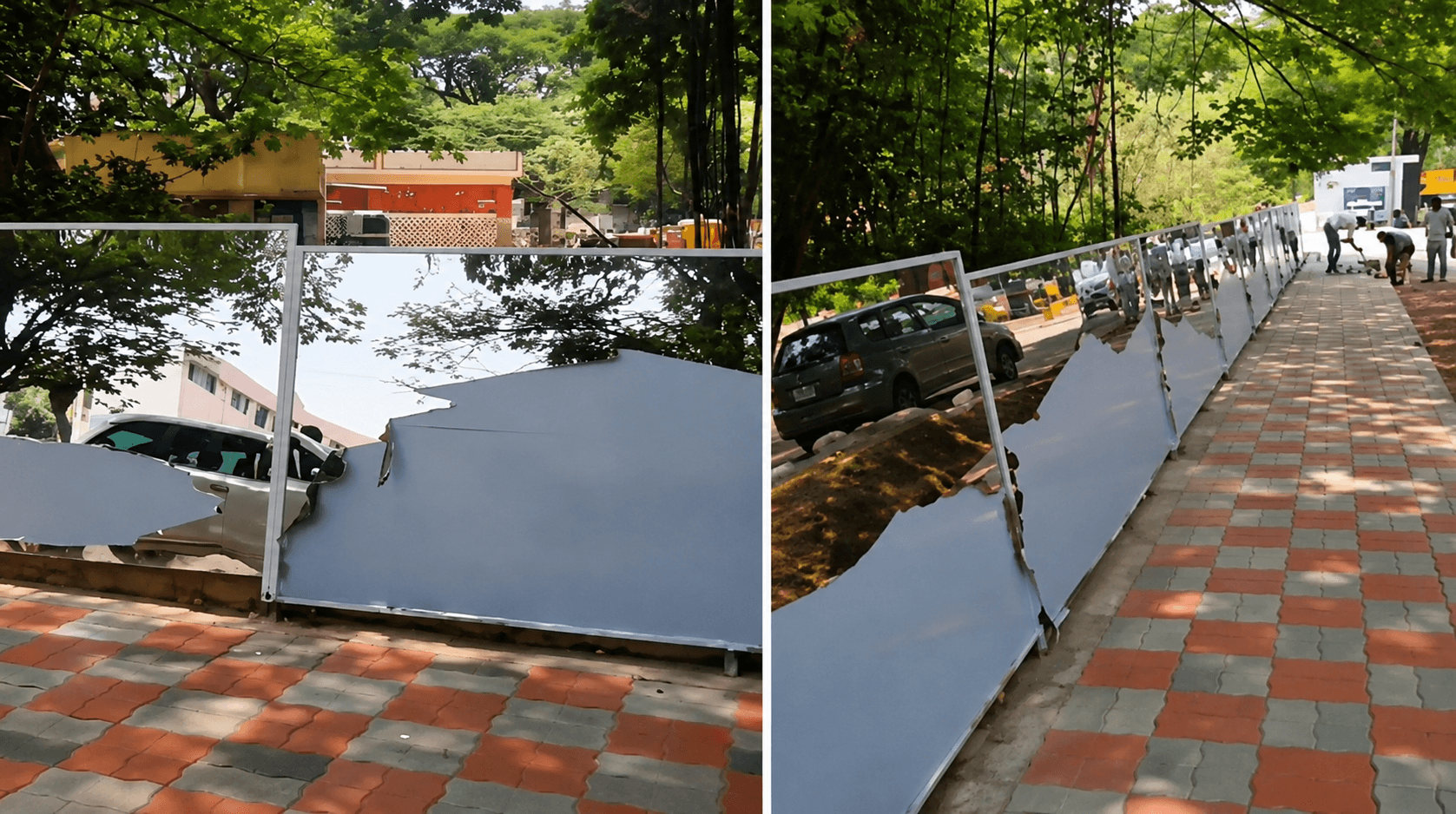
Mysuru has introduced an unconventional yet striking solution to a persistent urban issue. Authorities installed large mirrors on walls near public spaces to discourage public urination. The idea quickly gained traction online. It stood out not because of cost or scale, but because of its psychological insight.
The concept is simple. People tend to avoid inappropriate behavior when they can see themselves. This sense of self awareness acts as a deterrent. As a result, the initiative has been widely described as both creative and practical.
Understanding the Problem Beyond Infrastructure
Public urination remains a widespread issue across many Indian cities. Despite investments in sanitation infrastructure, behavioral gaps persist. In many cases, access is not the only barrier. Habit, convenience, and lack of enforcement also play key roles.
Mysuru’s approach shifts the focus. Instead of only building more facilities, it addresses human behavior directly. This marks a transition from infrastructure driven solutions to behavior driven interventions.
How the Mirror Strategy Works
The mirrors are installed on walls where public urination frequently occurs. LED lighting has also been added to ensure visibility at night. This increases the effectiveness of the intervention.
When individuals approach such spots, they immediately see their reflection. This creates a moment of hesitation. That pause is critical. It disrupts automatic behavior and encourages self regulation.
This approach aligns with behavioral science principles. Specifically, it uses what experts call a “nudge.” A nudge does not enforce behavior. Instead, it subtly guides decisions without restricting choice.
Public Reaction and Debate
The response has been mixed but engaged. Many citizens and observers praised the creativity of the solution. They see it as low cost and scalable. Others, however, raised concerns.
Critics argue that the approach addresses symptoms rather than root causes. They point to the need for more accessible public toilets and stronger enforcement. Some also question whether the effect will last over time. Despite differing views, the initiative has achieved one clear outcome. It has sparked a meaningful conversation on urban hygiene.
Civic Innovation and Its Broader Implications
Mysuru’s mirror experiment reflects a growing trend in urban governance. Cities are increasingly adopting behavioral insights to solve civic problems. This approach is faster to deploy and often more cost effective.
Moreover, it demonstrates how small design changes can create visible impact. Instead of large scale infrastructure projects, targeted interventions can shift behavior at specific hotspots.
For policymakers, this offers a valuable lesson. Urban challenges do not always require complex solutions. Sometimes, the right insight can outperform expensive systems.
Impact on Urban Sanitation Strategy
If successful, this model could influence sanitation strategies across India. Cities face budget constraints and rapid population growth. Therefore, scalable and low cost solutions are essential.
The mirror strategy fits this requirement. It requires minimal investment and can be replicated easily. However, it should not replace infrastructure development. Instead, it should complement existing efforts. Combining behavioral nudges with improved facilities can create a more holistic sanitation framework.
What This Means for the Future of City Design
Mysuru’s initiative highlights an important shift in city planning. Urban design is no longer just about physical structures. It now includes psychological and behavioral dimensions.
Designing cities that influence behavior positively can lead to cleaner and more efficient urban environments. This requires collaboration between policymakers, designers, and behavioral experts. In the long run, such approaches can reduce reliance on enforcement and create self sustaining civic discipline.
A Reflection of Smarter Governance
Mysuru’s mirror installation is more than a viral idea. It represents a shift in how cities approach persistent problems. By focusing on human behavior, it offers a fresh perspective on urban sanitation.
The initiative is not a complete solution. However, it is a strategic step forward. It shows that innovation in governance does not always require complexity. Sometimes, it only requires a better understanding of people.
FAQ's
Q1: Why did Mysuru install mirrors on walls?
Mysuru installed mirrors to discourage public urination by increasing self awareness and creating behavioral hesitation.
Q2: Do mirrors actually prevent public urination?
They can reduce it by acting as a psychological deterrent, though results may vary over time.
Q3: What role do LED lights play in this initiative?
LED lights improve visibility at night, ensuring the mirrors remain effective after dark.
Q4: Is this a long term solution to sanitation issues?
No, it is a complementary solution. It works best alongside proper sanitation infrastructure.
Q5: Can other cities adopt this model?
Yes, the approach is low cost and scalable, making it suitable for many urban areas.
Topics
Covering startup news, AI, technology, and business at ThePrimely. Delivering accurate, in-depth reporting on the stories that shape the future.