
India’s Job Market in 2026: Where Hiring Will Grow and What Skills Will Matter Most
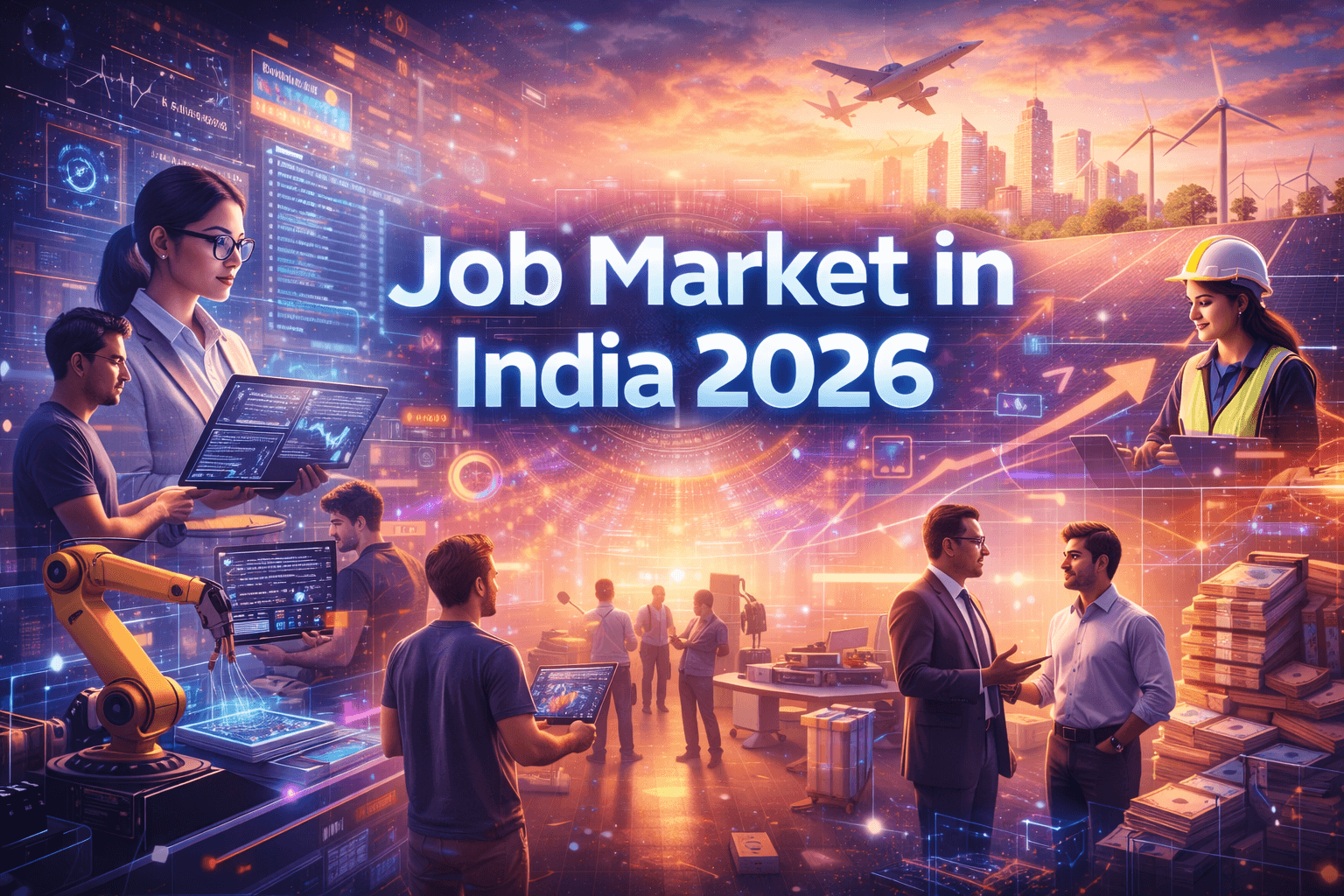
India’s job market is entering a pivotal phase in 2026 as traditional roles evolve and new opportunities open up across fast growing sectors. The landscape is no longer defined by tenure or job titles alone. Instead, digital fluency, adaptability and industry specific capabilities have emerged as critical differentiators for job seekers and career changers alike.
As companies rethink workforce strategies amid global uncertainty, automation and technological disruption, one trend is clear — skills and relevance now outweigh years of experience or brand names on a resume.
Where Hiring Momentum Will Be Strongest
Several sectors are poised to lead job growth in 2026, driven by digital transformation, sustainability initiatives and structural economic shifts.
Technology and Digital Roles
Technology remains the backbone of India’s hiring story. Roles in data science, artificial intelligence, cloud computing, cybersecurity and business intelligence continue to dominate demand. Employers are not just seeking coders; they want professionals who can drive digital adoption, leverage AI tools, and optimize business processes.
Even outside traditional tech titles, AI fluency is becoming increasingly important. Many industries now expect professionals to use AI to work faster, solve problems and make sharper decisions, especially as AI spreads into workflows far beyond IT.
Green Infrastructure and Sustainability
The government’s focus on clean energy, electric mobility and infrastructure development is creating steady demand for skilled technicians such as solar panel specialists, EV support roles and construction safety officers. These emerging “blue collar tech” roles highlight the blend of digital and practical skills required in India’s evolving economy.
Quick Commerce and Logistics
As quick commerce expands into tier two and tier three cities, roles in fleet management, warehouse automation and logistics planning are growing. These jobs require familiarity with digital dashboards and automated systems, not just manual coordination.
Next Generation Services
Community healthcare, tech enabled retail and customer experience functions are rising fast. Roles such as geriatric care assistants, tech savvy retail experience associates and workflow specialists reflect a market that values empathy, customer focus and digital comfort.
Top Skills That Will Matter Most in 2026
The skills that will drive career success in 2026 go far beyond basic qualification or domain knowledge. They include a mix of technical fluency, problem solving and human centric abilities.
AI and Digital Fluency
AI is no longer optional. Whether you are in finance, marketing or operations, understanding AI at a basic level — how to use it to automate routine tasks, interpret data and support decision making — is essential.
Communication and Collaboration
Strong communication remains a timeless skill. Employers consistently prioritise professionals who can convey ideas clearly, work across teams and influence outcomes without authority.
Adaptability and Continuous Learning
As technologies evolve quickly, adaptability will determine who thrives. The ability to learn new tools and frameworks quickly, and to apply them effectively, will outpace rigid experience accumulations.
Project and Product Thinking
Professionals who understand outcomes, not just outputs, stand out. Product thinking — seeing beyond code or task lists to how features impact users and business goals — is increasingly specified in job descriptions.
Domain and Data Analytics Skills
Data literacy — not just at an analytical level but the ability to interpret and translate insights into action — is one of the most in demand traits across industries including finance, healthcare and digital media.
Geographical Shifts in Hiring
Growth in hiring is no longer limited to metropolitan cities. While hubs like Bengaluru, Hyderabad and Mumbai lead, secondary cities such as Jaipur, Pune, Kochi and Coimbatore are becoming key employment hotspots. This reflects distributed job growth driven by remote work models and broader access to digital infrastructure.
Salary and “Digital Premium” Trends
The rise of technology driven roles is also reshaping salary structures. Specialists in areas like cybersecurity and cloud computing can expect average salary increases of between 15 and 30 percent, outpacing generalist roles. This occurs as companies compete for scarce talent with deep technical expertise.
At the same time, even some technical blue collar positions, such as EV mechanics and precision manufacturing technicians, are earning higher pay due to hands on expertise combined with digital tool familiarity.
Planning Your Career Strategy for 2026
If you are preparing for the job market in 2026 and beyond, here are practical steps that can help:
Upskill in AI and Data
Seek courses that teach practical AI applications and analytics rather than just theory.
Develop Soft Skills
Communication, collaboration and problem solving have never been more critical.
Embrace Hybrid Roles
Roles that combine digital tools with domain expertise create new opportunities.
Focus on Results
Build a portfolio of outcomes rather than just job descriptions.
Look Beyond Metros
Explore opportunities in growing cities where competition may be less intense and learning curves steeper.
Frequently Asked Questions
Which cities will offer the best job opportunities in India by 2026?
Along with Bengaluru, Hyderabad, and Mumbai, cities like Pune, Jaipur, Kochi, Coimbatore, and Indore are emerging as strong hiring hubs. Remote and hybrid work models are accelerating this shift.
How can students prepare for the Indian job market in 2026?
Students should focus on building practical skills, internships, real projects, AI awareness, and strong English communication. Learning how to present outcomes and not just qualifications will be critical.
Will salaries increase in India’s job market by 2026?
Yes, especially for roles requiring AI, data, cybersecurity, and cloud expertise. A digital premium is emerging where professionals with scarce, high impact skills command significantly higher compensation.
What is the biggest mistake job seekers should avoid in 2026?
Relying only on degrees or past job titles. The biggest risk is not upgrading skills. Continuous learning, adaptability, and communication will matter more than static experience.
Topics
Covering startup news, AI, technology, and business at ThePrimely. Delivering accurate, in-depth reporting on the stories that shape the future.