
Fuel Shortage in Indian Cities? No-Panic Buying Is the Real Problem
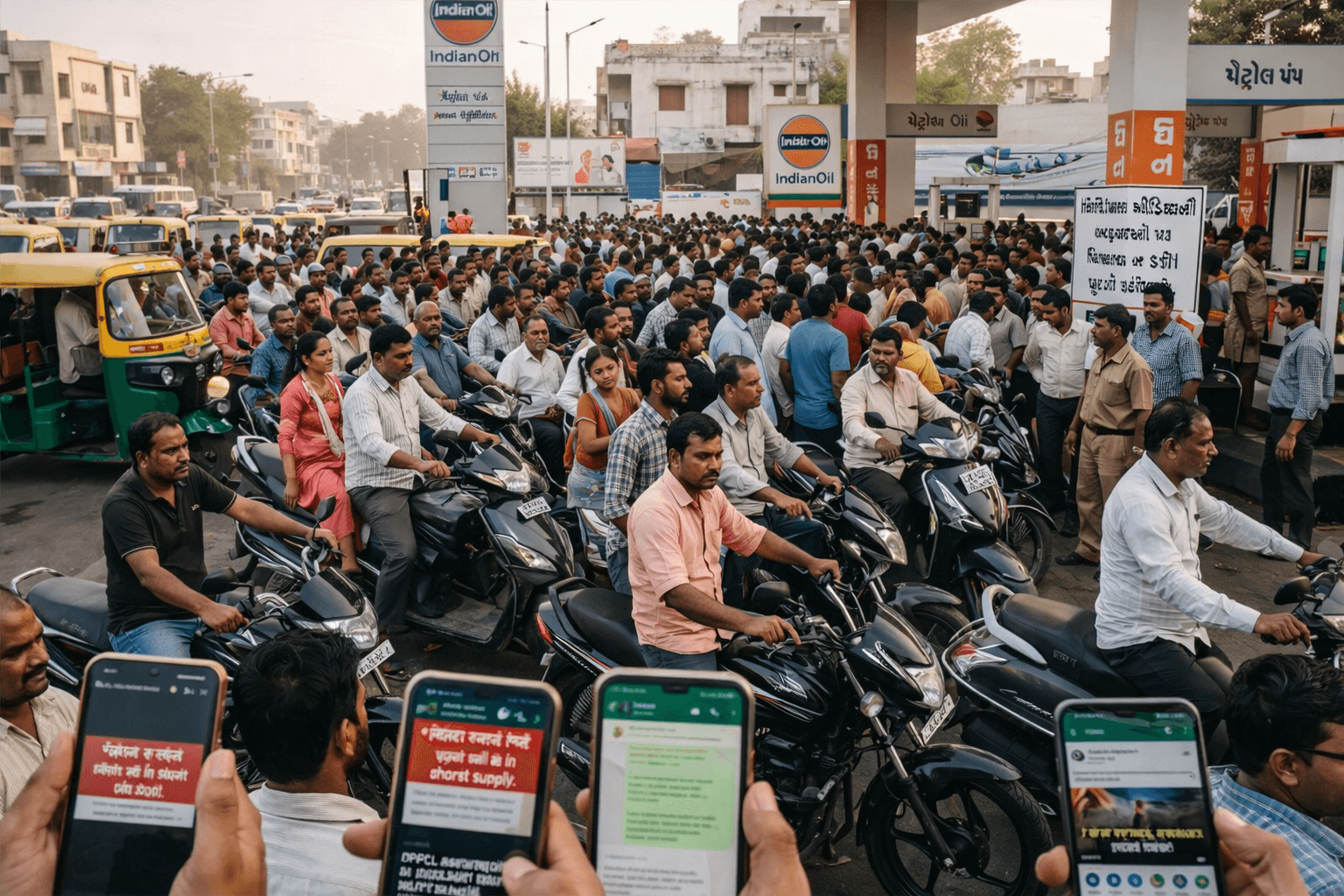
A wave of fuel shortage rumours India triggered an unexpected crisis. Long queues formed at petrol pumps. Panic spread quickly across cities. However, the reality told a different story. There was no actual fuel shortage. The disruption came from misinformation.
What Really Happened
Reports of a possible fuel shortage began circulating on social media. These claims spread rapidly across states like Gujarat and Delhi. As a result, people rushed to petrol pumps. In several locations, queues stretched for hours. Some reports indicated waiting times of up to five hours.
Despite the surge in demand, oil companies maintained a consistent message. There was no disruption in fuel supply. Bharat Petroleum Corporation Limited publicly assured that fuel stocks were adequate across the country.
Why Rumours Escalated Quickly
India’s fuel distribution system is highly sensitive to public behavior. Even a small spike in demand can create visible shortages at local stations. Social media amplified the situation. Unverified messages created urgency.
Moreover, past global supply disruptions have made consumers cautious. This context increased the speed at which rumours gained traction.
Developments Across Cities
Rapid Spread of Panic Buying
Cities reported sudden surges in fuel demand. Petrol pumps struggled to manage crowds. In Gujarat, several pumps witnessed long lines that lasted for hours. Similar scenes appeared in parts of Delhi and other urban centers.
Official Clarifications
Government officials quickly intervened. They dismissed the rumours as false. Oil marketing companies reinforced this message. They confirmed stable supply chains and sufficient reserves.
Supply Chain Remained Intact
Despite visible shortages at some outlets, the overall supply network functioned normally. Temporary stockouts occurred only due to sudden demand spikes, not supply failure.
Industry and Market Impact
The immediate impact was operational stress on petrol pumps. Staff had to manage crowd control and ensure fair distribution. For the broader energy sector, the incident highlighted a key vulnerability. Demand shocks driven by misinformation can disrupt normal operations.
Additionally, such events can distort short term consumption data. This affects supply planning and logistics.
Misinformation as a Market Risk and Digital Platforms Under Scrutiny
This episode shows how misinformation can influence real world markets. It creates artificial demand and operational chaos. Timely communication from companies and government agencies is critical. Clear messaging can reduce panic.
Consumers must verify information before acting. Panic buying often worsens the situation. Social media platforms may face increased pressure to control the spread of false information.
What This Means for India’s Fuel Stability
India’s fuel infrastructure remains stable. The country maintains strategic reserves and robust supply chains. However, perception risk is now a major factor. Even without real shortages, public fear can create disruption.
Therefore, managing information flow becomes as important as managing fuel supply.
FAQs:
1. Was there an actual fuel shortage in India?
No. Oil companies and the government confirmed that fuel supply remained stable across the country.
2. What caused the panic buying?
Unverified social media rumours triggered fear, leading people to rush to petrol pumps.
3. Which areas were most affected?
Cities in Gujarat and Delhi reported long queues and increased demand at petrol stations.
4. How did oil companies respond?
Companies like BPCL assured the public that there was enough fuel supply and no disruption in distribution.
5. What is the key takeaway from this incident?
Misinformation can create real world disruptions even when actual supply systems remain stable.
Topics
Covering startup news, AI, technology, and business at ThePrimely. Delivering accurate, in-depth reporting on the stories that shape the future.