
Fresh Graduates at Risk, Anthropic CEO Warns AI Could Cut Entry Level Jobs
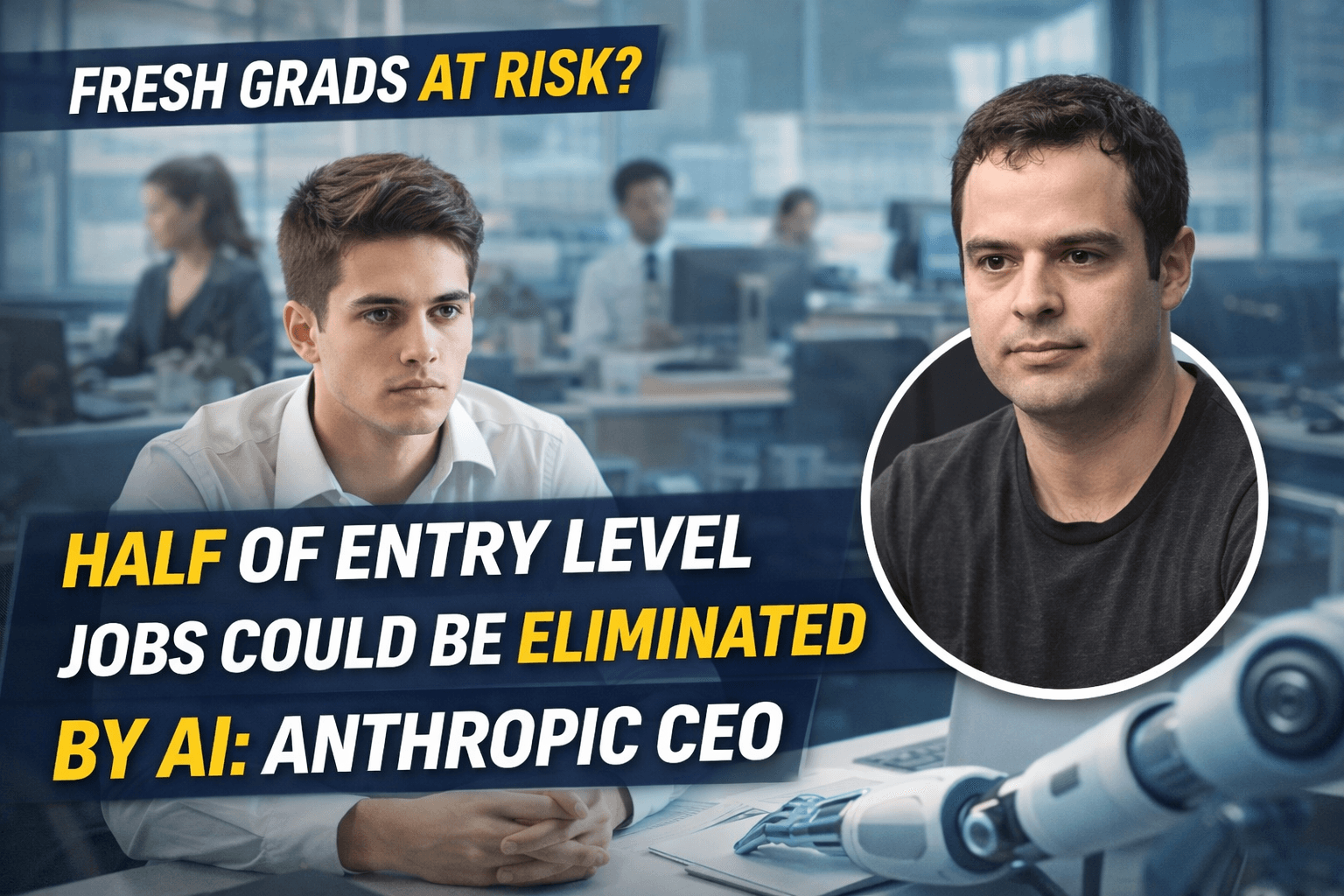
The way we work is changing fast. And according to Anthropic CEO Dario Amodei, the change could reshape the job market dramatically in the next few years. In recent interviews and public comments, Amodei warned that artificial intelligence may replace up to 50 percent of entry level white collar jobs within five years. His message has sparked serious attention from workers, employers, and policymakers around the world.
This is not just about machines doing simple tasks. It is about machines handling work that used to require human thinking, learning, and problem solving.
Why Amodei Sees a Major Shift Coming
Amodei pointed out that artificial intelligence is progressing more quickly than many people realize. Tools like generative AI models are not just answering questions or drafting simple text. They are beginning to take on tasks that were once the domain of junior employees.
He explained that many entry level roles — such as drafting reports, writing code fragments, analyzing data, producing summaries, and managing routine client requests — could soon be done more efficiently by AI systems. As these tools improve, companies may choose automation not only because it is cheaper but because it is fast, consistent, and available around the clock.
This shift puts fresh graduates and early career professionals squarely in the spotlight.
What Jobs Are Most at Risk
When we think about jobs that could be replaced, different categories of work rise to the top. Amodei highlighted roles that involve repetitive thinking or pattern recognition as especially vulnerable. These include:
- Entry level analyst and research support roles
- Junior consultant tasks involving routine data interpretation
- Early stage software testing and code documentation
- Administrative and customer support functions
- Basic legal or financial paperwork and reporting
These jobs are often the first step in a young professional’s career journey. If many of these roles become automated, early career pathways could look very different from what they have been in the past.
How This Is Different From Past Automation Waves
Automation is not new. Machines have replaced manual work in factories for decades. But what Amodei and other AI experts warn about now is cognitive automation — machines doing work that requires thinking rather than just physical effort.
Earlier waves of automation tended to affect manual labor first and then pushed workers into new sectors of the economy. What makes the current moment different is that AI can step into knowledge work that once required a college degree, training, and human reasoning.
This means entire career trajectories could shift, especially for those just starting out.
Real World Warnings and Early Signs
Some recent research supports this concern. Studies have shown that AI tools can already handle a significant portion of the tasks performed by white collar workers. In several sectors, up to a quarter or more of tasks traditionally done by analysts and support staff are now manageable by AI models.
At the same time, technology stocks tied to traditional software and staffing models saw volatility as investors weighed the implications of rapid AI adoption.
These developments show that the future of work is not a distant idea. It is unfolding now.
Preparing for a Changing Job Landscape
If AI continues to reshape work, what can individuals and organizations do to stay ahead?
Focus on Skills That Are Hard to Automate
Creativity, complex problem solving, human empathy, strategic planning, negotiation, and leadership remain areas where humans have an edge.
Embrace AI as a Tool, Not a Threat
Professionals who understand how to use AI to amplify their work will be more valuable than those who try to ignore it.
Invest in Lifelong Learning
Rather than relying on traditional career paths, workers should develop habits of continuous learning to adapt to new tools and workflows.
Companies Should Support Transition
Employers can play a role by offering training programs and redeployment pathways for staff whose roles are affected by automation.
What This Means for Graduates
Fresh graduates entering the workforce today face a different reality than those who graduated a decade ago. In many industries, the expectation that entry level roles provide a stepping stone to long term career growth is being challenged.
Amodei’s warning is a call to action. It is not meant to cause fear but to highlight the need for preparation. Young professionals may need to think beyond the first job title and focus on developing skills that will remain valuable even as tools evolve.
Why Leaders and Policymakers Need to Pay Attention
If a large portion of entry level jobs are automated in the next few years, it could have broad economic and social effects. Leaders may need to rethink how education, training, labor policies, and safety nets work in an AI age.
Some questions to consider include:
- How can education systems better prepare students for AI augmented work?
- What protections or support systems are necessary for workers displaced by automation?
- How can governments balance innovation and job security?
These are not easy questions, but they are becoming urgent.
Final Takeaway
The warning from the Anthropic CEO about AI and entry level jobs is a powerful reminder of how technology can change the world of work rapidly. While AI offers enormous potential to boost productivity, it could also unsettle traditional job paths that many young professionals rely on.
Preparing for this future means focusing on adaptable skills, learning to work with AI tools, and building flexible career paths. The change is coming. Understanding it early gives people the best chance to thrive in the future of work.
Topics
Covering startup news, AI, technology, and business at ThePrimely. Delivering accurate, in-depth reporting on the stories that shape the future.