
China’s New PhD Rules Drop Thesis to Tackle Plagiarism
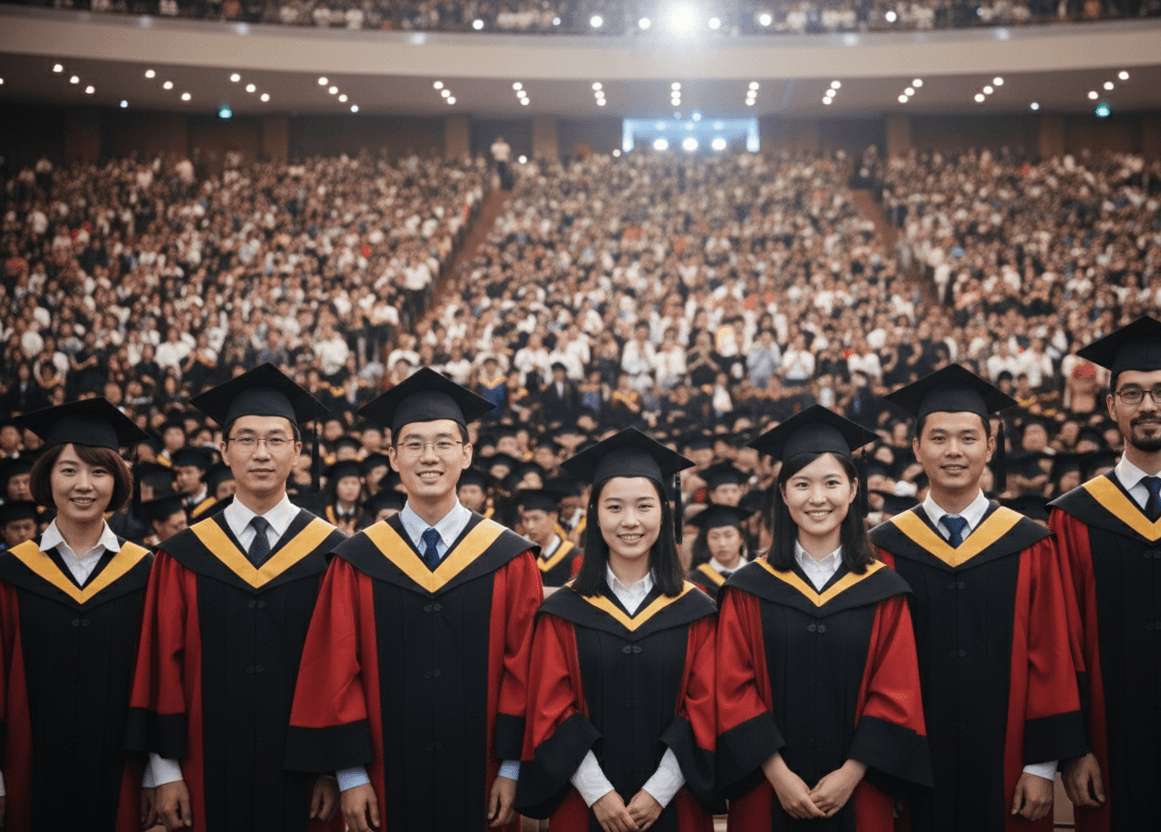
China New PhD Rules Reshape Doctoral Education
China's new PhD rules are beginning to transform doctoral education by allowing selected candidates to earn a PhD without submitting a traditional written thesis. Instead, universities can assess students based on innovation outputs, including patented technologies, engineering solutions and industry-ready products.
The reform aims to address persistent concerns about plagiarism, academic misconduct and the growth of paper mills, while aligning doctoral education more closely with national innovation priorities.
A PhD Without a Thesis
The policy gained attention after a doctoral candidate at Southeast University completed a PhD oral defense without submitting a dissertation. Instead, the candidate presented an engineering product designed for real-world infrastructure use.
The case illustrates how China's new PhD rules shift evaluation away from lengthy written dissertations toward tangible technical outcomes in selected disciplines.
What Has Changed Under China New PhD Rules
Under the revised framework, universities may assess doctoral candidates using innovation-based criteria rather than thesis length or publication volume.
Accepted Outputs Include
- Market-ready products
- Patented technologies
- Applied research with direct industrial use
The changes mainly apply to engineering, technology and applied science fields. Humanities, social sciences and theoretical disciplines continue to require traditional written theses.
Evaluation committees remain responsible for verifying originality, technical rigor and contribution value.
Why China Introduced New PhD Rules
Authorities have raised concerns about academic misconduct driven by intense publication pressure. Paper mills that sell fabricated research and ghostwritten dissertations have damaged trust in academic systems.
By reducing dependence on dissertation volume, China new PhD rules seek to:
- Lower incentives for plagiarism
- Improve research credibility
- Encourage problem solving with real-world impact
The reform also supports China’s broader strategy of linking universities with industrial and economic development.
How Doctoral Evaluation Works Now
Despite removing mandatory theses in some cases, the reform does not weaken scrutiny. Candidates must still pass formal oral defences and expert panel reviews.
Panels assess:
- Technical novelty
- Practical relevance
- Economic or societal impact
Supporters argue innovation-based doctorates demand equal effort through applied work. Critics warn that safeguards are needed to preserve theoretical depth and academic standards.
Why the Reform Matters Globally
China produces one of the world’s largest numbers of PhD graduates, making any systemic change internationally significant. Education experts worldwide are watching whether innovation-focused doctorates can coexist with traditional academic models.
The debate has prompted questions in other countries about modernizing doctoral education while maintaining research integrity.
What Comes Next
Officials say the policy will be monitored and refined based on results. Universities retain discretion over adoption and scope.
For now, China's new PhD rules signal a redefinition of doctoral achievement, placing innovation, impact and application alongside traditional scholarship.
Topics
Covering startup news, AI, technology, and business at ThePrimely. Delivering accurate, in-depth reporting on the stories that shape the future.