
Explained: Bharat Bandh February 12, 2026 | 30 Crore Workers Nationwide Strike
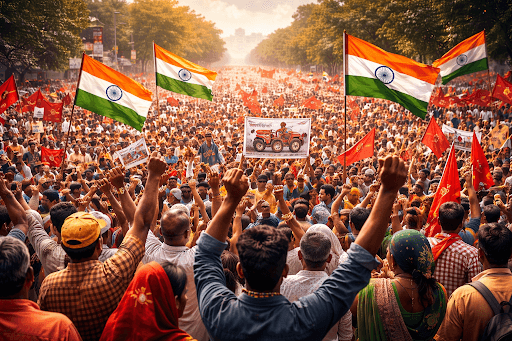
India is preparing for one of its largest civil protests in recent years. On February 12, 2026, trade unions and farmer groups have called for a nationwide general strike, widely known as Bharat Bandh. Around 30 crore workers are expected to take part.
The strike is likely to affect daily life in many parts of the country. Services linked to banking, transport, agriculture, and public offices may face disruptions across hundreds of districts.
The bandh highlights growing tension between worker groups, farmers, and the central government. Protesters say recent labour laws, economic policies, and trade decisions weaken workers’ rights and hurt local farming communities.
Why the Bharat Bandh Has Been Called
A joint platform of ten central trade unions has announced the nationwide strike. These include AITUC, CITU, INTUC, HMS, SEWA, and several others. The unions have issued strike notices across both government and private sectors.
Union leaders say the strike focuses mainly on opposing the four new Labour Codes introduced by the central government. According to them, these laws reduce job security and promote contract based employment. They also believe the changes weaken collective bargaining and worker protections.
The unions have also raised concerns about other proposed laws. These include the Draft Seed Bill, the Electricity Amendment Bill, and the SHANTI Act. Protest leaders argue that these policies favour corporate interests over public welfare.
Farmer organisations have also joined the protest. Groups linked to the Samyukt Kisan Morcha have announced full support. They say the bandh now represents a united voice of workers and farmers across India.
Who Is Expected to Join the Strike
Organizers estimate that nearly 30 crore people will participate in the strike. This makes it one of the largest coordinated protests in India’s history.
Participants are expected from multiple sectors, including:
- Industrial and factory workers
- Bank and insurance employees
- Government and public sector staff
- Agricultural labourers
- Students and youth groups
- Citizens supporting the movement
Workers and farmers plan to hold rallies, marches, and demonstrations in cities and towns. In states such as Odisha and Assam, unions have warned of near complete shutdowns.
Key Reasons Behind the Protests
Opposition to Labour Code Changes
The Labour Codes introduced in 2025 replaced 29 existing labour laws. Supporters say the reforms simplify regulations. Trade unions strongly disagree.
Union leaders argue the new system makes hiring and firing easier. They also say it reduces wage security, workplace safety, and collective bargaining rights.
Anger Over Economic Policies
Protesters have also criticised what they describe as pro corporate economic policies. They believe privatisation and contract based employment models hurt small workers and rural communities.
Many unions say recent trade deals and policy decisions ignore the needs of farmers and informal workers.
Concerns Over India US Trade Agreements
Farmer groups have raised concerns about trade discussions with the United States. They fear cheaper imports could enter Indian markets and damage domestic agriculture.
To strengthen their demands, farmer groups have aligned with trade unions for the nationwide strike.
How Daily Life May Be Affected
A strike of this scale may disrupt essential services in several regions.
Banking Services
Bank employee unions have confirmed participation. As a result, banking services may remain limited or unavailable in some areas. Customers are advised to plan urgent work in advance.
Transport Services
Public transport, including buses and trains, may face delays or cancellations. Road blockades and protests could also slow traffic movement.
Schools and Government Offices
Some schools and government offices may remain closed or operate with reduced staff. The impact will vary by state and district.
Impact on Cities and Rural Areas
Business activity may slow in both urban and rural regions. Markets, supply chains, and local services could face temporary disruptions.
Political and Social Reactions
The Bharat Bandh has drawn mixed reactions nationwide. Supporters see it as a democratic way to raise concerns. Critics worry about economic losses and public inconvenience.
Experts say protests of this scale reflect deeper concerns about job security, labour rights, and rural livelihoods.
What Comes After February 12
Trade unions have said February 12 will act as a test of public support. If their demands remain unmet, they may plan larger or longer protests in the future.
The government now faces the challenge of balancing economic reforms with social stability. Dialogue and policy clarity will play a key role in the coming weeks.
Topics
Covering startup news, AI, technology, and business at ThePrimely. Delivering accurate, in-depth reporting on the stories that shape the future.