
AI Devices Race Intensifies with Hark and Sarvam
A New Battlefront Beyond Software
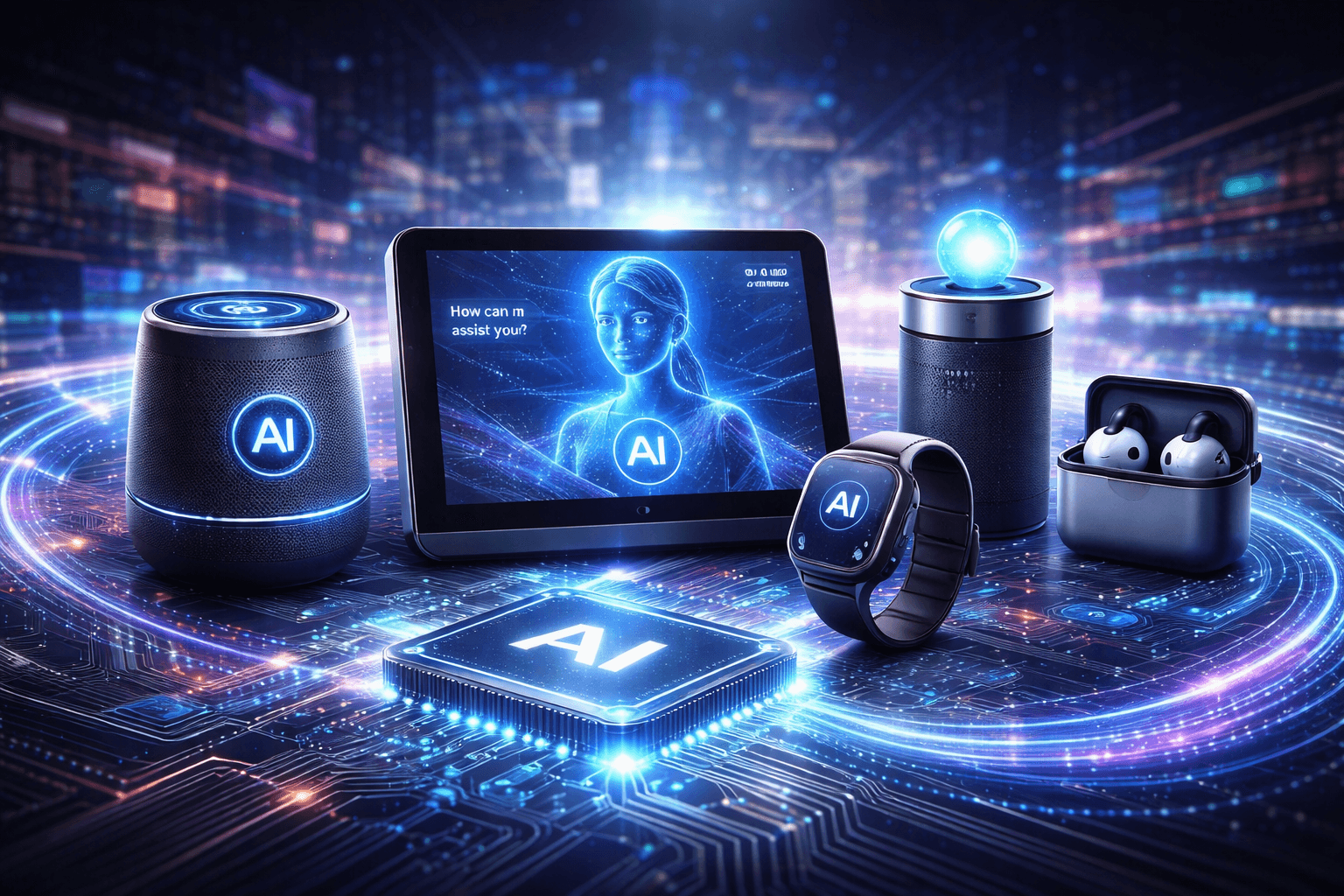
The AI devices market is entering a decisive phase. The focus is shifting from software to integrated hardware ecosystems.
Two developments highlight this shift. A new startup named Hark is building AI native devices. At the same time, Sarvam AI is raising significant capital to expand its capabilities.
Together, these moves signal a deeper transformation in the AI industry.
From AI Models to AI Devices
For years, AI progress focused on software models. However, the next phase requires tight integration between hardware and intelligence.
Companies now aim to control the full stack. This includes chips, devices, and AI systems.
As a result, the competition is expanding beyond traditional tech boundaries.
Hark Building a New Category of AI Devices
Vision of a Device Ecosystem
Hark is a new venture from the founder of Figure AI. The company plans to build a family of AI devices.
These devices will not rely on traditional app interfaces. Instead, they will function through direct AI interaction.
This marks a shift toward ambient computing. Users will interact with AI naturally rather than through screens.
Strategic Positioning
Hark aims to compete in an emerging category. This includes AI powered wearables and personal assistants.
The company’s approach suggests a long term vision. It is targeting a complete ecosystem rather than a single product.
Sarvam AI: Scaling Through Strategic Funding
$250 Million Funding Round
Sarvam AI is in discussions to raise around $250 million. The valuation is expected to reach about $1.5 billion.
Key investors include major global and Indian players. These include NVIDIA and HCLTech.
This funding round reflects strong confidence in India’s AI ecosystem.
Focus on India First AI
Sarvam AI focuses on building AI models for Indian languages and use cases.
This gives it a unique advantage. It can address a large and underserved market.
Moreover, its technology supports voice and conversational systems.
The Rise of AI Hardware Ecosystems
Shift Toward Integrated Systems
The industry is moving from standalone software to integrated AI systems.
Companies want control over both hardware and software. This ensures better performance and user experience.
Increasing Capital Intensity
Building AI devices requires significant investment.
Funding rounds like Sarvam AI’s highlight this trend. Only well funded companies can compete at scale.
Global Competition Intensifies
The AI devices race is now global.
US based startups like Hark are pushing innovation. Meanwhile, Indian firms like Sarvam AI are scaling rapidly.
This creates a competitive and dynamic landscape.
Strategic Implications for the Industry
Redefining User Interfaces
AI devices will change how users interact with technology.
Voice and context aware systems will replace traditional interfaces.
Supply Chain and Chip Dependency
Control over chips and hardware will become critical.
Companies that manage the full stack will gain a strong advantage.
Regional Innovation Advantage
India’s AI ecosystem is gaining momentum.
Local language capabilities and large user bases create strong growth opportunities.
The Next Phase of AI Evolution
The AI devices market is still in its early stages.
However, early signals are clear. The next wave of innovation will come from hardware integrated AI systems.
Hark’s vision and Sarvam AI’s funding position them strongly for this shift.
If execution succeeds, both could shape the future of AI interaction.
A Structural Shift in the AI Industry
The rise of AI devices marks a structural shift in the technology landscape.
Hark represents a new category of AI first hardware. Sarvam AI reflects the growing strength of regional innovation.
Together, they highlight a critical trend.
The future of AI will not be limited to software. It will be defined by integrated, intelligent devices.
Topics
Covering startup news, AI, technology, and business at ThePrimely. Delivering accurate, in-depth reporting on the stories that shape the future.