
U.S.–Japan Trade Deal: $550B Investment Plan Takes Shape
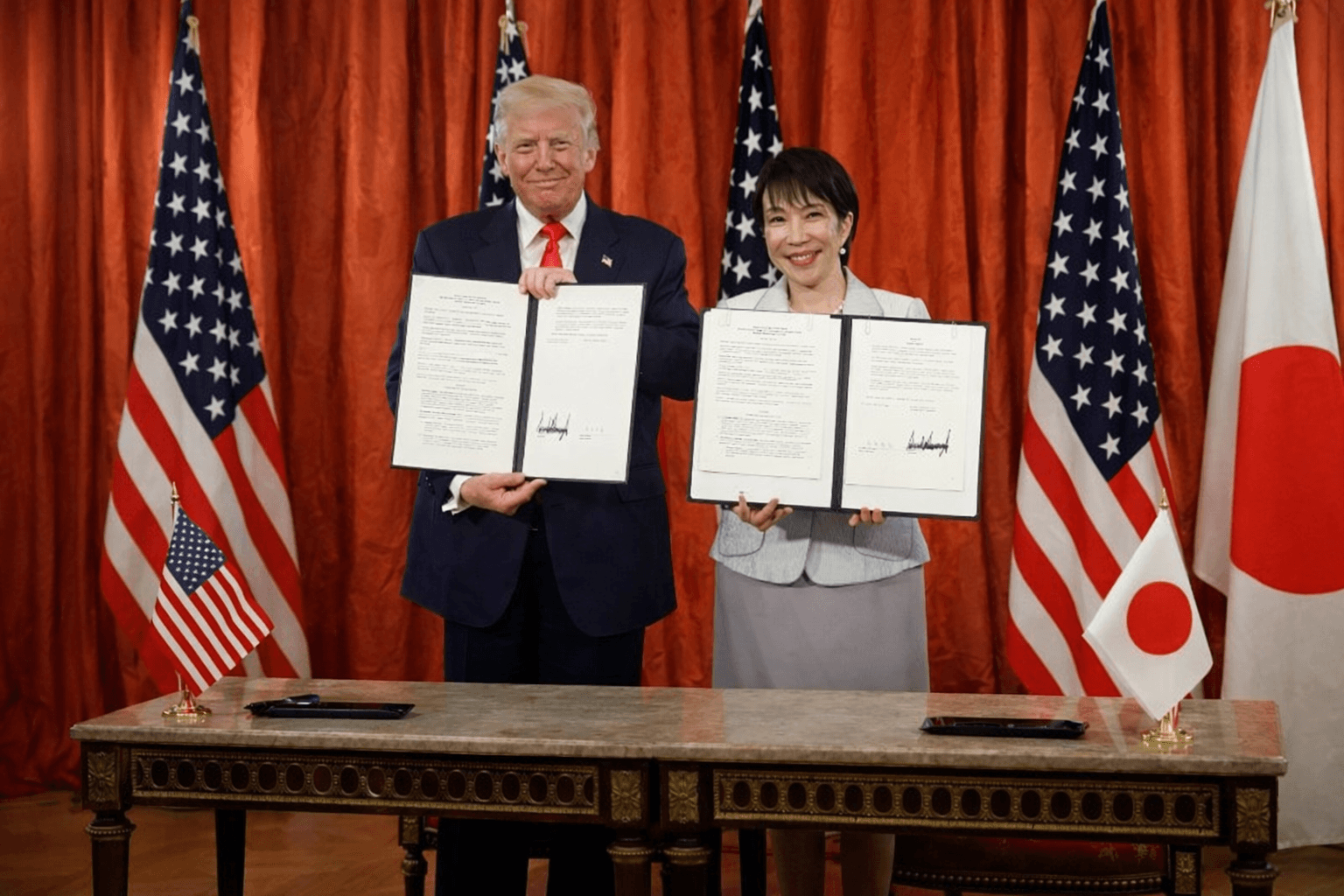
The U.S.–Japan trade deal moved into implementation as Washington and Tokyo unveiled the first $36 billion in projects under Japan’s wider $550 billion investment commitment in the United States. The agreement aims to deepen economic ties and strengthen industrial cooperation between the two countries.
The announcement marks a key milestone in one of the largest bilateral trade and investment arrangements in recent history.
U.S.–Japan Trade Deal: Initial Projects Announced
Under the U.S.–Japan trade deal, the first phase focuses on large-scale energy and industrial infrastructure projects. These investments target regions critical to power generation, exports, and advanced manufacturing.
Donald Trump confirmed the projects alongside senior U.S. trade officials, highlighting their role in boosting domestic capacity and job creation.
The first tranche includes:
- A $33 billion natural gas power plant in Ohio with a planned capacity of about 9.2 gigawatts.
- A $2.1 billion crude oil export terminal on the Texas Gulf Coast to expand energy export capability.
- A $600 million industrial diamond manufacturing facility in Georgia aimed at strengthening supply chains for advanced materials.
Together, these projects form the foundation of the broader investment roadmap.
Strategic Objectives Behind the U.S.–Japan Trade Deal
The U.S.–Japan trade deal combines investment commitments with trade policy changes. A 15 percent baseline tariff on Japanese imports into the U.S. forms part of the framework, replacing earlier tariff uncertainty.
In return, Japan committed to directing long-term capital into sectors that both governments view as strategically important. These include energy security, critical minerals, and industrial manufacturing.
As a result, the agreement seeks to reduce supply chain vulnerabilities while supporting domestic production.
Market Reaction and Economic Impact
Following the announcement, Asian equity markets reacted positively. Japanese stocks advanced as investors priced in stronger overseas investment demand and industrial growth prospects.
Meanwhile, analysts noted that the initial $36 billion allocation serves as a confidence signal. It demonstrates that the U.S.–Japan trade deal is moving beyond commitments into execution.
However, market participants cautioned that the pace of future investments will depend on regulatory clearances, financing structures, and coordination between public and private entities.
What Comes Next Under the U.S.–Japan Trade Deal
Officials from both governments said they are finalising oversight mechanisms to guide how the remaining investment is deployed. Selection committees will review projects to ensure alignment with national economic and security priorities.
Over time, the full $550 billion U.S.–Japan trade deal investment plan is expected to span energy, infrastructure, advanced manufacturing, and technology-related sectors. Policymakers see the agreement as a long-term pillar of bilateral economic cooperation rather than a short-term stimulus measure.
Topics
Covering startup news, AI, technology, and business at ThePrimely. Delivering accurate, in-depth reporting on the stories that shape the future.