
Samsung AirDrop Support Could Change File Sharing
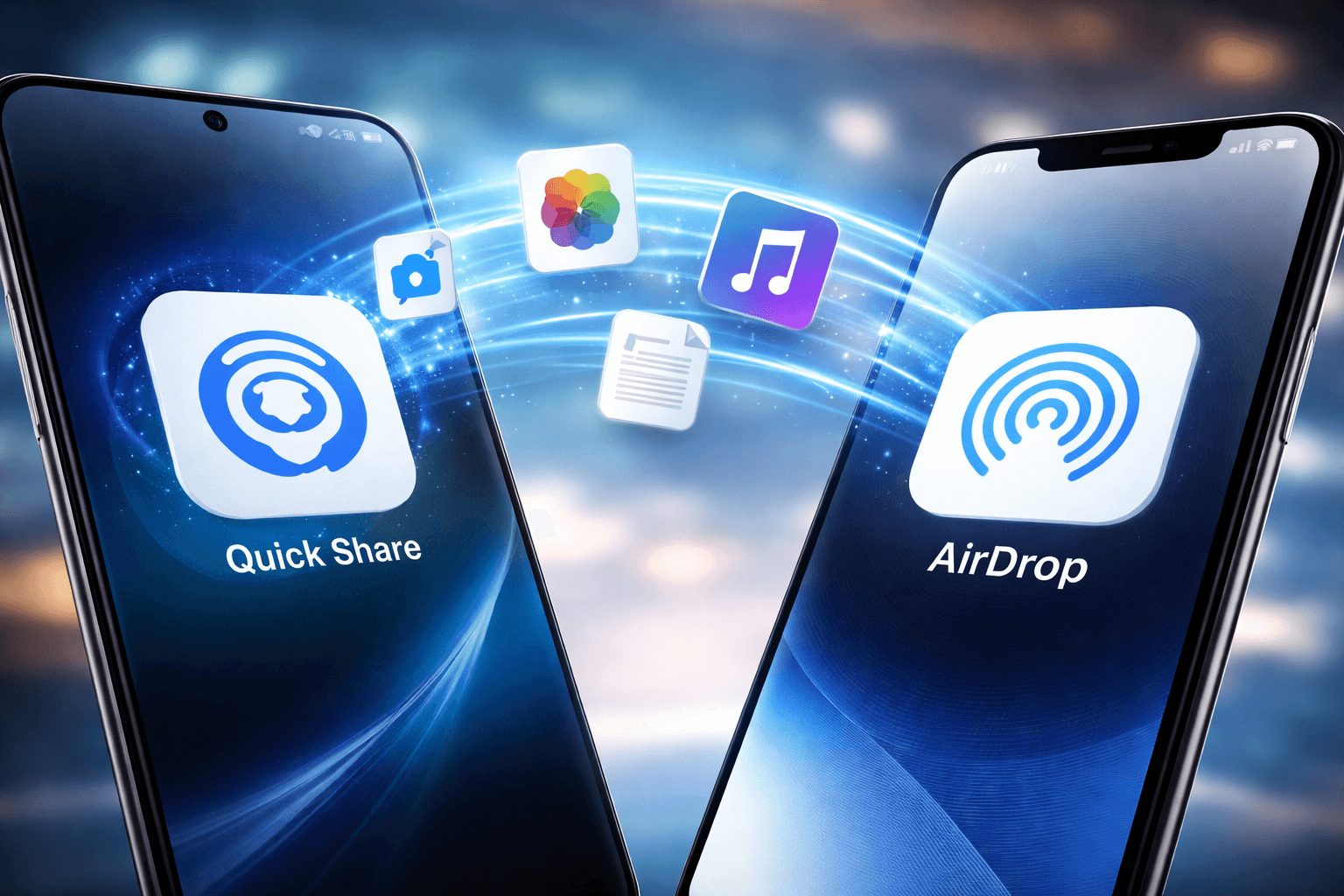
A Breakthrough Moment for Smartphone Ecosystems
Samsung AirDrop compatibility is emerging as a major shift in mobile technology. For years, file sharing between Android and iPhone remained fragmented.
Now, that barrier is beginning to weaken.
Reports suggest that Samsung may soon enable AirDrop-like functionality through Quick Share. This could allow direct file transfers between Galaxy devices and iPhones.
If implemented fully, this change will reshape user experience across platforms.
Understanding the Current Development
Samsung’s approach builds on Android’s Quick Share system. This feature already enables fast file transfer across Android devices.
However, a recent evolution is more significant.
Google introduced interoperability between Quick Share and AirDrop in late 2025. Initially, this worked only on select Pixel devices.
Now, this capability is expanding across the Android ecosystem.
What This Means for Samsung Users
- Galaxy devices may soon detect nearby iPhones directly
- Files can transfer without third party apps
- Transfers will use direct wireless protocols like Wi Fi Aware
This reduces friction between the two ecosystems.
Galaxy S26 and the AirDrop Integration Debate
The Samsung Galaxy S26 sits at the center of this development.
Leaks and early reports suggest that Quick Share may support AirDrop compatibility on this device.
However, current confirmations remain mixed.
- Some reports indicate the feature is not yet active on shipping devices
- Others suggest it may arrive via future updates like One UI upgrades
Therefore, the feature appears to be in transition rather than fully deployed.
How the Technology Works
The integration does not mean Apple is opening AirDrop completely. Instead, it relies on interoperability layers.
Core Mechanism
- Android Quick Share detects AirDrop enabled Apple devices
- The receiving iPhone must enable visibility mode
- Data transfers occur via peer to peer wireless connection
This process removes the need for cloud uploads or messaging apps.
In practical terms, users can share photos, videos, and documents instantly.
Breaking the Walled Garden
This shift has broader implications for the tech industry.
1. Reduced Ecosystem Lock In
For years, Apple and Android operated in isolated environments. This change reduces that separation.
2. Improved User Experience
Users no longer need workarounds like email or third party apps. File sharing becomes seamless.
3. Competitive Pressure
Other Android brands are also preparing similar features. This signals a wider industry move toward interoperability.
Strategic Implications for Samsung
Samsung’s move is not just technical. It is strategic.
Strengthening User Retention
Cross platform compatibility removes a key friction point for users switching devices.
Enhancing Ecosystem Value
Samsung can position itself as more open and flexible compared to closed ecosystems.
Aligning with Industry Trends
Regulatory pressure and user demand are pushing companies toward interoperability.
Gradual but Inevitable Expansion
The rollout will likely happen in phases.
Initially, support may remain limited to newer devices like the Samsung Galaxy S26. Over time, updates could extend it to older models.
Google has already confirmed broader expansion plans for 2026.
However, some limitations may remain:
- Users may need to adjust privacy settings
- Full contact integration may not be available initially
Despite this, the direction is clear.
A Structural Shift in Mobile Connectivity
Samsung AirDrop compatibility represents more than a feature update. It signals a structural shift in how devices interact.
For users, the benefit is immediate. File sharing becomes faster and simpler.
For the industry, the impact is deeper. Ecosystem barriers are starting to dissolve.
Samsung’s move aligns with a broader trend toward openness. The companies that embrace this shift will lead the next phase of mobile innovation.
Topics
Covering startup news, AI, technology, and business at ThePrimely. Delivering accurate, in-depth reporting on the stories that shape the future.