
Microsoft Expands Data Centers, Vows Not to Raise Electricity Costs
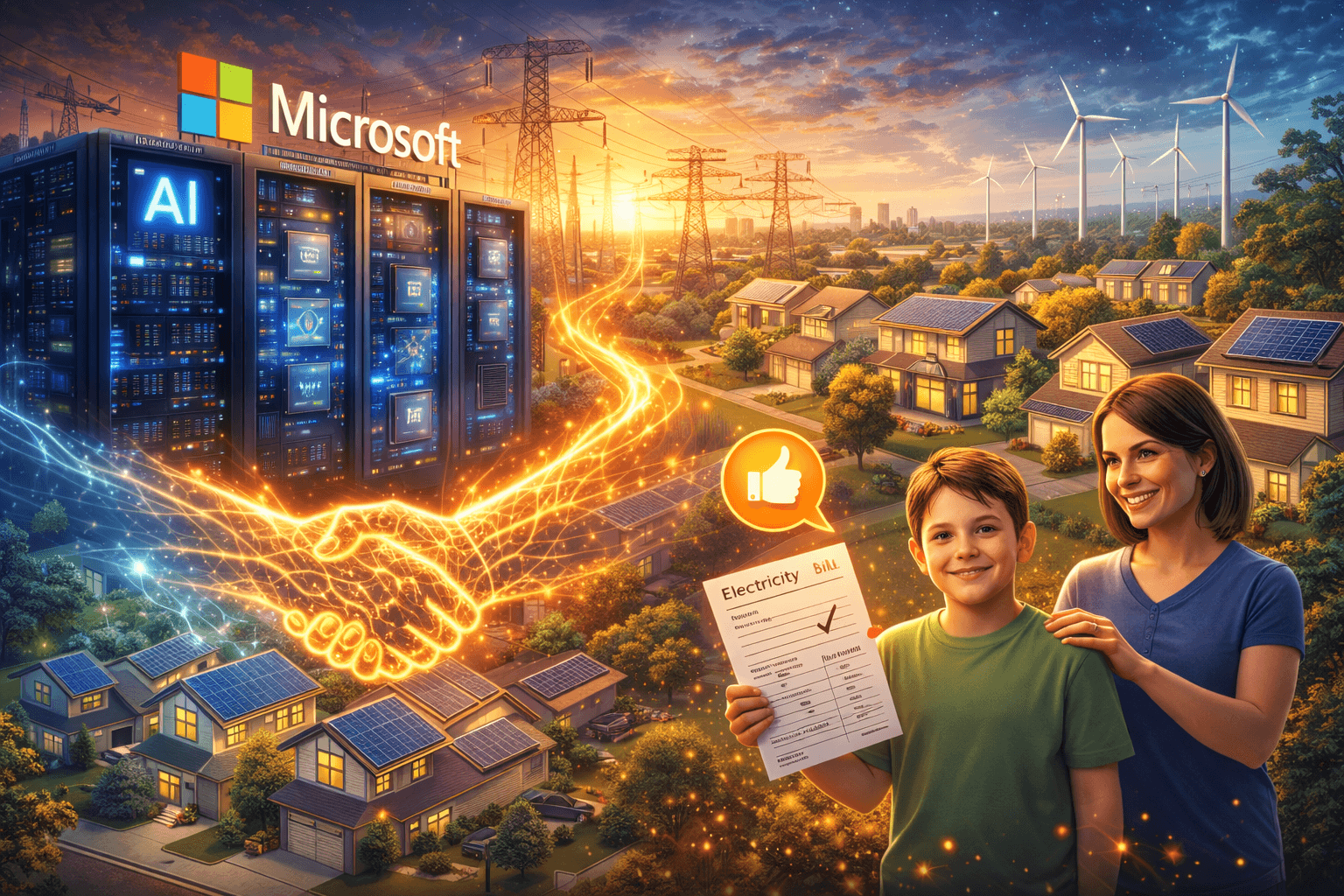
Microsoft is accelerating its AI data center expansion across the United States while making an unusually direct pledge: its growth will not lead to higher electricity bills for local residents. The commitment places Microsoft data centers electricity costs at the center of a wider debate over how AI infrastructure should be financed as energy demand from hyperscale computing surges.
The announcement comes as data centers move from being invisible digital backbones to visible community issues. Power use, grid upgrades, and environmental impact are now part of public discussions whenever large technology facilities are proposed.
Why AI Data Center Growth Is Different
Traditional cloud facilities already consume large amounts of energy, but AI workloads significantly increase demand. Advanced processors used for training and running AI systems operate at high power densities, requiring not only more electricity but also intensive cooling and specialized electrical infrastructure.
This shift is reshaping the electricity grid impact of digital infrastructure. Utilities must plan for concentrated demand spikes, while regulators face pressure to ensure that large corporate users do not indirectly shift costs onto households through higher utility rates tech structures.
The “Community-First” Infrastructure Plan
Microsoft described its strategy as a community-first infrastructure plan, aimed at aligning expansion with local economic and energy realities. The company says it will coordinate closely with utilities and regulators so that the cost of serving new data centers is borne by Microsoft rather than residential ratepayers.
Key pillars include:
- Paying full market rates for electricity and infrastructure needs
- Supporting grid upgrades instead of relying on existing capacity
- Increasing transparency with local governments and communities
- Investing in efficiency and water-conscious cooling systems
The goal is to address rising local opposition data centers projects have faced in several states, where residents worry about grid stress, land use, and long-term environmental effects.
Political and Regulatory Pressure
Energy costs have become politically sensitive, and large technology facilities are increasingly part of that conversation. Policymakers have emphasized that tech firms should finance their own energy demands rather than rely on cross-subsidization through residential tariffs.
This environment raises the bar for corporate accountability. Companies making large Microsoft AI investments must now demonstrate not just technological leadership, but also responsible integration into regional infrastructure systems.
Economic and Infrastructure Trade-Offs
Data centers bring construction jobs, tax revenue, and digital ecosystem growth. They also require substations, transmission upgrades, and long-term grid planning. The AI infrastructure economic impact therefore extends beyond technology into public utilities, land planning, and environmental oversight.
Microsoft’s approach attempts to frame expansion as a net positive by combining job creation and local investment with cost-containment promises. Whether that balance holds will depend on how projects perform over time and how effectively utilities manage demand growth.
Environmental and Community Dimensions
Large facilities also face scrutiny over data center environmental concerns, including water use for cooling and carbon intensity of power sources. Communities increasingly expect clear reporting and sustainability measures alongside economic benefits.
By proactively addressing electricity pricing, Microsoft is attempting to secure social acceptance early, rather than responding after resistance emerges.
What This Means for the Industry
Other hyperscalers expanding AI capacity face similar pressures. The industry is entering a phase where energy strategy is as important as chip performance. Managing power sourcing, regulatory relationships, and community trust is becoming core to competitive positioning.
For investors and professionals in infrastructure, utilities, and cloud computing, the takeaway is clear: AI growth is now inseparable from energy policy and grid economics.
Frequently Asked Questions
Will Microsoft data centers raise electricity bills?
Microsoft says its facilities will not cause higher residential electricity rates and that it will cover its own energy-related costs.
Why are AI data centers controversial?
They consume large amounts of power and water, raising concerns about grid strain, environmental impact, and fairness in utility pricing.
How do utilities handle this growth?
Through grid upgrades, new capacity planning, and regulatory rate structures that determine who pays for infrastructure expansion
Topics
Covering startup news, AI, technology, and business at ThePrimely. Delivering accurate, in-depth reporting on the stories that shape the future.