
Sensex, Nifty close lower as record-low rupee, oil worries weigh on markets
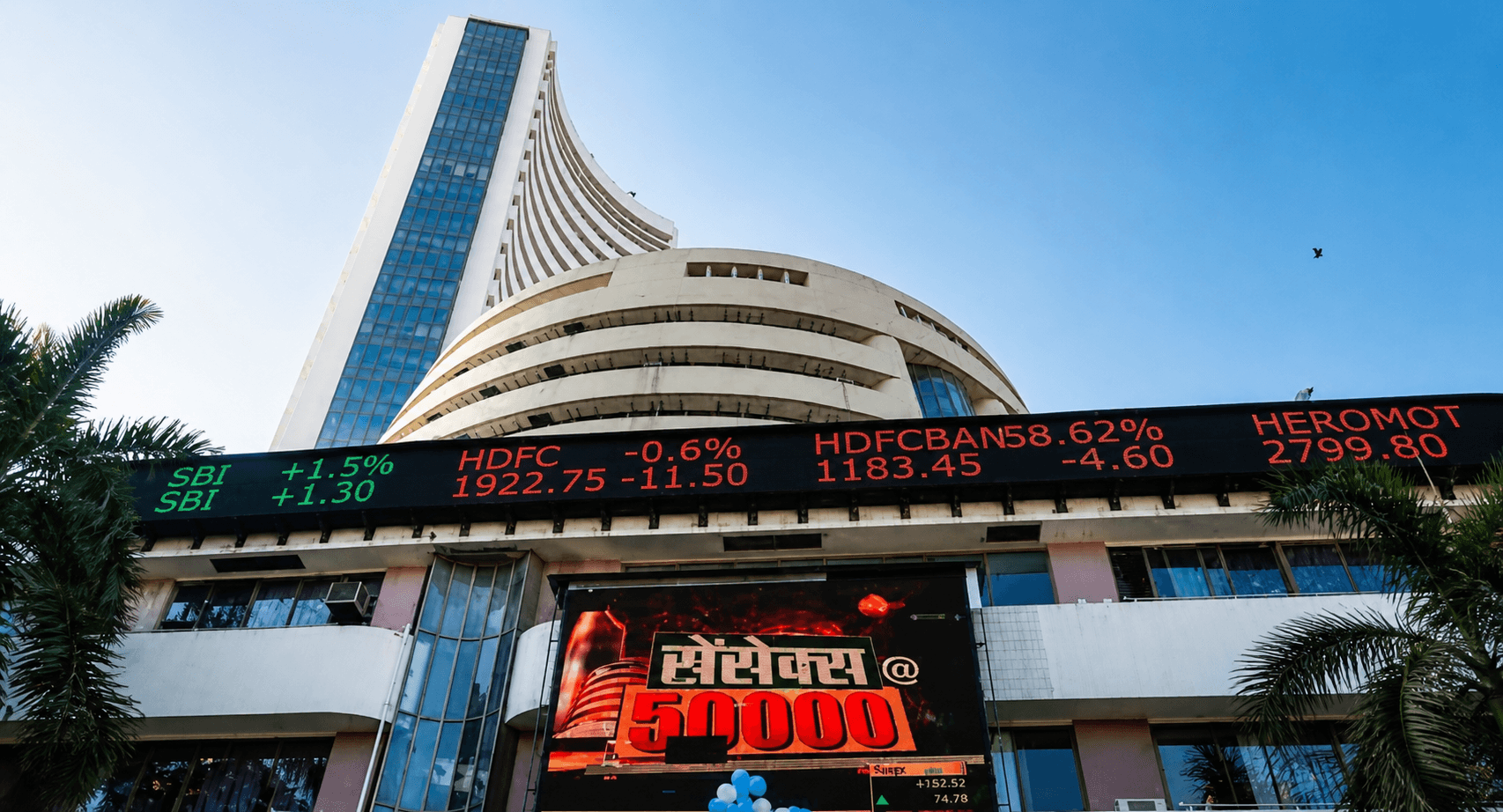
The Indian stock market fall has raised fresh concerns among investors. Both benchmark indices, Sensex and Nifty, ended lower as multiple risk factors converged at once.
The decline was not driven by a single trigger. Instead, a mix of currency weakness, rising oil prices, and global uncertainty weighed heavily on sentiment.
What Happened in the Market Today
The market opened weak and extended losses through the session. Sensex dropped by around 300 points during early trade. Meanwhile, Nifty also slipped, reflecting broad based selling.
Although markets attempted a recovery, the pressure remained persistent. Eventually, both indices closed lower, confirming a cautious investor stance. At the same time, the rupee hit a record low against the US dollar. This added another layer of concern for market participants.
Why the Indian Stock Market Fell
Several key factors explain the current weakness. Each of them is significant on its own. Together, they create a strong negative signal.
Rupee at Record Low
The sharp fall in the rupee has become a major concern. A weaker currency increases import costs. It also signals capital outflows. As a result, foreign investors tend to reduce exposure. This directly impacts equity markets.
Rising Crude Oil Prices
Crude oil prices have surged due to geopolitical tensions, including concerns around West Asia. For an import dependent country like India, this creates pressure on inflation and fiscal balance. Higher oil prices also reduce corporate margins. Therefore, investors react cautiously.
Global Geopolitical Uncertainty
Tensions involving major global regions have increased risk perception. Markets typically dislike uncertainty. Consequently, investors shift towards safer assets. This reduces liquidity in equities and triggers selling.
Technical Signals and Market Positioning
Despite the recent fall, the broader trend still shows resilience. Nifty recently moved above the 24,000 level, which remains a key psychological mark.
However, analysts suggest that markets may face resistance at higher levels. Support zones are now critical for maintaining stability. Short term volatility is expected to remain high. Therefore, traders need to stay cautious.
Impact on Sectors and Investors
The impact is not uniform across sectors. Oil sensitive sectors face direct pressure. Banking and financial stocks also react to currency fluctuations.
Meanwhile, export oriented companies may see some support due to the weaker rupee. However, overall sentiment remains cautious. Retail investors are showing restraint. Institutional flows will likely dictate near term direction.
What This Means for Market Direction
The current situation highlights a broader shift. Markets are moving from momentum driven gains to risk aware consolidation. If the rupee stabilizes and oil prices cool, sentiment may improve. On the other hand, continued global tensions could extend volatility.
Therefore, investors should focus on quality and long term fundamentals rather than short term movements. The Indian stock market fall reflects a combination of domestic and global pressures. Currency weakness, rising oil prices, and geopolitical risks have aligned at the same time.
While the long term outlook remains intact, the near term path may stay volatile. Investors must stay disciplined and avoid reactive decisions. A balanced approach will be critical in navigating the current market phase.
FAQ's
Why did the Indian stock market fall today?
The fall was driven by a weak rupee, rising oil prices, and global geopolitical tensions.
How does the rupee impact the stock market?
A weaker rupee increases import costs and triggers foreign investor outflows, affecting equities.
Is Nifty still strong above 24,000?
Yes, but resistance remains. Sustaining above this level is crucial for further upside.
Which sectors are most affected?
Oil sensitive sectors and financial stocks face pressure, while exporters may benefit.
Should investors worry about this fall?
Short term volatility is expected. However, long term investors should stay focused on fundamentals.
Topics
Covering startup news, AI, technology, and business at ThePrimely. Delivering accurate, in-depth reporting on the stories that shape the future.