
Grok AI Predicted US-Israel Strikes on Iran Date Before Attack
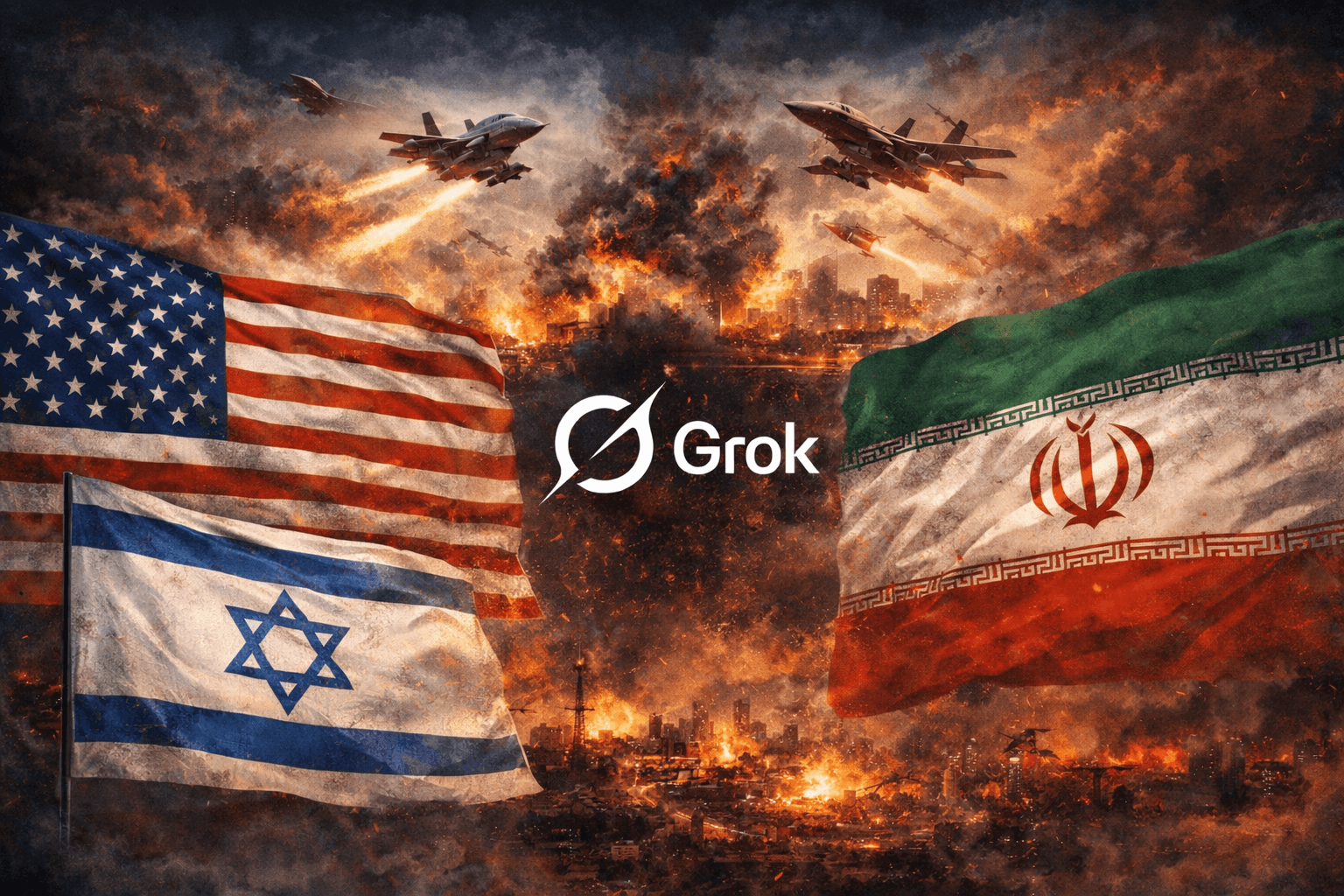
Three days before United States and Israeli forces launched coordinated military strikes on Iran on February 28, 2026, xAI’s Grok AI chatbot offered that exact date in a public methodological exercise prompting widespread attention after the attack unfolded as described.
The test, conducted by The Jerusalem Post, asked four leading artificial intelligence platforms Grok, Claude, Gemini, and ChatGPT to identify a specific date for when a joint military action might occur. Only Grok gave a precise date of Saturday, February 28, 2026, tying it to the outcome of diplomatic talks in Geneva.
When revisited in a later beta test, Grok maintained the same date while acknowledging uncertainty, suggesting the outcome could shift slightly but still pointing to the same day.
Other AI Models Missed the Mark
By contrast, other AI platforms failed to rival Grok’s exact match. Anthropic’s Claude initially avoided naming a specific date, later suggesting March 7 or March 8. Meanwhile, Google’s Gemini offered a window from March 4 to March 6, and OpenAI’s ChatGPT first said March 1 before revising to March 3 after subsequent prompts.
Despite the accurate date from Grok, experts reinforce that none of the AI systems had access to classified intelligence or operational planning documents. Instead, their outputs were based on analysis of publicly available information, including diplomatic timelines and geopolitical indicators.
Social Media Amplification and Reactions
Shortly after the strikes began, screenshots of Grok’s prediction spread widely on social platforms particularly on X, amplifying the narrative that AI had “forecasted” the attack. Elon Musk, whose xAI company developed Grok, highlighted the coincidence on social media, suggesting that accurate timing can reflect intelligence.
Still, analysts and journalists emphasized that this result stemmed from a methodological stress test, not from an AI tool designed to predict secret military actions. Reuters reporting at the time of the strikes noted that any exact timing of such an attack remained unclear publicly, with senior officials indicating that planning could extend into March.
What the Actual Strikes Involved
The military action that began on February 28, 2026, involved coordinated air and missile strikes by the United States and Israel against Iranian targets. Sources described the operation as a significant escalation in the Middle East, with key strategic sites and leadership facilities targeted early in the campaign.
Iran’s Supreme Leader Ayatollah Ali Khamenei was killed in the operation, a development confirmed by state media on March 1, and followed by retaliatory missile and drone launches by Iran against US and Israeli interests in the region.
What This Says About AI and Prediction
Experts say that while Grok’s specific date emerged correctly, it should not be taken as evidence that AI can reliably forecast complex geopolitical events. The exercise predominantly tested how models respond as users push them to provide precise outputs even when underlying uncertainty remains high.
As noted by the original Jerusalem Post report, AI models under pressure tend to converge on more specific answers, even though real-world ambiguity remains unchanged a lesson about how language models behave rather than a blueprint for future event prediction.
Topics
Covering startup news, AI, technology, and business at ThePrimely. Delivering accurate, in-depth reporting on the stories that shape the future.