
Google Bets Big on the ‘Agentic Enterprise’ at Next 2026
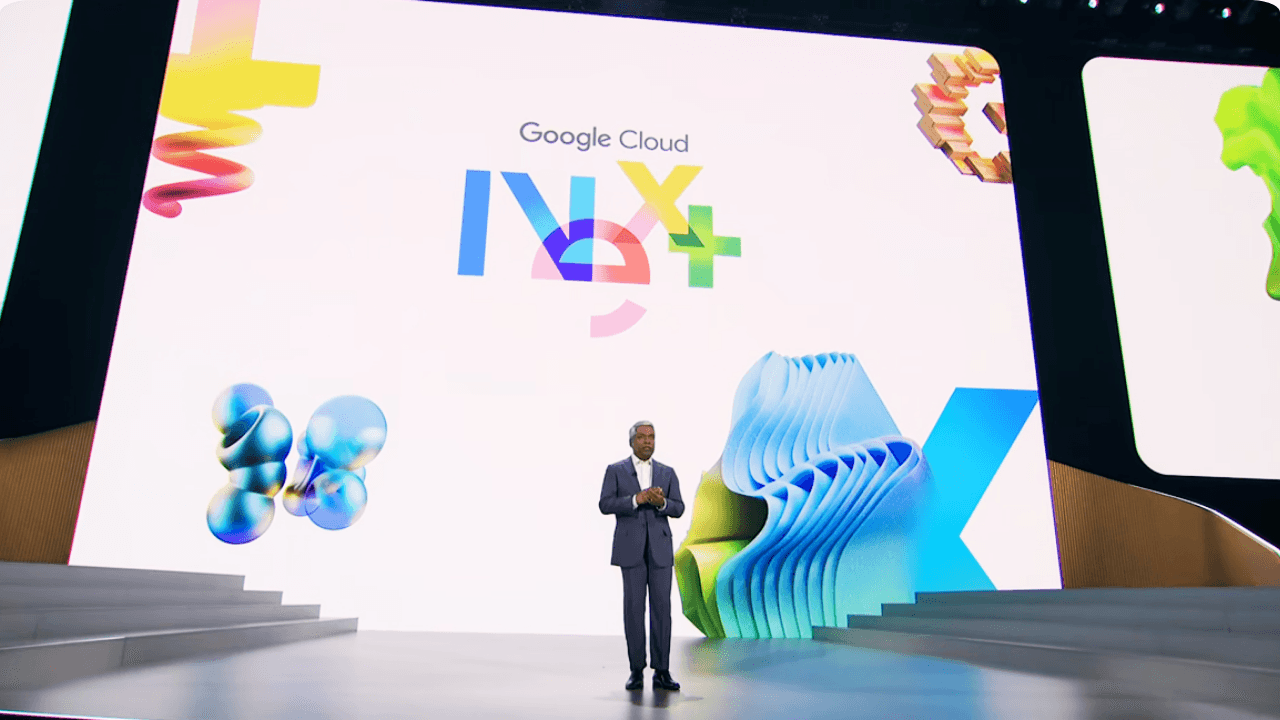
Google has made a decisive move at Cloud Next 2026, placing its future on what it calls the Agentic Enterprise. This is not just another AI upgrade. It signals a shift from tools that assist humans to systems that act, decide, and execute tasks independently.
The announcement reflects a broader transition in enterprise technology. Businesses are moving beyond experimental AI and entering a phase where automation drives real operations. Google is positioning itself at the center of that transition.
What Is an Agentic Enterprise
An Agentic Enterprise is built around AI agents that can perform tasks autonomously. These systems do more than answer questions. They plan workflows, interact with systems, and make decisions without constant human input.
At Cloud Next 2026, Google introduced the Gemini Enterprise Agent Platform, a unified system designed to build and manage such agents at scale.
These agents are capable of handling complex enterprise processes. They can coordinate across departments, analyze large datasets, and execute actions in real time. This marks a clear shift from passive AI tools to active digital operators.
The Technology Behind the Shift
Google’s strategy combines software, infrastructure, and data into one integrated ecosystem. The company unveiled its eighth-generation Tensor Processing Units (TPUs), designed to handle advanced AI workloads with higher efficiency and performance.
The new platform also consolidates earlier tools like Vertex AI into a single framework. This allows businesses to build, deploy, and govern AI agents more easily.
At the same time, Google is emphasizing scale. Its systems are already processing billions of tokens per minute, showing how quickly enterprise AI usage is growing.
Why Google Is Making This Bet
The move is driven by a clear industry trend. Enterprises are struggling to move from AI experiments to real-world deployment. Many companies use AI, but fewer achieve meaningful outcomes.
Google sees this gap as an opportunity. By offering a complete platform, it aims to become the backbone of enterprise AI systems.
This strategy is similar to how operating systems shaped earlier technology eras. Control the platform, and you control the ecosystem. In this case, that platform is AI agents.
Impact on Businesses and Markets
The implications are significant. AI agents can reduce manual work, improve efficiency, and enable faster decision-making across industries.
Companies are already beginning to adopt such systems. Early implementations show AI agents handling tasks like customer service, data analysis, and even cybersecurity operations.
At the same time, competition is intensifying. Google is competing with major players like Amazon and Microsoft, all of whom are investing heavily in enterprise AI.
The introduction of new TPUs also signals a challenge to Nvidia’s dominance in AI hardware, adding another layer to the competition.
Strategic Implications
Google’s push into the Agentic Enterprise is not just about technology. It is about long-term control of the enterprise AI stack.
By integrating hardware, software, and AI models, Google is building a tightly connected ecosystem. This could make it easier for businesses to adopt AI but also raises questions about vendor dependence.
The company is also investing heavily in infrastructure, with billions allocated to support AI growth. This shows that the shift toward agentic systems is not a short-term experiment but a long-term strategy.
The Bigger Picture
The rise of agentic AI marks a turning point. AI is evolving from a support tool into a decision-making system that can operate independently.
For businesses, this means rethinking workflows, roles, and even organizational structures. The focus is no longer on using AI occasionally but on embedding it deeply into operations.
Google’s announcement at Next 2026 highlights this transition clearly. The question is no longer whether AI will transform enterprises, but how quickly that transformation will happen.
Topics
Covering startup news, AI, technology, and business at ThePrimely. Delivering accurate, in-depth reporting on the stories that shape the future.