
Gold silver outlook signals volatile week as Middle East tensions influence markets
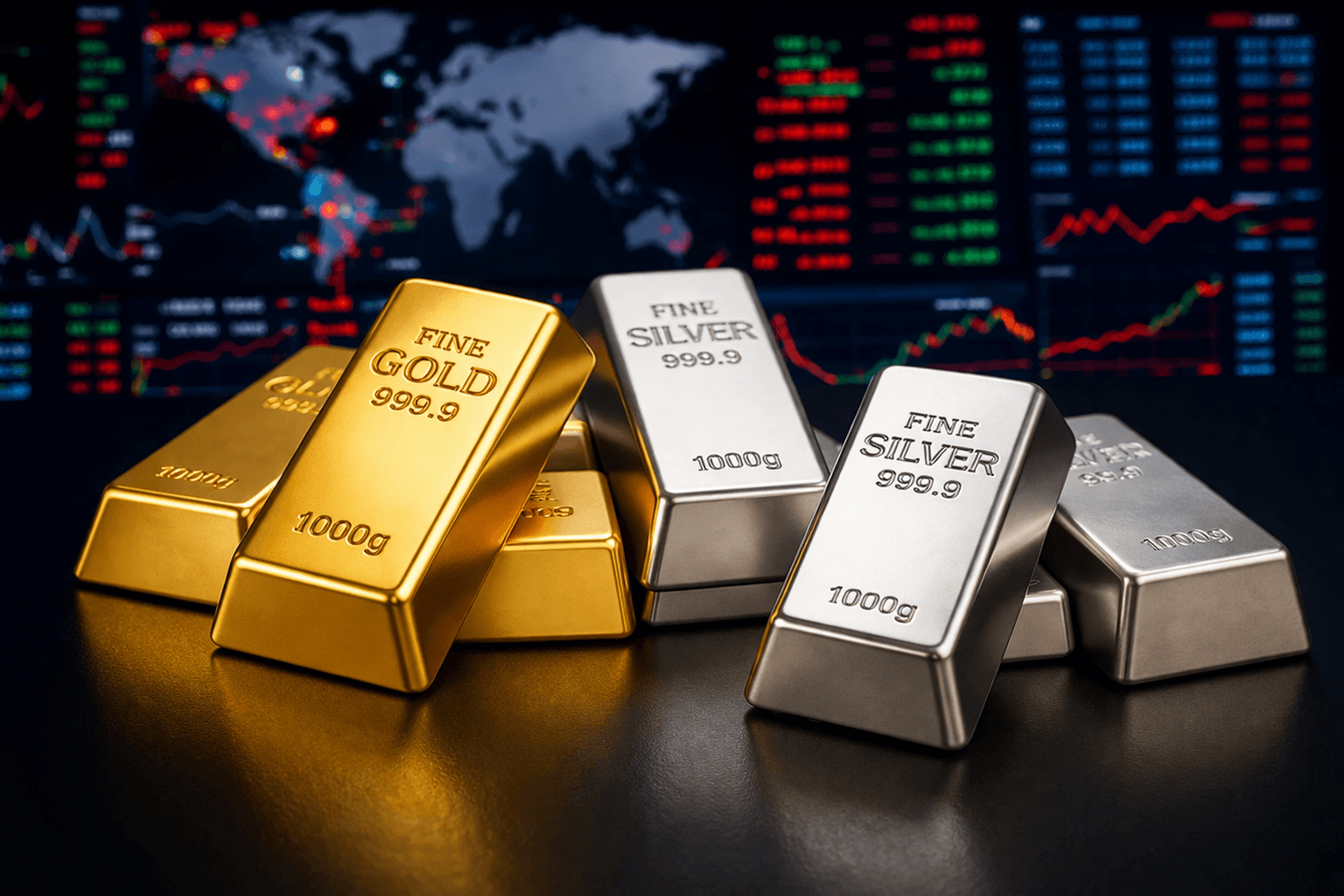
Investors track Federal Reserve cues and geopolitical developments shaping bullion price movement
Gold silver outlook suggests bullion markets may witness significant volatility in the coming week as investors monitor geopolitical tensions and global economic signals. Analysts indicate that developments linked to the Middle East conflict continue to influence demand for safe-haven assets.
The market participants are expected to closely follow signals from the US Federal Reserve, particularly regarding interest rate policy and inflation outlook. Changes in monetary policy expectations can influence investment demand for precious metals.
Gold prices have recently experienced fluctuations as investors weigh geopolitical risks against macroeconomic factors such as interest rates and currency movements. Meanwhile, silver prices have shown stronger swings due to their dual role as both industrial and investment assets.
Impact of Middle East tensions on bullion market sentiment
Geopolitical uncertainty linked to the Iran conflict has contributed to volatility across global financial markets. Investors often turn to gold during periods of uncertainty, although price movements can remain uneven due to competing economic factors.
Recent trading sessions saw gold prices rebound above 4,400 dollars per ounce following dip-buying activity, while silver also recorded gains amid fluctuating market sentiment.
Analysts note that safe-haven demand typically increases when geopolitical risks rise. However, a strong US dollar and expectations of higher interest rates can reduce the appeal of non-yielding assets such as gold.
Additionally, energy market volatility linked to tensions in the Gulf region has influenced inflation expectations, which can indirectly affect precious metal prices.
Federal Reserve policy signals influence gold silver outlook
Expectations regarding interest rate decisions by the US Federal Reserve remain a major factor shaping bullion market direction. Higher interest rates tend to strengthen the US dollar, which can pressure gold prices.
Market participants are therefore analysing economic indicators such as inflation data and employment figures for clues about future policy adjustments.
Analysts indicate that uncertainty regarding timing of potential rate cuts has contributed to cautious trading patterns in gold and silver markets.
Meanwhile, global bond yields and currency movements continue to influence investor allocation decisions between commodities and financial assets.
Recent price movement trends in gold and silver markets
Gold and silver prices have recorded significant swings in recent weeks as global markets reacted to geopolitical developments and macroeconomic signals.
Data indicates that gold prices have traded within a broad range near 1.59 lakh to 1.70 lakh rupees per 10 grams in the domestic market. Price corrections have triggered selective buying activity among investors.
Silver has shown relatively higher volatility due to its industrial demand component linked to manufacturing and energy sectors. Market analysts say silver often reacts more sharply during periods of economic uncertainty.
Additionally, investment flows into exchange-traded funds linked to precious metals have fluctuated as investors adjust risk exposure.
Global economic indicators affecting bullion demand
Inflation outlook, currency strength, and central bank policy decisions continue to shape investor sentiment toward precious metals.
Analysts say bullion prices may respond to upcoming economic data releases from major economies including the United States, China, and the euro area.
Meanwhile, fluctuations in crude oil prices linked to Middle East tensions have contributed to broader market uncertainty affecting commodities and equities.
Investors are also monitoring global growth expectations, which can influence industrial demand for silver and other metals.
Outlook for investors tracking bullion market volatility
Market experts suggest that bullion prices may remain sensitive to geopolitical developments and policy signals in the near term.
Gold is often considered a hedge against inflation and currency depreciation. However, competing safe-haven assets such as government bonds and the US dollar may influence capital flows.
Analysts expect trading patterns to remain influenced by news related to the Middle East conflict and signals from central banks regarding interest rate trajectory.
As global markets continue to adjust to evolving economic conditions, the gold silver outlook remains dependent on both geopolitical stability and macroeconomic policy direction.
Topics
Covering startup news, AI, technology, and business at ThePrimely. Delivering accurate, in-depth reporting on the stories that shape the future.