
Gold Prices Falling in India: Real Reasons Explained
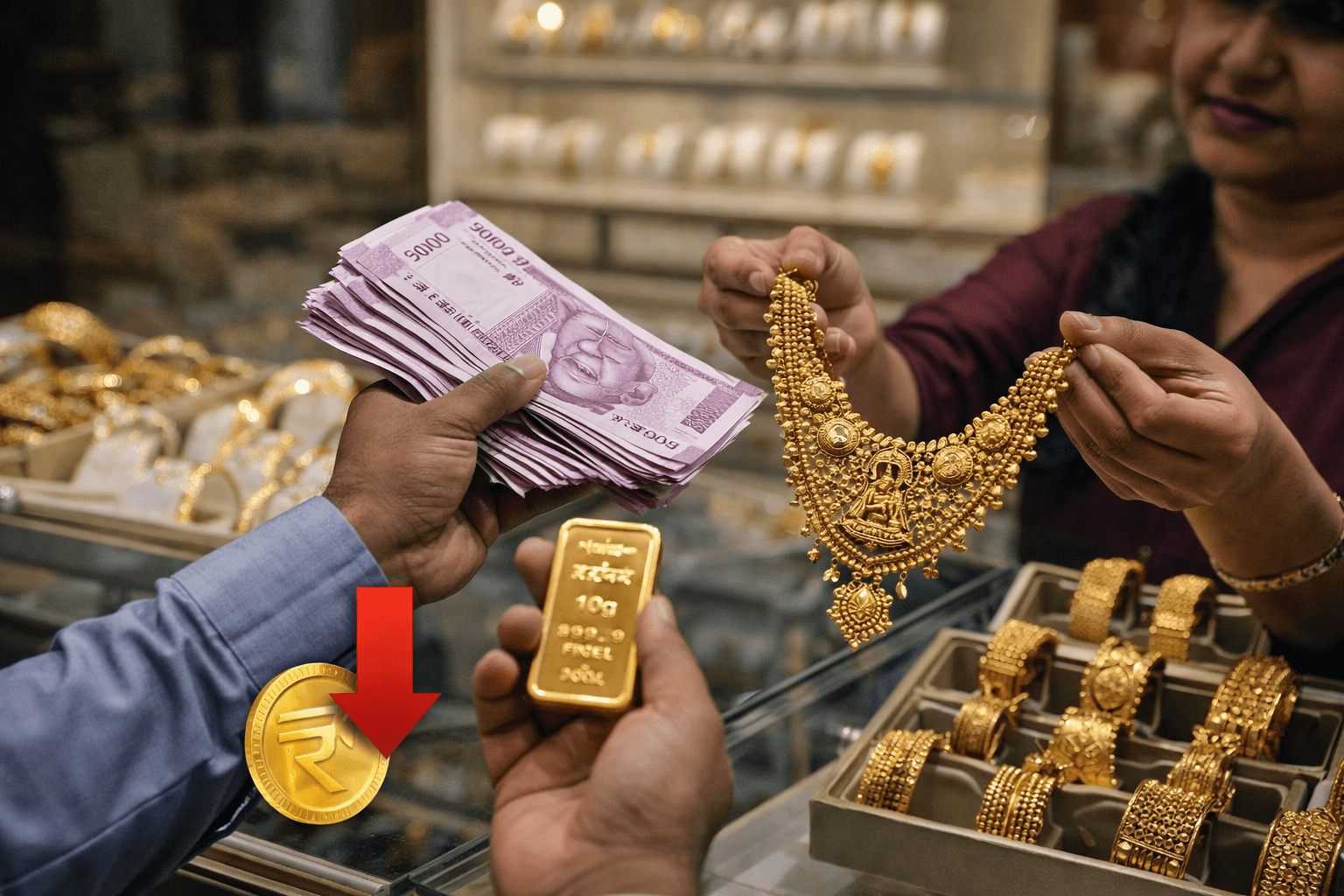
Gold has long been seen as a symbol of stability during uncertain times. Wars, inflation fears and market volatility usually push investors towards the precious metal.
Yet in recent weeks, gold prices in India have moved in the opposite direction.
Despite geopolitical tensions and global uncertainty, prices of the yellow metal have declined sharply, surprising both investors and jewellery buyers.
This unusual shift reflects deeper changes in how global markets respond to crises.
Recent Price Movement Shows Sharp Correction
Recent price data highlights how quickly gold prices have shifted within a short period.
On 21 March 2026, the price of 24-karat gold in India was around ₹14,597 per gram. In the latest trading session, the price declined to approximately ₹13,565 per gram, reflecting a noticeable correction in the market.
The decline of more than ₹1,000 per gram within days shows how sensitive gold prices remain to interest rate expectations, currency movements and global investor sentiment.
Analysts note that although geopolitical tensions usually support gold, stronger economic signals such as a firm US dollar and expectations of higher interest rates have temporarily reduced demand.
A Safe Haven That Isn’t Acting Safe
Traditionally, gold performs well when risk rises. Investors often move money into bullion when stock markets fluctuate or geopolitical tensions increase.
However, analysts say several economic forces are currently outweighing gold’s safe-haven appeal.
One of the main factors is the strength of the US dollar. When the dollar rises, gold becomes more expensive for international buyers, which reduces demand and pushes prices lower.
Higher interest rates are another major reason.
Gold does not pay interest or dividends. When central banks maintain high interest rates, investors often prefer bonds or other assets that generate returns.
Because of this shift, gold has struggled to attract the same level of investment flows seen in previous crises.
The Role of the US Federal Reserve
Expectations around US monetary policy have played a crucial role in shaping gold’s recent performance.
Markets now believe interest rates may remain higher for longer as inflation continues to concern policymakers.
Recent signals from the Federal Reserve suggest only limited rate cuts in 2026, reducing the attractiveness of gold as an investment asset.
Gold prices have fallen even as tensions in the Middle East increased, showing how economic factors can sometimes override geopolitical trends.
Profit Booking After Record Highs
Gold reached historic highs earlier this year, driven by global uncertainty and strong investment demand.
After sharp gains, many investors chose to sell and secure profits, which added downward pressure on prices.
Analysts say this kind of correction is common after rapid rallies.
Gold had previously crossed record levels near $5,500 per ounce before declining more than 10% in recent weeks.
Such declines often reflect technical market adjustments rather than long-term changes in demand.
Impact on Indian Buyers and Jewellery Markets
For Indian consumers, falling prices can create opportunities, especially during wedding and festival seasons when gold purchases typically increase.
India is one of the world’s largest gold markets, driven by cultural traditions and investment demand.
Changes in global gold prices often influence domestic jewellery demand, although currency movements and import duties also affect retail prices.
In recent trading sessions, 24-karat gold saw notable declines across major Indian cities, reflecting global price trends and currency fluctuations.
Retail buyers often increase purchases when prices fall, helping stabilise the market over time.
Global Uncertainty Still Matters
Although prices have declined, analysts caution that gold remains sensitive to geopolitical developments.
The ongoing Iran conflict and disruptions in global energy markets continue to create uncertainty across financial markets.
Historically, prolonged instability tends to support gold prices over the long term.
However, short-term movements often reflect interest rates, currency strength and investor sentiment more than geopolitical headlines.
Gold’s behaviour during the current crisis shows how financial markets have become more complex and interconnected.
Is Gold Losing Its Safe-Haven Status?
Some experts believe gold’s recent performance reflects a shift in how investors manage risk.
Instead of relying only on traditional safe assets, investors now diversify across bonds, currencies and commodities.
Stronger global economic growth expectations have also reduced the urgency to move funds into gold.
However, analysts caution against interpreting short-term price movements as long-term structural change.
Gold has historically recovered after periods of decline, particularly when inflation or geopolitical risks intensify.
A Market in Transition
The recent fall in gold prices highlights the balance between economic forces and investor psychology.
While geopolitical tensions often increase demand for safe assets, interest rates and currency strength currently dominate market behaviour.
For consumers in India, lower prices may encourage buying activity, especially during festive and wedding seasons.
For investors, the trend serves as a reminder that gold, like any asset, responds to multiple global factors at once.
As financial markets continue to adjust to changing economic conditions, gold’s role as a safe haven may evolve rather than disappear.
For now, the fall in gold prices reflects not a collapse in demand, but a shift in the forces shaping global investment decisions.
Topics
Covering startup news, AI, technology, and business at ThePrimely. Delivering accurate, in-depth reporting on the stories that shape the future.