
ByteDance AI Video Model Launch Paused Amid Escalating Copyright Disputes
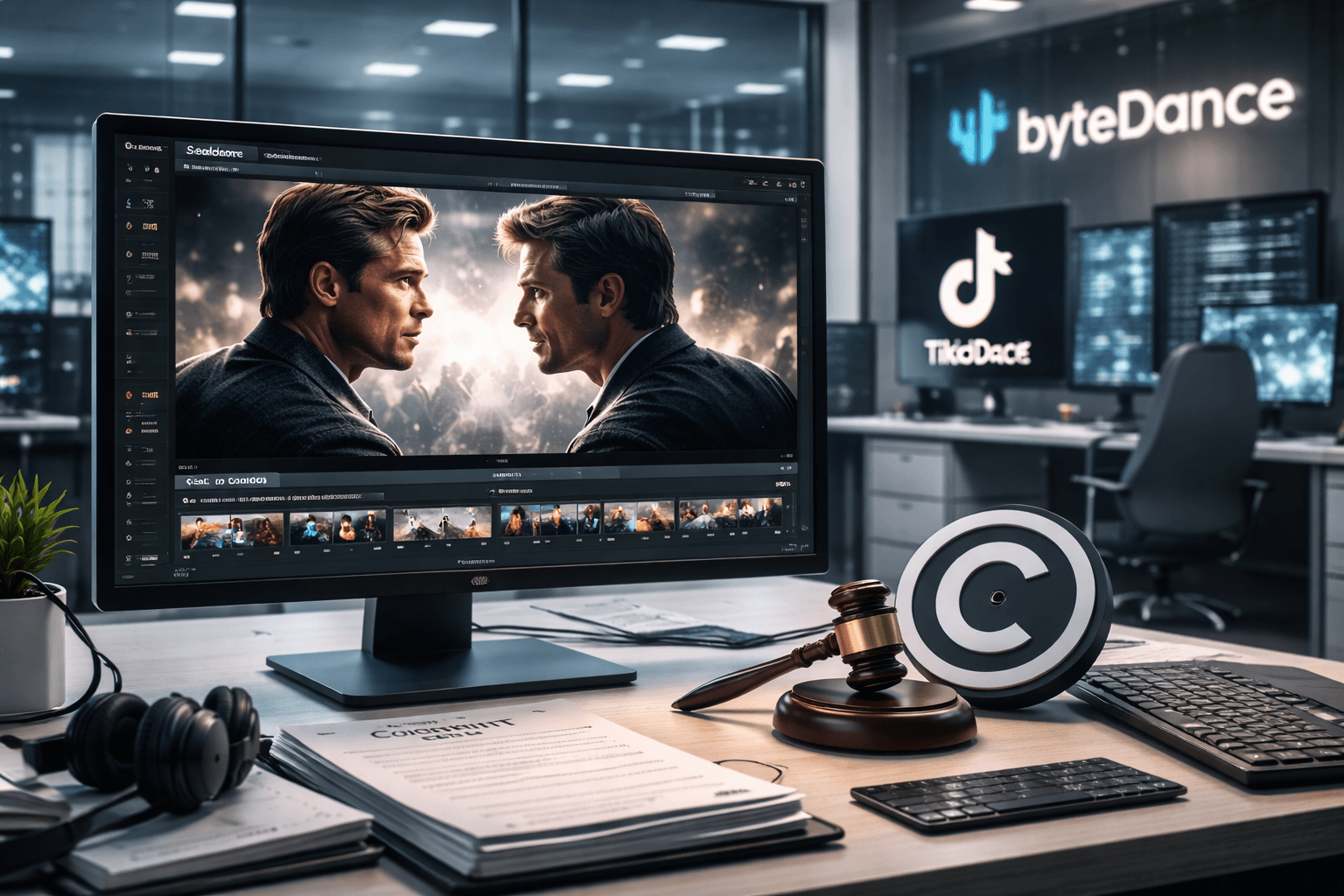
Generative artificial intelligence is rapidly transforming digital content creation.
However, the technology is also creating serious legal challenges for technology companies and media industries.
The latest example involves ByteDance, the parent company of TikTok, which has suspended the global launch of its AI video model Seedance 2.0 following copyright disputes with major Hollywood studios and streaming platforms.
The move highlights the increasing legal scrutiny surrounding generative AI systems that train on copyrighted media.
Understanding the ByteDance AI Video Model
The ByteDance AI video model, known as Seedance 2.0, is a text-to-video and image-to-video system capable of generating complex video scenes from simple prompts.
The technology allows users to produce short cinematic clips by entering a text description.
Examples circulating online included AI-generated scenes involving well-known actors and characters. Some clips depicted fictional scenarios such as a simulated fight between Brad Pitt and Tom Cruise.
These demonstrations quickly attracted attention across social media platforms.
However, they also triggered strong criticism from film studios and creative industry organizations.
Why Hollywood Raised Copyright Concerns
Major entertainment companies argue that the AI system may rely on copyrighted material for training.
Industry groups claim that Seedance 2.0 can reproduce recognizable characters, actors, and scenes without authorization.
Several large studios have reportedly taken formal steps against the company.
For example:
- Disney issued a cease-and-desist letter regarding potential misuse of its characters.
- Paramount Skydance raised concerns over alleged intellectual-property infringement.
Critics argue that generative AI models must obtain licensing agreements before using copyrighted material for training datasets.
Without clear legal frameworks, technology firms face increasing litigation risks.
ByteDance’s Decision to Suspend the Global Launch
According to reports, ByteDance has delayed the international rollout of Seedance 2.0 while addressing the copyright complaints.
The suspension affects the planned global release of the AI video system.
Sources cited in reports indicate that the decision followed escalating legal concerns raised by studios and streaming platforms.
Reuters noted that the report referencing the delay came from people familiar with the situation, although the claims have not been independently verified.
The company has previously stated that it respects intellectual-property rights and plans to strengthen safeguards against unauthorized use of copyrighted material.
The Growing Legal Battle Over Generative AI
The controversy surrounding the ByteDance AI video model reflects a broader global debate about generative AI.
AI systems require massive datasets for training. Many of these datasets include copyrighted media such as films, music, images, and scripts.
Content creators and studios increasingly argue that technology companies must obtain licensing rights before using these materials.
At the same time, AI developers contend that training models on publicly available content may fall under fair-use principles in some jurisdictions.
The legal outcome of these disputes could reshape how generative AI models are developed.
Strategic Implications for the AI Industry
The dispute carries several strategic implications for the technology sector.
First, it highlights the growing intersection between artificial intelligence development and intellectual-property law.
Second, it may encourage technology firms to invest in licensed training datasets.
Third, the case could influence regulatory frameworks for generative AI worldwide.
Companies developing advanced models for video generation are now likely to face stronger scrutiny from regulators and copyright holders.
Topics
Covering startup news, AI, technology, and business at ThePrimely. Delivering accurate, in-depth reporting on the stories that shape the future.