
When AI Girl Steals a Voice: 28 Million Viewers Misled
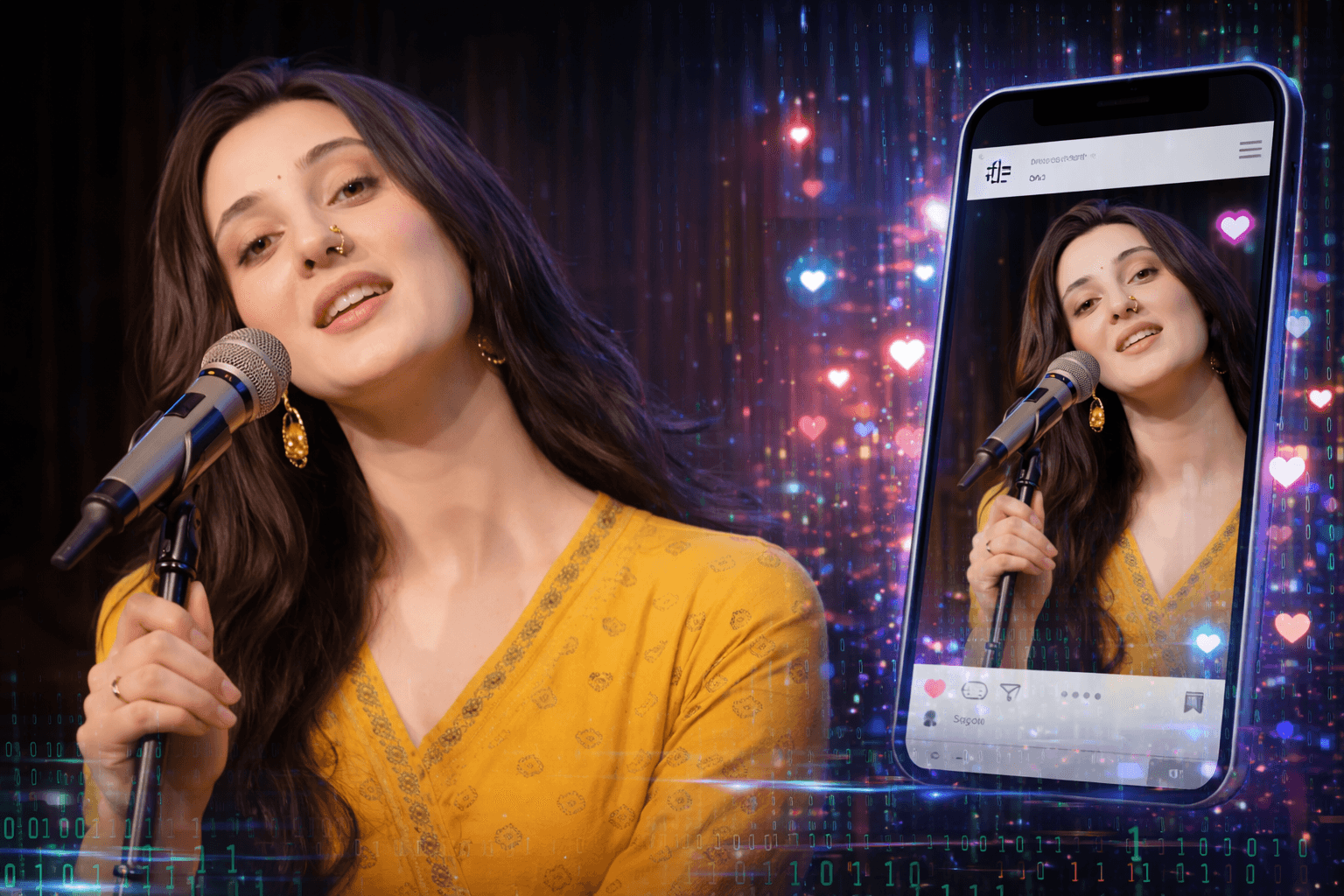
The AI fake shayari video phenomenon that swept Instagram this week is a striking example of how synthetic content can shape digital narratives and blur lines between authentic expression and AI fabrication.
In less than 24 hours, an AI generated video featuring a woman reciting Urdu couplets garnered 28 million views, earning praise and widespread engagement before tech savvy users uncovered troubling facts. AI generated influencer delivering shayari on Instagram screen.
https://www.instagram.com/tanvijoshii_?igsh=cXR3eTRoOGo0ZnJk
Curious Case: Viral Shayari With Borrowed Voice
The video, shared under the profile Tanvi Joshi, appeared to show a charismatic young woman delivering poetic lines about old and new money. But this Tanvi Joshi does not exist as a real person. The account was using an AI generated person to mimic human appearance and speech.
Further scrutiny revealed that this performance was not original. The audio and voice in the video were lifted from a real Instagram clip by Marziya Shanu Pathan, a municipal corporator who had recited the same couplet in an earlier post. Her original clip received under 900,000 views a fraction of the AI version’s reach.
Pathan herself commented under the viral AI post, exclaiming, “Aye that’s my voiceeeeeee.” This disclosure helped many viewers realize they were watching an AI fabricated video.
Why This Matters: Credibility and Consent Online
This incident is not an isolated joke or meme. It exposes fundamental vulnerabilities in how users perceive content online:
- Attribution Loss: AI creators repurposed original work without clear consent or attribution.
- Credibility Erosion: Millions responded positively before knowing the content was synthetic, showing how authenticity can be manipulated.
- Detection Difficulty: High quality AI content can closely mimic natural speech and facial expressions, complicating detection.
The scale of engagement 28 million views versus less than 1 million for the original reveals how AI impersonation outcompetes real creators in reach, even when the material itself is sourced from them.
Broader Digital Risk Environment
The shayari video incident aligns with broader concerns across India and global markets:
- Deepfakes have been used to falsely endorse products or institutions, prompting public cautions from entities such as SBI regarding fake AI driven investment promotions.
- Security reports show that approximately 90% of Indians have been exposed to fake celebrity AI endorsements, often used in scams or manipulative ads.
- Celebrities and public figures are increasingly confronting unauthorized AI representations, leading to legal action for example, Aishwarya Rai and Abhishek Bachchan filing suit over AI deepfake clips on YouTube.
These developments highlight how AI generated content, when misused, can distort perception, mislead audiences, and even fuel fraudulent schemes.
Strategic Implications for Platforms and Users
The spread of AI fake content has several strategic implications:
- Platforms must enforce clearer AI labeling and verification standards. Proposed regulations now require video and audio labels for AI generated content, though implementation remains challenging.
- Creators should guard original materials, including voice and performance recordings, to mitigate unauthorized AI usage.
- Audiences need better tools and literacy to critically assess digital content authenticity.
For brands and institutions, the risks extend beyond comedy or intrigue. Misleading AI content can damage reputations, erode user trust, and fuel misinformation, prompting more proactive moderation and defense strategies.
Future Outlook: Balancing Innovation With Integrity
AI continues to transform digital media with creative potential but it also enables rapid imitation, manipulation, and unauthorized representation at scale. Content platforms, lawmakers, and creators must collaborate to define transparent standards for synthetic media. In the short term, this case will likely prompt tighter scrutiny of viral AI videos. In the longer term, industry norms around consent, attribution, and digital authenticity will need to evolve if audiences are to maintain trust in online content.
Topics
Covering startup news, AI, technology, and business at ThePrimely. Delivering accurate, in-depth reporting on the stories that shape the future.