
AI Predicts Soil Moisture with Precision
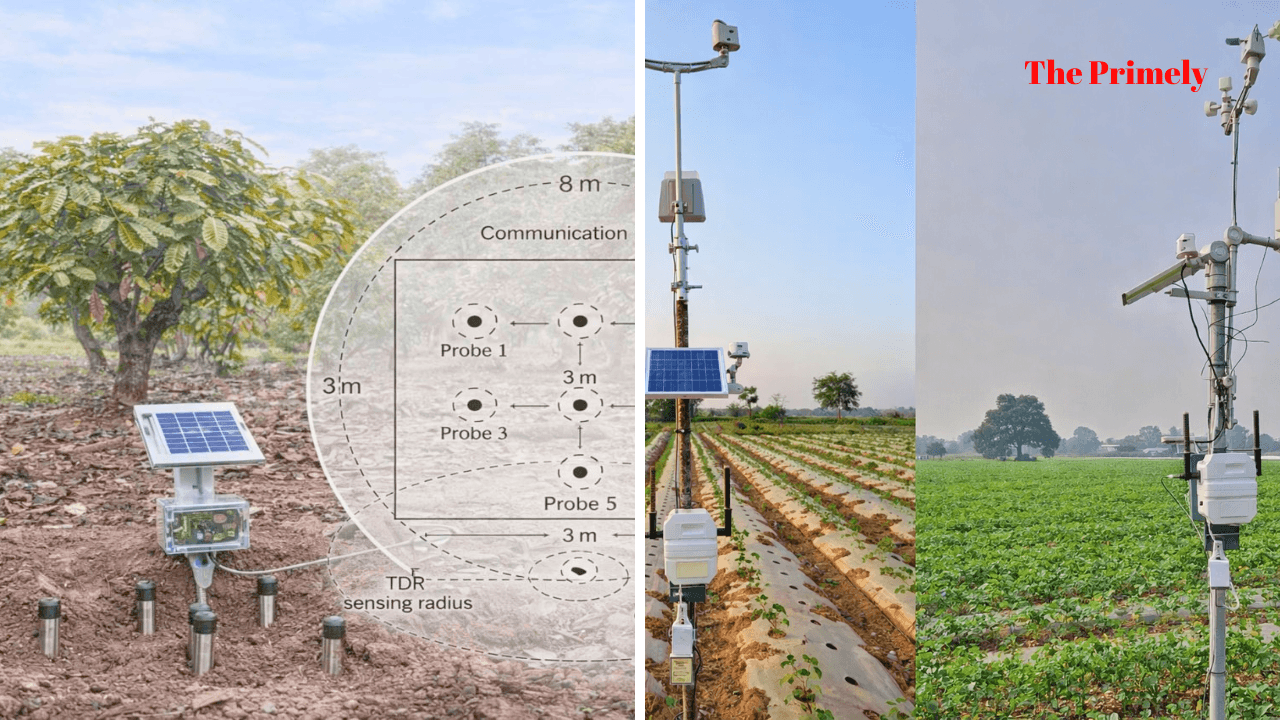
A new breakthrough in agricultural technology is showing how artificial intelligence can transform farming practices. Researchers have developed a system that combines underground sensors with AI to predict soil moisture with 95.49% accuracy, offering a major step forward in smart irrigation.
The AI soil moisture prediction system focuses on what matters most to crops — the water levels near plant roots — rather than relying only on surface measurements.
How the System Works
The system uses buried sensors placed below the soil surface to collect real-time moisture data. These sensors are typically installed at depths of around 6 to 12 inches, where plant roots actively absorb water.
This underground data is then processed by AI models that can predict moisture conditions with high precision. According to researchers, the system’s predictions stay within 5% of actual readings nearly 95.49% of the time.
The result is a more accurate understanding of soil conditions compared to traditional surface-level monitoring.
Why Underground Monitoring Matters
One of the key insights from the study is that soil moisture varies significantly with depth. Surface dryness does not always reflect the actual water availability for crops.
By focusing on root-level conditions, the system provides a clearer picture of plant stress and water needs. This helps farmers make better irrigation decisions, especially during changing weather conditions.
The research showed that even in a small test area, multiple buried probes were able to track moisture changes consistently and reliably.
Impact on Agriculture
This technology has strong implications for modern farming. Accurate moisture prediction can reduce water waste, improve crop yield, and lower operational costs.
In regions facing water scarcity, such systems could help optimize irrigation schedules and ensure efficient use of resources. It also supports the broader shift toward precision agriculture, where data-driven decisions replace traditional guesswork.
Role of AI in Smart Irrigation
Artificial intelligence is increasingly being used to analyze environmental data and improve agricultural outcomes. By combining sensor data with predictive models, AI can anticipate changes before they occur.
This proactive approach allows farmers to respond in advance rather than reacting after crops show signs of stress. It represents a shift from reactive farming to predictive farming.
Topics
Covering startup news, AI, technology, and business at ThePrimely. Delivering accurate, in-depth reporting on the stories that shape the future.