
Will AI Replace 99% of Jobs by 2027? What an AI Expert Really Warns
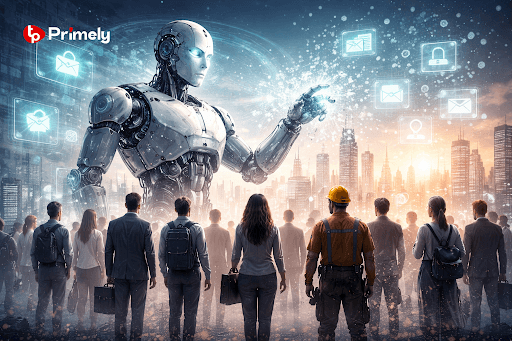
Artificial intelligence is evolving faster than most industries can adapt. A recent warning from AI safety expert Dr Roman Yampolskiy has intensified the global debate. He claims that up to 99 percent of jobs could disappear by 2027 if artificial general intelligence develops at its current pace.
The statement has sparked concern across industries. But how realistic is this prediction? And which jobs could survive in an AI dominated economy?
Let us break it down clearly.
The 99% Job Loss Warning Explained
Dr Roman Yampolskiy, a computer scientist known for his work in AI safety research, shared his views during a public discussion on the rapid growth of advanced artificial intelligence.
According to him, once artificial general intelligence reaches human level capability, it could perform nearly every cognitive and physical task better and faster than people. If that happens, companies may prefer AI systems over human workers because they are cheaper, faster, and more scalable.
His core argument is simple. When machines outperform humans in most tasks, economic demand for human labour could shrink dramatically.
This is why he believes massive job displacement may happen by 2027.
Is It Realistic That 99 Percent of Jobs Will Disappear?
The prediction is extreme. Many economists and technology experts disagree with the timeline.
Historically, major technological shifts such as the Industrial Revolution and the rise of the internet eliminated certain jobs but also created entirely new industries. Work transformed rather than vanished.
However, AI is different in one major way. It does not only automate physical labour. It also performs cognitive tasks such as writing, coding, design, legal research, and data analysis.
That is why this debate feels more urgent than previous automation cycles.
Five Types of Jobs That May Survive AI
While Dr Yampolskiy warns about large scale job loss, he believes a few categories of work may remain relevant.
1. Roles Based on Human Empathy
Jobs that depend on emotional intelligence may survive longer. Therapists, counsellors, and certain care professionals provide human connection that machines struggle to replicate authentically.
2. AI Oversight and Governance
As AI systems expand, organisations will need experts to supervise, audit, regulate, and align them with ethical standards. Human judgment will remain critical in this space.
3. High Trust Advisory Roles
In areas such as law, strategic consulting, and wealth advisory, people often prefer accountable human experts when making high risk decisions.
4. Skilled Craft and Artisanal Work
Some consumers value products made by humans. Handmade goods and artistic creations may retain niche demand because of their uniqueness.
5. Human AI Integrators
Professionals who understand both technology and business strategy will act as bridges between AI systems and organisations. These hybrid roles may grow significantly.
Which Jobs Face the Highest Risk?
Routine and repetitive work faces the greatest automation pressure. This includes:
• Basic data entry
• Predictable customer support
• Standardised administrative tasks
• Routine content production
• Certain accounting and back office functions
AI systems already handle many of these functions efficiently. As models improve, more structured roles may become vulnerable.
How Workers Can Stay Relevant in the AI Era
The future of work will reward adaptability.
Professionals can strengthen their position by:
• Learning AI tools instead of competing against them
• Building skills in problem solving and strategic thinking
• Improving communication and leadership abilities
• Developing digital literacy
• Staying open to continuous learning
People who combine technical understanding with human skills will hold an advantage.
The Bigger Picture: Evolution, Not Extinction
The idea that 99 percent of jobs will disappear by 2027 represents a worst case scenario. While AI will disrupt many sectors, economic systems tend to adapt.
New roles will emerge around AI management, ethics, infrastructure, training, and integration. Industries will restructure rather than collapse overnight.
The real question is not whether AI will change work. It will. The question is how quickly individuals, businesses, and governments respond.
Final Verdict on AI Job Displacement by 2027
Artificial intelligence will reshape employment at an unprecedented scale. Certain jobs will decline sharply. Others will evolve. Some entirely new careers will appear.
The 99 percent figure is controversial and debated. However, the core message is clear. The workforce must prepare for rapid transformation.
The safest long term strategy is to build skills that machines cannot easily replicate: empathy, creativity, ethical reasoning, leadership, and complex decision making.
The future belongs to professionals who learn how to work with AI, not against it.
Frequently Asked Questions
1. Will 99 percent of jobs really disappear by 2027?
The prediction that 99 percent of jobs may disappear by 2027 comes from AI safety expert Dr Roman Yampolskiy. However, many economists believe this represents an extreme scenario. While AI will automate many tasks, most experts expect job transformation rather than complete elimination.
2. Which jobs are most at risk from artificial intelligence?
Jobs that involve routine, repetitive, or rule based tasks face the highest risk. These include data entry, basic customer service, standard administrative roles, and some back office functions. AI systems can already perform many of these tasks efficiently.
3. What types of jobs are likely to survive AI disruption?
Roles that depend on empathy, human judgment, creativity, leadership, and ethical oversight are more likely to survive. Examples include therapists, strategic advisors, AI governance specialists, and skilled craft professionals.
4. What is artificial general intelligence and why does it matter?
Artificial general intelligence refers to AI systems that can perform any intellectual task at human level or beyond. If developed, such systems could automate both physical and cognitive work, leading to major changes in global employment patterns.
5. Will AI create new jobs while replacing others?
Yes. Historically, technological revolutions have eliminated some roles while creating new industries. AI is already generating demand for roles in AI development, oversight, ethics, integration, cybersecurity, and human AI collaboration.
6. How can professionals protect their careers from AI automation?
Professionals can stay relevant by developing digital skills, learning how to use AI tools, strengthening communication and leadership abilities, and focusing on problem solving and creativity. Continuous learning will become essential.
7. Is AI job displacement happening already?
Yes. Automation has already reduced demand for certain routine jobs. However, the process is gradual and varies by industry. The impact depends on technology adoption speed, regulation, and market demand.
8. Should workers be worried about AI replacing them?
Concern is understandable, but panic is not productive. AI will reshape work, but adaptation and reskilling can create new opportunities. Workers who evolve alongside technology are more likely to succeed.
Topics
Covering startup news, AI, technology, and business at ThePrimely. Delivering accurate, in-depth reporting on the stories that shape the future.