
XRP News Today Trump Signals Iran Talks as XRP Rises 4% and Oil Retreats
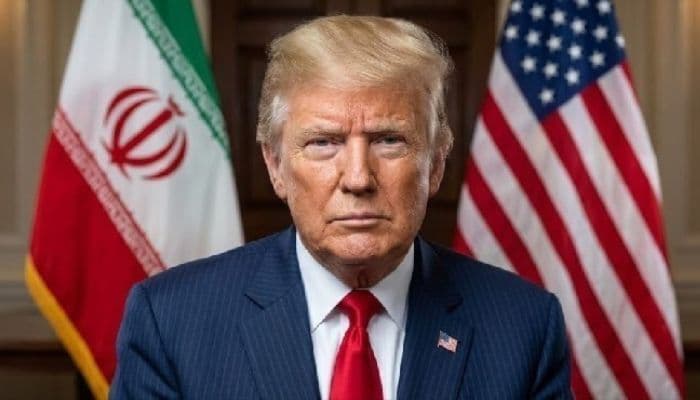
A Single Signal From Trump Changed the Market Tone
One statement shifted the mood across every risk asset class simultaneously.
XRP climbed nearly 4% to $1.37, tracking a broader risk on move after Trump signaled openness to renewed US Iran talks, easing geopolitical fears. Brent crude slipped 0.9% to $98.44 a barrel, the dollar weakened against most major currencies, and Treasuries \firmed as easing oil prices helped cool inflation fears.
XRP is moving higher in Monday's trading. President Trump's comments suggesting that Iranian officials want to resume negotiations to end the war are pushing crypto valuations higher.
The pattern is now deeply familiar. Every diplomatic signal however tentative produces an immediate risk on rally. Every collapse produces a risk off selloff. XRP has been caught in this cycle for weeks, trading the war as much as it trades its own fundamentals. But underneath the geopolitical noise, the on chain data tells a more interesting story.
XRP Price Where It Stands and What the Charts Show
The XRP/USD exchange rate jumped by almost 4% in the last 24 hours to reach $1.37.
The move recovers most of the ground lost after the Islamabad collapse.
XRP rallied above $1.35 after the US Iran ceasefire was announced on April 7, but the move only lasted five days. The Islamabad peace talks broke down on April 12 after 21 hours of negotiations. Then Trump ordered a naval blockade of Iranian ports, and the XRP price dropped right back to $1.33 as oil prices surged above $100 again.
The $1.35 level is a welldefined technical ceiling. Breaking through it convincingly and holding above it for more than a few sessions has been the consistent failure point for XRP bulls throughout Q1 and into Q2 2026. Today's 4% move toward $1.37 is meaningful only if it holds. History says to watch carefully.
Global Markets in Risk On Mode The Macro Backdrop Supporting XRP
XRP's recovery is not happening in isolation. Global equities are moving with it.
The MSCI All Country World Index rose 0.4%, putting it on track for its longest winning streak since September, while Asian equities gained 1.5% and European shares looked set to open higher.
XRP's valuation is gaining today as investors weigh macroeconomic and geopolitical risks. While the war in Iran might not immediately appear to have big implications for XRP's fundamentals and valuation, the cryptocurrency's token price has come to see movements that track heavily in line with the outlook for interest rate cuts.
That last point is the core of XRP's macro sensitivity in 2026. The token's price action is not primarily about Ripple's technology or institutional adoption announcements on any given day. It is about whether oil is rising or falling, whether the Fed is getting closer to cuts or further from them, and whether global risk appetite is expanding or contracting.
Oil at $98.44 instead of $104 matters. Every dollar oil falls from its blockad driven peak reduces inflation pressure slightly, keeps rate cut expectations alive marginally longer, and allows risk assets including XRP to breathe.
Binance Stablecoin Reserves Reboundm A Fresh Liquidity Signal
One of the most constructive on chain developments today is happening in stablecoins, not in XRP directly.
Binance's ERC 20 stablecoin reserves have climbed to about $46.3 billion, their highest level since early February, after rebounding by roughly $5 billion from the cycle low. The recovery suggests fresh fiat linked liquidity is moving back onto the exchange, often seen as a sign that traders are rebuilding buying power for assets such as XRP, Bitcoin, and other altcoins.
Although reserves remain below the $51 billion cycle peak from November 2025, the latest increase points to improving market depth and a stronger cushion against near term downside volatility. For XRP, the trend may support bullish sentiment, especially if stablecoin inflows continue rising toward prior peak levels.
Stablecoin reserve levels on major exchanges are one of the most reliable leading indicators for crypto market direction. When capital moves into stablecoins on exchanges, it is positioned to buy. When it moves out, it has either been deployed into assets or withdrawn entirely. The $5 billion rebound from the cycle low is a signal that sidelined capital is returning to deployment position not that it has already moved into XRP or Bitcoin, but that the infrastructure for the next move is being laid.
XRP Liquidity at Multi Year Low A Contrarian Signal
Not every data point today is straightforwardly bullish. One indicator is flashing caution and simultaneously hinting at opportunity.
XRP liquidity on Binance has fallen to its lowest level since 2021. The liquidity index recently dropped to about 0.053, while 30 day trading volume slid to roughly 3.77 billion XRP, among the weakest readings in recent years. XRP was changing hands near $1.33 at the time, with muted price swings reflecting the softer market depth.
The trend suggests traders remain cautious and are waiting for a fresh catalyst. Still, such low liquidity phases often precede larger price moves once volume and participation begin to recover.
Low liquidity is a double edged condition. On the bearish side, it means thin order books and potential for sharp drawdowns if sellers emerge without matching buyers. On the bullish side, it means that a catalyst driven surge in buy orders can move price significantly further than it would in a liquid market. If the CLARITY Act advances or a diplomatic breakthrough occurs, XRP's low liquidity environment amplifies whatever direction the move takes.
Long Term Holders Are Still Buying What Glassnode Data Shows
While short term traders are cautious, the cohort that matters most for long term price direction is doing something different.
Glassnode data show XRP's long term holders have been in a steady accumulation phase since January 2026. The Hodler Net Position Change metric has remained mostly positive for months, with net additions often holding in the 200 million to 300 million XRP range even as XRP traded near the $1.30 area. That marks a clear shift from the heavy distribution seen through much of mid to late 2025, when long term holders were reducing exposure as prices remained elevated. The sustained accumulation suggests larger investors have been consistently buying weakness and absorbing supply during XRP's broader downtrend.
200 to 300 million XRP in net additions per month from long term holders is a structurally significant quantity of supply absorption. When HODLers accumulate at this pace through a downtrend, they are reducing the available sell side supply that shortmterm traders would need to push price lower. It does not guarantee a rally but it provides a foundational layer of demand that makes deeper sustained declines progressively harder to achieve.
The CLARITY Act XRP's Single Most Important Regulatory Catalyst
The geopolitical noise dominates daily price action. But the event that could change XRP's trajectory for the rest of 2026 is legislative and its window is narrowing.
The CLARITY Act now has endorsements from Coinbase, the Treasury Secretary, the SEC Chair, and the former White House crypto czar the first time in 2026 that no major player is blocking the bill. However, if the bill doesn't clear committee by the end of April, it could be shelved because there won't be enough working weeks left before the October midterm recess. Should the bill pass, banks will get the legal cover to use XRP in Ripple's cross border payment network, and that's what finally brings in the institutional money XRP has been waiting on all year.
If Tim Scott schedules the markup before May, XRP has a real chance of pushing through $1.45 and back toward $1.60 where it was after the SEC commodity classification in March. If the bill passes, XRP ETF inflows could realistically hit $4 to $8 billion on top of the $1.2 billion that spot ETFs have already pulled in without the bill being law.
The stakes are that clear. The CLARITY Act is not a distant policy aspiration for XRP it is the specific mechanism through which institutional adoption of XRP in cross border payments gets unlocked. Without it, banks face legal uncertainty that prevents them from deploying Ripple's network at scale. With it, the legal framework shifts and deployment can begin.
The April 22 Ceasefire Expiry XRP's Geopolitical Time Bomb
The ceasefire expires around April 22, and neither the US nor Iran has said whether it will be extended. Pakistan urged both sides to keep the truce going, but Trump is now blockading Iranian ports and Iran's parliament speaker came home saying they will not bow to any threats.
If the ceasefire breaks, oil prices could go well past $105 and the Bitcoin and XRP price would likely drop as investors pull back from the market. If new talks get announced or the truce is extended, both would probably rally again the same way they did when the original ceasefire was announced on April 7.
April 22 is eight days away. The market is watching every diplomatic signal between now and then including today's Trump comments that Iranian officials want to resume talks as a potential preview of whether the ceasefire survives or collapses into full escalation.
FAQ: XRP News Today April 14, 2026
Q1. Why is XRP rising today? XRP climbed nearly 4% to $1.37, tracking a broader risk on move after Trump signaled willingness to keep the door open for talks with Iran, boosting optimism that a potential deal could reduce geopolitical tensions.
Q2. What is XRP's current price and key technical levels? XRP is trading near $1.37 following today's rally. XRP has been rejected at $1.35 three times since late March. The $1.35 to $1.37 zone is the key breakout level to watch. A sustained move above it targets $1.45 and $1.60.
Q3. What do Binance stablecoin reserves signal for XRP? Binance's ERC 20 stablecoin reserves climbed to about $46.3 billion, their highest level since early February, after rebounding by roughly $5 billion from the cycle low, suggesting fresh fiat linked liquidity is moving back onto the exchange.
Q4. What is the CLARITY Act and why does it matter for XRP? Should the CLARITY Act pass, banks will get the legal cover to use XRP in Ripple's cross border payment network, and that is what finally brings in the institutional money XRP has been waiting on all year. .
Q5. What are XRP's long term holders doing? Glassnode data show XRP's long term holders have been in a steady accumulation phase since January 2026, with net additions often in the 200 million to 300 million XRP range, marking a clear shift from the heavy distribution seen through much of mid to late 2025.
Q6. What happens to XRP if the ceasefire expires on April 22 without an extension? If the ceasefire breaks, oil prices could go well past $105 and the XRP price would likely drop as investors pull back from the market. If new talks get announced or the truce is extended, XRP would probably rally again the same way it did when the original ceasefire was announced on April 7.
The Next Eight DaysThree Events, Three Scenarios for XRP
XRP's April is being shaped by three events that will resolve within eight days of each other.
The April 16 SEC roundtable is the first test of regulatory momentum. While it focuses on options market structure rather than the CLARITY Act directly, the commissioners running it are the same ones driving the SEC entire crypto agenda. Any signals about regulatory pace and direction will be read directly by XRP investors.
The April 22 ceasefire expiry is the dominant risk variable. An extension even a short one would pull oil back from the $100 threshold, ease inflation fears marginally, and give XRP room to extend today's rally toward $1.45. A collapse sends XRP back toward $1.28 to $1.30 support.
The late April CLARITY Act Senate committee markup is the structural catalyst that dwarfs everything else in its long term significance. A confirmed markup date alone would probably move the XRP price before the vote even happens.
Closing Perspective XRP at the Intersection of War, Regulation, and Liquidity
XRP in April 2026 sits at an unusual intersection. The token that is furthest along the regulatory approval path commodity classification from the SEC and CFTC, pending CLARITY Act passage, $1.2 billion in ETF inflows already is also the one most directly exposed to the geopolitical variable that has nothing to do with its technology.
If the war drags on and creates additional inflationary pressures, the Federal Reserve may be forced to raise interest rates to curb inflation. Rising interest rates would be a bearish development for XRP and the broader cryptocurrency market. Conversely, war related developments that help support a path to rate cuts could help send the token's valuation higher.
Today's 4% move is a reminder that every diplomatic signal matters enormously while this war continues. The structural case for XRP regulatory clarity, institutional adoption pipeline, long term holder accumulation is intact and improving. The timing of when that structural case converts into sustained price appreciation depends almost entirely on events happening in the Strait of Hormuz and in the US Senate, not in any blockchain development lab.
Both arenas have their most critical windows opening in the next eight days.
Topics
Covering startup news, AI, technology, and business at ThePrimely. Delivering accurate, in-depth reporting on the stories that shape the future.