
AI Image Controversy in UK Politics: Trust, Technology and the Risk of Misinformation
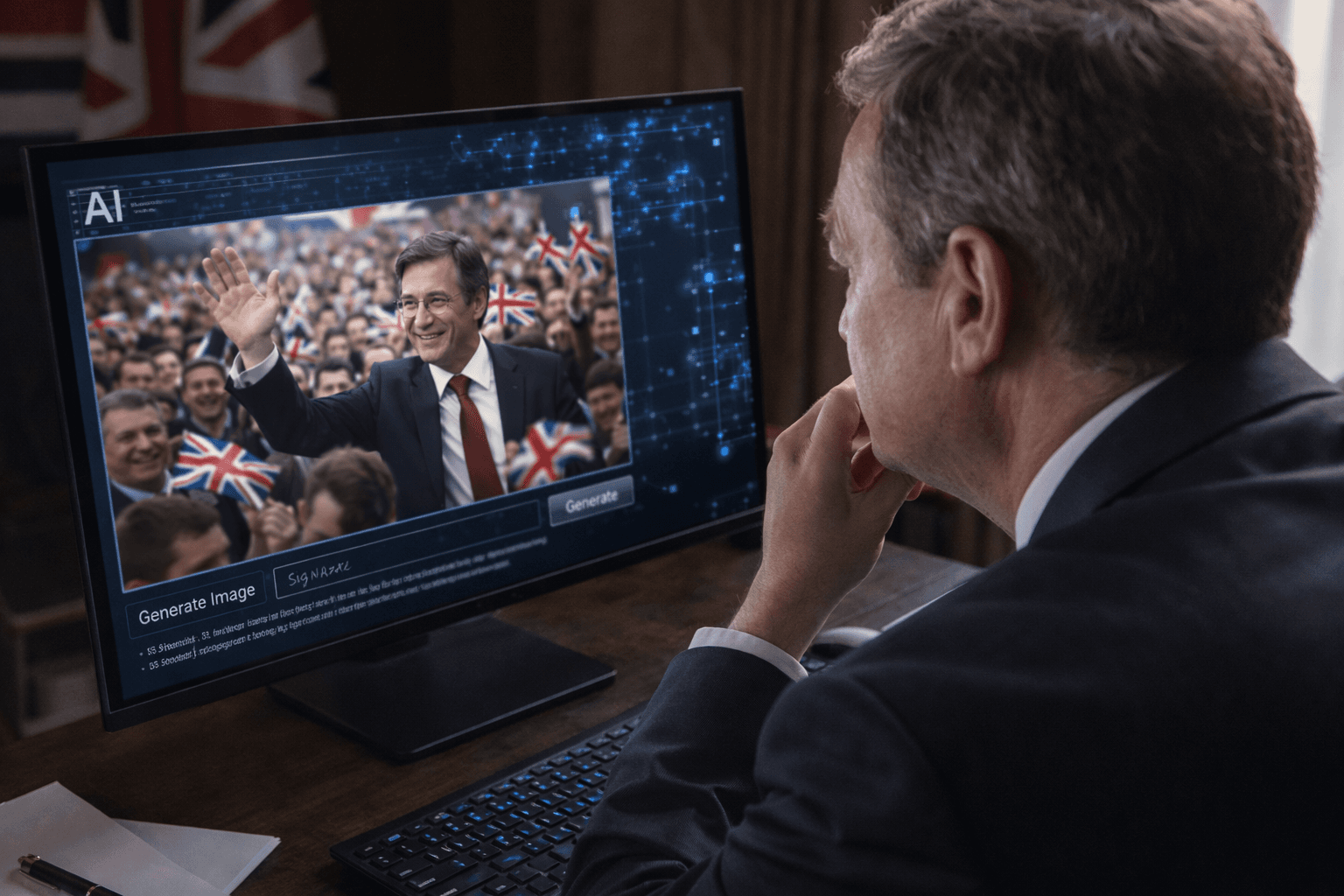
The AI image controversy in UK politics has highlighted a growing challenge for modern democracies. As artificial intelligence tools become more accessible, the line between authentic and manipulated content is becoming increasingly blurred.
A recent incident involving a UK political figure admitting the use of an AI-generated image has triggered debate over digital ethics, transparency, and the future of political communication.
This case reflects a broader issue. Technology is evolving faster than the systems designed to regulate it.
What Happened in the AI Image Controversy
The controversy centers on a political figure who acknowledged that an image used in communication was generated using artificial intelligence. The image was initially presented without clear disclosure of its origin.
This raised immediate concerns about whether the content could mislead audiences.
While the individual later clarified the use of AI, the incident sparked criticism from political opponents and media observers.
The core issue was not just the image itself. It was the lack of transparency at the time of its publication.
The Growing Role of AI in Political Communication
Artificial intelligence is rapidly transforming how information is created and shared.
AI tools can now generate:
- Images
- Videos
- Text content
These capabilities offer efficiency and creative flexibility. However, they also introduce risks.
In politics, visuals carry strong emotional impact. When images are generated artificially, they can shape perception even if they are not real.
This makes disclosure critical.
Misinformation Risks in the Digital Age
The Power of Visual Content
Images influence public opinion more quickly than text.
An AI-generated image can create a strong impression before verification occurs.
This increases the risk of misinformation spreading rapidly.
Difficulty of Detection
Modern AI-generated visuals are becoming more realistic.
For the average viewer, distinguishing between real and synthetic images is becoming increasingly difficult.
This creates an environment where misinformation can thrive.
Impact on Public Trust
Trust is central to democratic systems.
When political communication includes undisclosed AI-generated content, it can erode confidence in institutions.
Even when clarified later, the initial impact may persist.
Regulatory and Ethical Challenges
Lack of Clear Guidelines
Current regulations often do not fully address AI-generated content.
Many frameworks focus on traditional media, leaving gaps in digital governance.
Need for Transparency Standards
Experts increasingly argue that AI-generated content should be clearly labeled.
Transparency allows audiences to understand the nature of the information they are consuming.
Balancing Innovation and Accountability
AI offers significant benefits.
However, its use in sensitive areas such as politics requires careful oversight.
Governments face the challenge of encouraging innovation while preventing misuse.
Political and Public Reactions
The incident has triggered wider debate within the UK political landscape.
Critics argue that using AI-generated images without disclosure risks misleading voters.
Supporters suggest that AI is simply a new communication tool, similar to digital editing.
However, the consensus is emerging around one key principle: transparency is essential.
Public reaction indicates growing awareness of AI’s influence on information.
Industry and Media Implications
Changing Standards for Journalism
Media organizations are also grappling with AI.
They must ensure that content remains accurate and clearly sourced.
The distinction between real and generated content must be maintained.
Rise of Verification Tools
Technology companies are developing tools to detect AI-generated content.
These include watermarking systems and authenticity verification mechanisms.
However, these solutions are still evolving.
Strategic Implications for Democracy
Protecting Information Integrity
Maintaining trust in information is critical.
Governments and institutions must ensure that digital content remains reliable.
Educating the Public
Public awareness is a key defense against misinformation.
People need to understand how AI can be used to create content.
Building Regulatory Frameworks
Clear policies will be necessary.
These should define how AI can be used in political communication and what disclosures are required.
Future Outlook: A Defining Challenge for Digital Governance
The AI image controversy in UK politics is not an isolated event.
It is part of a broader transformation in how information is created and consumed.
As AI tools become more advanced, similar incidents are likely to increase.
The key question is not whether AI will be used in politics.
It is how it will be regulated.
The next phase of digital governance will focus on balancing innovation with trust.
Topics
Covering startup news, AI, technology, and business at ThePrimely. Delivering accurate, in-depth reporting on the stories that shape the future.