
Prediction Markets Iran Strike Backlash: Ethics, Regulation and Risk
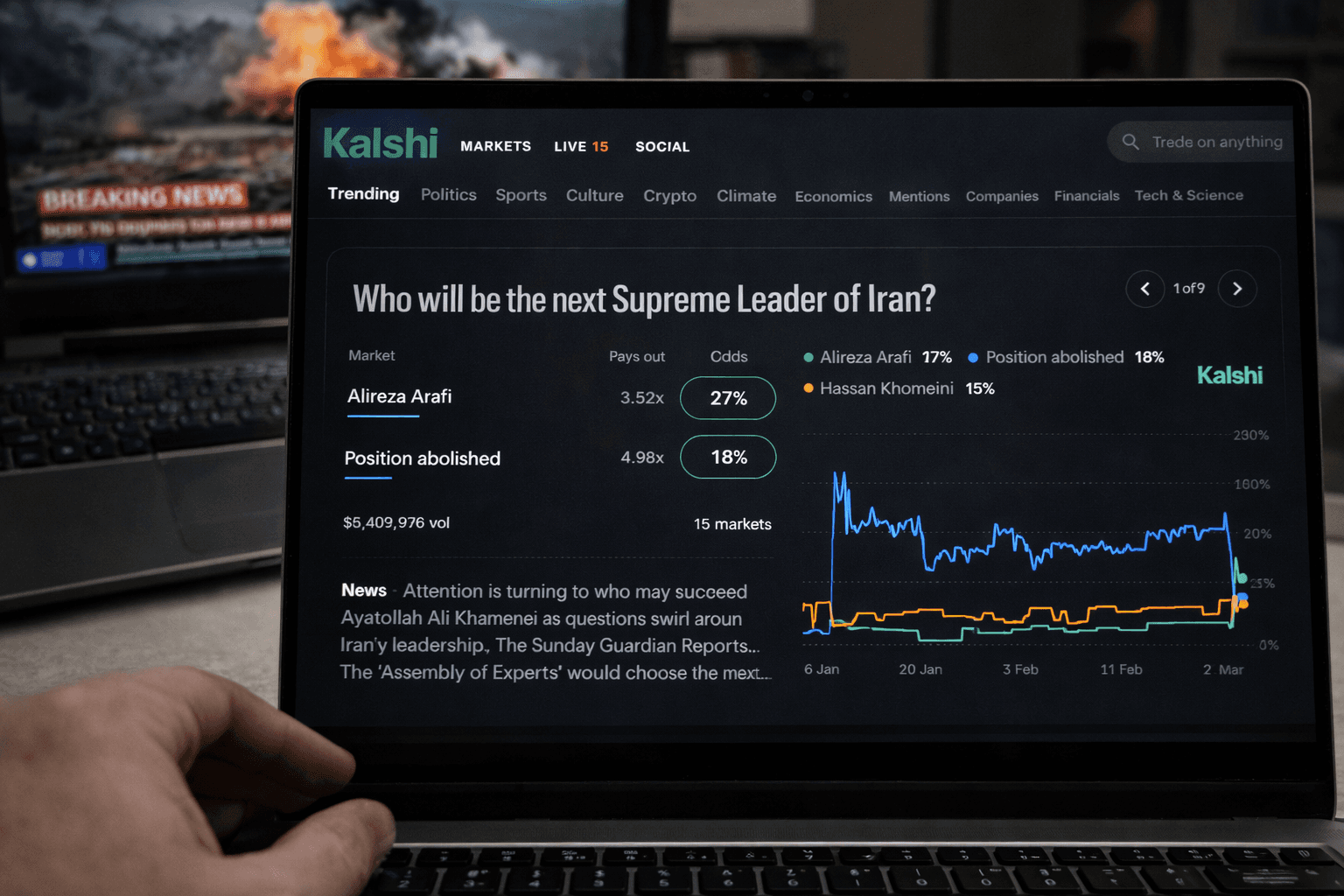
The prediction markets Iran strike backlash has intensified as platforms such as Kalshi and Polymarket face criticism for hosting markets tied to military action involving Iran. The controversy highlights the growing intersection between geopolitics, technology platforms, and financial speculation.
At the center of the debate is whether allowing users to place financial bets on potential air strikes or military escalation crosses ethical and regulatory boundaries. As tensions in the Middle East continue, scrutiny around these platforms has deepened.
This is no longer a niche debate within crypto communities. It has entered mainstream policy discussions.
What Triggered the Backlash
Prediction markets allow users to speculate on future events by buying and selling contracts based on probabilities. In recent days, both Kalshi and Polymarket listed markets related to possible Iranian military developments and strike scenarios.
Critics argue that enabling bets tied to conflict events risks normalizing war as a tradable asset class. The timing of these listings, coinciding with active military operations and rising casualties, amplified public concern.
Observers also questioned whether such markets could create perverse incentives or influence information flows.
The platforms, however, position themselves as neutral forecasting tools that reflect public sentiment rather than shape it.
How Prediction Markets Operate
Prediction markets function by aggregating crowd sentiment into price signals. Contracts typically pay out if a specific event occurs within a defined timeframe.
On Polymarket, which operates using blockchain infrastructure, users trade shares in event outcomes using cryptocurrency. Kalshi, regulated in the United States as an event-based derivatives exchange, offers contracts on economic and political outcomes.
In theory, these markets improve information efficiency. Prices adjust as new data emerges.
However, when the subject shifts from elections or economic data to live military conflict, the ethical calculus changes.
Ethical Concerns Around War-Linked Betting
The prediction markets Iran strike backlash centers on three primary concerns.
First, there is the moral dimension. Critics argue that wagering on military escalation trivializes human suffering. When contracts are tied to air strikes or retaliatory actions, the line between analysis and profiteering becomes blurred.
Second, there are concerns about misinformation. In volatile situations, rumors and unverified reports can shift prices quickly. This dynamic may amplify speculation rather than clarity.
Third, there is the risk of reputational harm to the broader fintech and crypto industry. As digital financial products gain mainstream acceptance, controversies linked to conflict could invite stricter oversight.
These concerns are shaping the current debate.
Regulatory Implications
Kalshi operates under oversight from the U.S. Commodity Futures Trading Commission. This regulatory structure raises questions about whether event-based contracts tied to military conflict fall within permissible boundaries.
Polymarket, by contrast, operates in a decentralized environment, which complicates enforcement.
Lawmakers and regulators may now examine whether existing frameworks adequately address conflict-related event contracts.
Historically, financial markets have included instruments tied to geopolitical outcomes. However, retail-accessible platforms with real-time trading introduce new scale and visibility.
This difference matters.
Market Reaction and Public Response
Public reaction has been mixed.
Some users defend prediction markets as tools for transparent forecasting. They argue that markets often process information more efficiently than traditional media.
Others view the listings as exploitative.
Social media criticism has intensified scrutiny, with calls for platforms to remove or restrict certain contracts during active conflicts.
At the same time, trading volumes reportedly increased following the listings, reflecting strong public engagement despite the controversy.
This divergence illustrates a broader tension between innovation and responsibility.
Strategic Implications for the Industry
The backlash could influence the future direction of prediction markets.
Platforms may need to adopt clearer ethical guidelines around conflict-related contracts. Voluntary restrictions or temporary suspensions during active military events could become more common.
Regulators may also consider defining boundaries for event-based derivatives tied to violence or war.
For the crypto sector, the episode reinforces the importance of governance frameworks that anticipate reputational risk.
As prediction markets expand into mainstream finance, they face heightened expectations around accountability.
Broader Context: Financialization of Real-World Events
The controversy reflects a larger trend.
Financial markets increasingly incorporate contracts linked to real-world events, from elections to climate outcomes. The Iran-related listings push this trend into more sensitive territory.
The key question is whether there should be limits to what can be monetized.
Markets are designed to price risk and probability. Yet not all risks carry equal ethical weight.
Balancing open forecasting tools with social responsibility remains a complex challenge.
Future Outlook
The prediction markets Iran strike backlash may mark a turning point for event-based trading platforms.
If regulatory scrutiny intensifies, platforms could face stricter compliance requirements. Alternatively, industry self-regulation could pre-empt government action.
Either way, the debate is unlikely to fade quickly.
As geopolitical volatility increases globally, similar controversies may arise in the future.
How platforms respond now will shape public trust and regulatory relationships going forward.
Topics
Covering startup news, AI, technology, and business at ThePrimely. Delivering accurate, in-depth reporting on the stories that shape the future.