
Iran President Apologizes to Neighbours but Rejects US Surrender Demand Amid Escalating War
The Middle East conflict has entered a volatile phase. Explosions in Tehran, missile exchanges across the region, and rising oil market fears now define the geopolitical landscape.
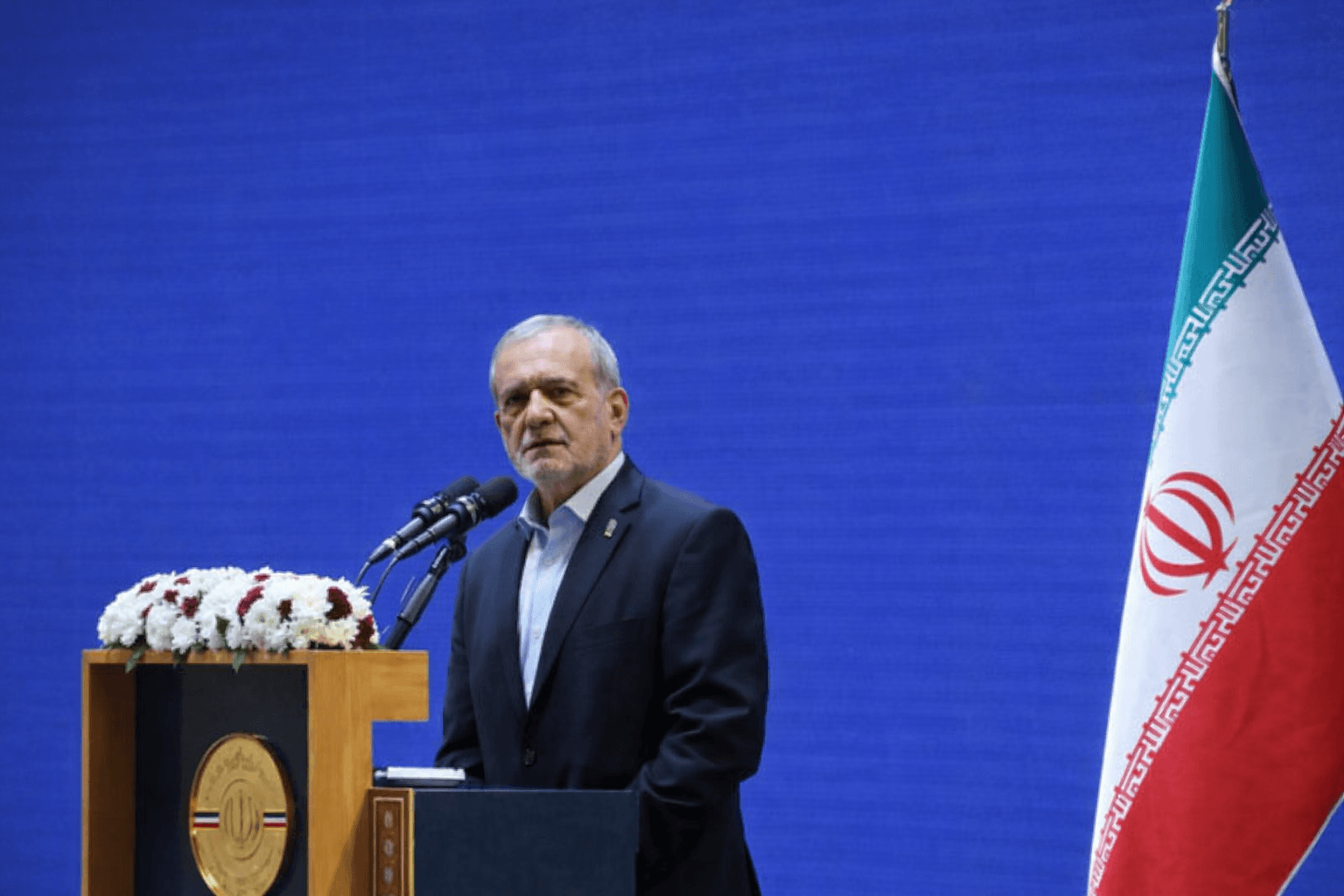
In a significant diplomatic move, Iran’s president apologized to neighbouring countries for recent missile attacks. At the same time, he rejected calls from the United States demanding unconditional surrender.
The message was clear. Iran seeks to calm regional tensions while continuing its confrontation with the United States and Israel.
The development comes as the war enters its second week and threatens to reshape the political and economic balance of the region.
The War That Triggered the Regional Crisis
The current conflict began after coordinated airstrikes by the United States and Israel targeted Iran. The strikes hit several Iranian cities, including Tehran.
One of the most significant consequences was the death of Iran’s Supreme Leader during the attack. The strike triggered a wave of retaliation from Iran.
Missiles and drones were launched across the region. Targets included Israel and locations hosting American military assets.
Several Gulf countries also experienced missile incidents during the escalation.
The conflict has already caused heavy human losses. Reports indicate more than 1,300 civilians have been killed in Iran, while additional casualties have been reported in Lebanon, Israel, and among US forces.
The war is now spreading beyond traditional battle lines.
Iran President Apologizes to Neighbours
Diplomatic Attempt to Contain Regional Fallout
Iran’s president issued a public apology to neighbouring countries following missile strikes that reached Gulf states.
The statement acknowledged that regional nations were unintentionally affected during the conflict.
He said the Iranian government regrets the attacks and does not seek confrontation with neighbouring countries.
The president confirmed that Iran will halt attacks on regional states unless they directly launch strikes against Iran.
This policy decision was approved by Iran’s interim leadership council.
The move aims to prevent the war from expanding into a wider regional conflict involving Gulf nations.
It also signals Iran’s attempt to separate its primary confrontation with the United States and Israel from its relations with neighbouring states.
Tehran Rejects US Demand for Unconditional Surrender
Strategic Messaging From Iran’s Leadership
Despite the conciliatory tone toward neighbours, Iran’s leadership delivered a firm message to Washington.
The United States had demanded unconditional surrender from Iran during the conflict.
Iran’s president rejected the demand outright.
He described the surrender call as unrealistic and stated that such expectations would never be accepted by the Iranian people.
This response reflects a broader strategy.
Iran is attempting to maintain national unity and demonstrate resistance despite ongoing airstrikes and military pressure.
The rhetoric also signals that negotiations remain unlikely in the immediate term.
Key Developments in the Ongoing Conflict
Military Escalation Across Multiple Fronts
Several critical developments have intensified the war.
First, large explosions have been reported in Tehran and other Iranian cities. Airstrikes continue as the US-Israel coalition targets strategic infrastructure.
Second, Iran has responded with missile and drone attacks across the region.
Some of these strikes reached Gulf locations including major economic hubs.
Third, regional militant groups have joined the conflict.
Hezbollah entered the confrontation by launching attacks toward northern Israel.
This development expanded the battlefield beyond Iran itself.
Finally, global powers are beginning to react.
European countries are discussing military assistance to protect regional allies and critical infrastructure.
The war is gradually shifting from a bilateral confrontation into a broader geopolitical crisis.
Energy Markets and the Strait of Hormuz Risk
Oil Supply Concerns Grow Worldwide
The conflict has triggered immediate alarm in global energy markets.
The Strait of Hormuz, one of the world’s most important oil shipping routes, has become a central concern.
Nearly 20 percent of global oil supply moves through this narrow waterway.
Any disruption could rapidly affect global fuel prices and supply chains.
Energy markets have already reacted with rising crude prices and increased shipping risk premiums.
Traders fear that prolonged conflict could interrupt tanker traffic.
If the strait becomes unstable, energy markets could experience severe volatility.
For oil-importing economies, this risk is particularly significant.
Strategic Implications for the Middle East
A Redefinition of Regional Power Dynamics
The current conflict is reshaping regional geopolitics.
First, Iran’s leadership structure is undergoing rapid transition after the loss of its supreme leader.
Second, alliances across the Middle East are shifting as countries evaluate security risks.
Third, the conflict highlights the vulnerability of global energy infrastructure.
Finally, the involvement of multiple actors increases the probability of long term instability.
For policymakers, the conflict presents a complex strategic challenge.
Containment will require diplomatic coordination, military restraint, and economic stabilization measures.
What Could Happen Next
Three Possible Scenarios
Several outcomes remain possible in the coming weeks.
Scenario one: Controlled escalation.
The war continues but remains limited to Iran, Israel, and US forces.
Scenario two: Regional expansion.
Additional countries become involved, transforming the conflict into a broader Middle East war.
Scenario three: Diplomatic intervention.
International mediators push for a ceasefire to prevent further escalation.
At present, the first scenario appears most likely.
However, the situation remains extremely fluid.
Iran’s apology to neighbouring countries represents a calculated diplomatic signal.
Tehran is attempting to contain regional fallout while continuing its confrontation with the United States and Israel.
At the same time, the firm rejection of surrender demands shows that the conflict remains far from resolution.
The war now carries consequences beyond military strategy.
Energy markets, regional alliances, and global political stability are all under pressure.
The coming weeks will determine whether the conflict stabilizes or evolves into a broader geopolitical crisis.
Topics
Covering startup news, AI, technology, and business at ThePrimely. Delivering accurate, in-depth reporting on the stories that shape the future.